1/8
The Party Wall etc Act 1996: explanatory booklet
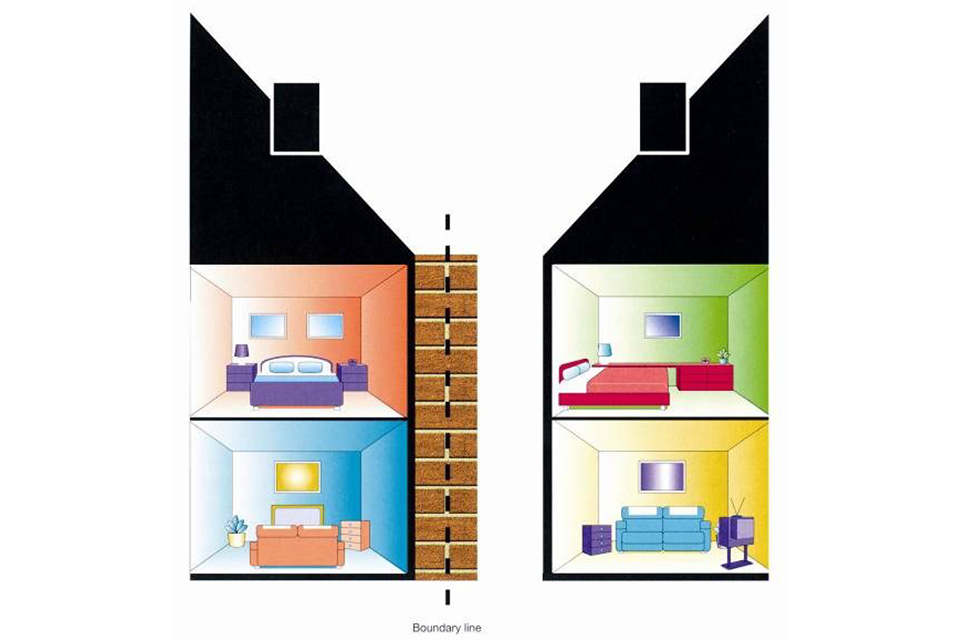
The Party Wall etc. Act 1996, which came into force on July 1, 1997, and applies across England and Wales, provides a legal framework for preventing and resolving disputes related to party walls, party structures, boundary walls, and excavations near neighboring buildings. This guide clarifies the Act's implications for both Building Owners, who initiate construction work, and Adjoining Owners, who are affected by it. It is crucial to understand that the Act operates independently of planning permission or building regulations, meaning compliance with one does not negate the need to adhere to the others.
The Act defines several types of work requiring notification: building new walls up to or astride a boundary (Section 1), working on existing party walls or structures (Section 2), and excavating near neighboring buildings (Section 6). If a Building Owner plans any of these, they must notify all Adjoining Owners in writing. Failure to issue proper notice can lead to legal action, including injunctions to halt work. The Act does not empower Adjoining Owners to prevent work outright but allows them to influence its execution, timing, and manner, ensuring that unnecessary inconvenience is avoided and any damage is rectified.
For works on existing party walls, the Act grants specific rights, such as repairing, underpinning, cutting into, raising, or demolishing and rebuilding the wall. Minor tasks like hanging shelves or installing electrical sockets typically do not require notice, unless they could affect the wall's structural integrity. Adjoining Owners are defined broadly to include freeholders, leaseholders, and those with properties within relevant distances of an excavation, necessitating notification to all affected parties. Written notice is essential, detailing the proposed work, its commencement date, and acknowledging it as a Party Wall Act notice. Notice periods are generally two months for party wall works and one month for new boundary walls or excavations.
Upon receiving a notice, an Adjoining Owner can consent, refuse consent, or take no action. If consent is not given in writing within 14 days, a dispute is deemed to have arisen. Disputes are ideally resolved through direct discussion, but if an agreement cannot be reached, the Act provides for the appointment of a surveyor or surveyors. An 'Agreed Surveyor' can be jointly appointed, or each owner can appoint their own, who then work together to create an 'Award.' This Award is a legally binding document outlining the work, its timeline, necessary protections, and often includes a record of the adjoining property's condition before work begins. Surveyor fees are typically borne by the Building Owner if the work is solely for their benefit, but costs may be shared if the work addresses a shared defect or repair need.
In cases where an Adjoining Owner refuses to appoint a surveyor, the Building Owner can appoint a second surveyor on their behalf to proceed with the dispute resolution. Access to neighboring property for works is granted under the Act, provided 14 days' notice is given, except in emergencies. Adjoining Owners also have rights to protect their property from foreseeable damage, receive compensation for losses, and request security for expenses, particularly for intrusive or complex works. The Act does not alter property ownership or resolve boundary disputes, which are matters for the courts or alternative dispute resolution.
This booklet also includes example letters for various notice types and acknowledgments, guiding users through the formal communication process required by the Act. It emphasizes the importance of clear and timely communication and the structured process for resolving potential disagreements to ensure building works proceed smoothly and legally, protecting the rights and interests of all parties involved.
#PartyWallAct1996 #BuildingRegulations #PropertyLaw #ConstructionDisputes #BuildingOwnerResponsibilities #AdjoiningOwnerRights #SurveyorAppointment #PartyWallAward #HomeRenovation #PartyWallAct1996 #BuildingRegulations #PropertyLaw #ConstructionDisputes #BuildingOwnerResponsibilities #AdjoiningOwnerRights #SurveyorAppointment #PartyWallAward #HomeRenovation
 No comments yet
Party Wall Agreements explained – everything you need to know when planning your renovation


Party wall agreements: What you need to know