




1/8
10 New Trends in Multifamily Housing Design
The COVID-19 pandemic significantly influenced multifamily residential building design, necessitating a rethinking of community spaces to ensure safety and comfort in high-density living. Nate Jenkins, an associate principal at OZ Architecture, outlines ten emerging trends that address these challenges, focusing on creating adaptable and healthy living environments.
Historically, amenities in multifamily buildings were concentrated on upper floors to impress prospective tenants, often requiring elevator use. The new trend shifts towards integrating ground-floor and second-floor mezzanine amenities. These lower-level spaces enhance street-level engagement and offer more permeable physical connections through operable windows and doors, facilitating safer and more accessible interaction within the building. This move balances the continued presence of rooftop amenities with the practical benefits of street-level engagement.
Crowded elevators are being addressed with the implementation of smart elevator systems, a technology more common in office buildings but now making its way into residential complexes. These intelligent systems optimize passenger flow, reduce wait times, and minimize large gatherings in lobbies by making fewer stops. Users can monitor car occupancy, allowing for more informed and safer travel decisions.
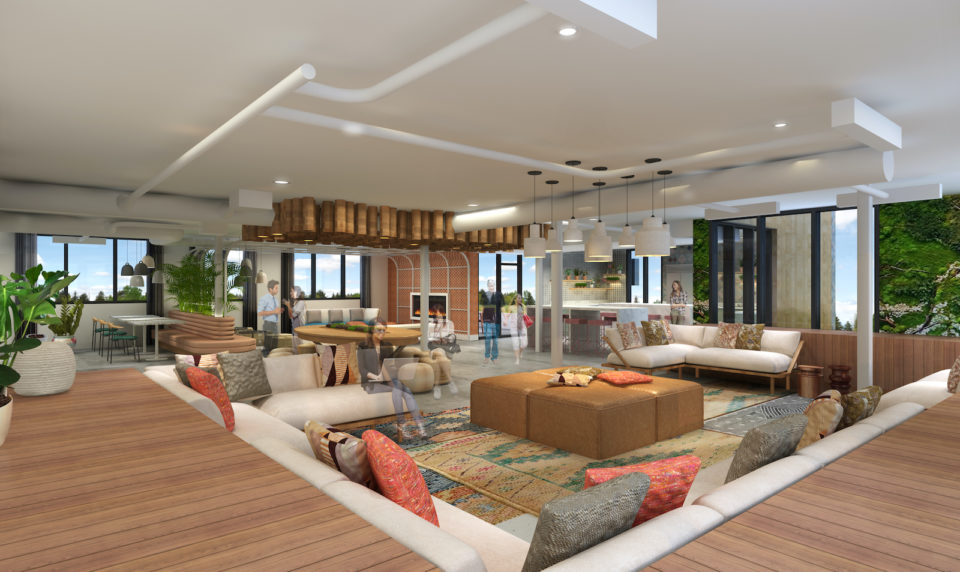
Traditional open common spaces, designed for large group mingling, are being reconfigured into smaller, more defined gathering areas. Drawing inspiration from restaurant design, architects are partitioning open spaces into intimate "rooms" that can accommodate four to ten people. This can involve using elements like screen walls, planter-box partitions, canvas separators, or permanent landscape treatments, both indoors and outdoors, to create a sense of personal space while maintaining a communal atmosphere.
Addressing air quality, new ventilation systems are being engineered to maximize fresh airflow. The emphasis is on increasing the operability of windows, skylights, and other elements to bring fresh air into all areas, from individual units to corridors and common spaces. Building systems are being upgraded to provide higher concentrations of fresh air, allowing buildings to "breathe" more effectively by facilitating the intake of fresh air and the exhaustion of stale air, benefiting all occupants.
Stairwells, traditionally viewed as utilitarian and often poorly lit, are being transformed into significant amenities. Wider, daylit staircases with a residential aesthetic are becoming the "new circulator" within buildings. Designers are incorporating art, color, materials, and natural light sources like windows and skylights to activate these spaces, encouraging their use as a healthy alternative to elevators and enhancing the overall residential experience.
Open-concept co-working spaces are evolving into private, reservable, or rentable conference rooms within residential buildings. As communal rooms faced reduced usage, reappropriating them into private workspaces offers residents a convenient and safe on-site working environment. This approach not only adds to the building's attractiveness but also presents a potential new revenue stream for landlords, as residents might prefer to rent an office within their building rather than at an external co-working facility.
Large, glittering public pools, often seasonal and expensive to maintain, are being replaced by intimate lounge areas designed for small groups. The impracticality of pandemic-era restrictions on communal pools, combined with their significant space consumption, has led to a shift towards partitioned hangout spaces. These new designs aim to create more accessible outdoor areas for all residents, fostering smaller, more manageable social interactions.
Indoor fitness centers are being redesigned to be less crowded, featuring large fresh-air ports such as roll-up garage doors and sliding glass doors. There's also an increased integration of outdoor space for training. The traditional model of closely packed exercise machines is being phased out in favor of open-air workout spaces that may include different flooring surfaces, like artificial turf, mimicking outdoor playing fields and promoting a healthier exercise environment.
Finally, in individual residences, small or inoperable windows are being replaced by larger, sliding glass doors with Juliet balconies. This design allows residents to open up their units to the outdoors, effectively extending their living space and bringing fresh air and natural light into their homes. Juliet balconies, offering direct outdoor access without the full footprint of a traditional balcony, are becoming a standard feature in many new unit designs, reflecting a desire for greater connection to the exterior.
#MultifamilyHousingDesign #PostPandemicArchitecture #CommunityBuilding #SmartHomeTechnology #SustainableDesign #UrbanPlanning #ResidentialAmenities #InteriorDesignTrends #WorkFromHomeSolutions #MultifamilyHousingDesign #PostPandemicArchitecture #CommunityBuilding #SmartHomeTechnology #SustainableDesign #UrbanPlanning #ResidentialAmenities #InteriorDesignTrends #WorkFromHomeSolutions
 No comments yet