




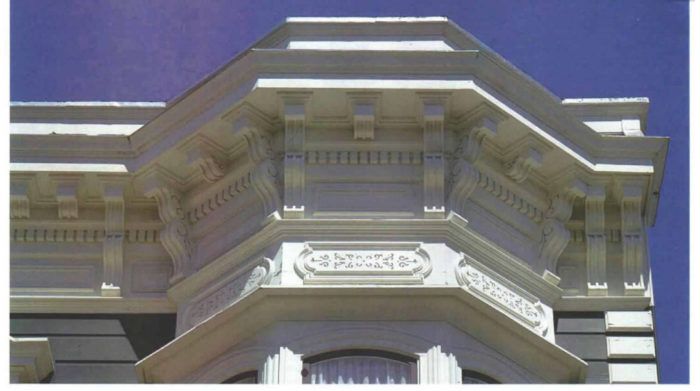
Building an Ornate Cornice
In the realm of architectural preservation, restoring a Victorian-era house presents a unique blend of craftsmanship and historical investigation. This particular endeavor details the meticulous reconstruction of an elaborate cornice on a San Francisco Victorian home, once the childhood residence of California Governor “Sunny” Jim Rolf. The article highlights the process of architectural sleuthing, a critical first step in faithfully recreating period-specific details.
During the mid-20th century, many Victorian homes in San Francisco underwent a transformation, as owners, influenced by contemporary design trends and the perceived high maintenance of ornate features, stripped away decorative elements like brackets, columns, window hoods, and intricate moldings. These houses were frequently covered with stucco or asbestos shingles, resulting in a homogenized appearance that diminished their original character. However, about two decades ago, a reversal began, with visionary owners committing to uncover and restore the authentic architectural heritage of these homes.
Pam Whitehead, an owner of one such stripped-down Victorian, embarked on a restoration journey in 1989. Her team, including contractor John Hornor and carpenter Bryan Kelly, initiated an “architectural archaeology” process to understand the house's original appearance. This involved consulting local historical societies for old photographs and exploring the neighborhood for anecdotal evidence or visual records from long-term residents. In a fortunate discovery, Pam located a small photograph of her house in a biography of Governor Rolf. This image revealed that the currently stucco-clad, aluminum-windowed structure was once a refined Italianate Victorian, distinguished by an octagonal bay with arched first-floor windows, a belt cornice, and a substantial main cornice with a mansard roof.
While the article focuses on the initial investigative phase and the historical context of Victorian architectural decline and resurgence, it also alludes to the practical challenges of reconstruction, noting that "cabinet-grade trim meets detective work." The mention of "template routing aids rebuilding effort" in the synopsis indicates that the subsequent phases of the project involved precise woodworking techniques to replicate the lost ornamental details. The restoration project underscored a commitment to historical accuracy, aiming to authentically revive the original grandeur of the Victorian home rather than merely adding superficial embellishments.
This restoration effort is illustrative of a broader movement to conserve and celebrate San Francisco's distinctive architectural legacy. It emphasizes the importance of diligent research and skilled craftsmanship in preserving historical buildings, ensuring that their unique character and intricate details are not lost to time or changing aesthetic preferences. The story of Governor Rolf's boyhood home serves as a testament to the value of restoring architectural authenticity and the rewarding process of bringing a building back to its historical splendor.
#VictorianArchitecture #HomeRestoration #CorniceReconstruction #ArchitecturalSleuthing #SanFranciscoHomes #HistoricPreservation #ItalianateStyle #CarpentryTechniques #VictorianArchitecture #HomeRestoration #CorniceReconstruction #ArchitecturalSleuthing #SanFranciscoHomes #HistoricPreservation #ItalianateStyle #CarpentryTechniques
 No comments yet