1/7
A Trip Around the World in Five Pots
The article explores the rich history and diverse traditions of pottery from various corners of the globe, focusing on locales where ceramic craftsmanship is deeply ingrained in the local culture. It begins with a personal anecdote about collecting locally made ceramics during travels, highlighting the universal appeal of this ancient craft. The narrative then takes the reader on a virtual tour, showcasing five distinct pottery traditions.
First, the article delves into La Chamba, Colombia, where women have been producing inky, satin-finished pots for centuries. This tradition, originating from the Pijao people, involves a unique process using three types of clay, red glaze, and a specific smoking technique with organic matter like rice husks to achieve its distinctive black, glossy finish. The article also suggests contemporary ceramists like Faye Toogood and Danny Kaplan who create similarly sleek black pieces.
Next, the focus shifts to Tamegroute, Morocco, a village on the edge of the Sahara Desert known for its emerald green glazed earthenware. This tradition, dating back to the mid-1600s, is carried on by seven families who use a local clay called _taligit_ and a unique glaze mixture of manganese, barley flour, and local rock, combined with traditional kilns fueled by palm branches. The resulting uneven coloring is a hallmark of Tamegroute ceramics. Modern alternatives are presented through artists like Niko June and Casa Veronica.
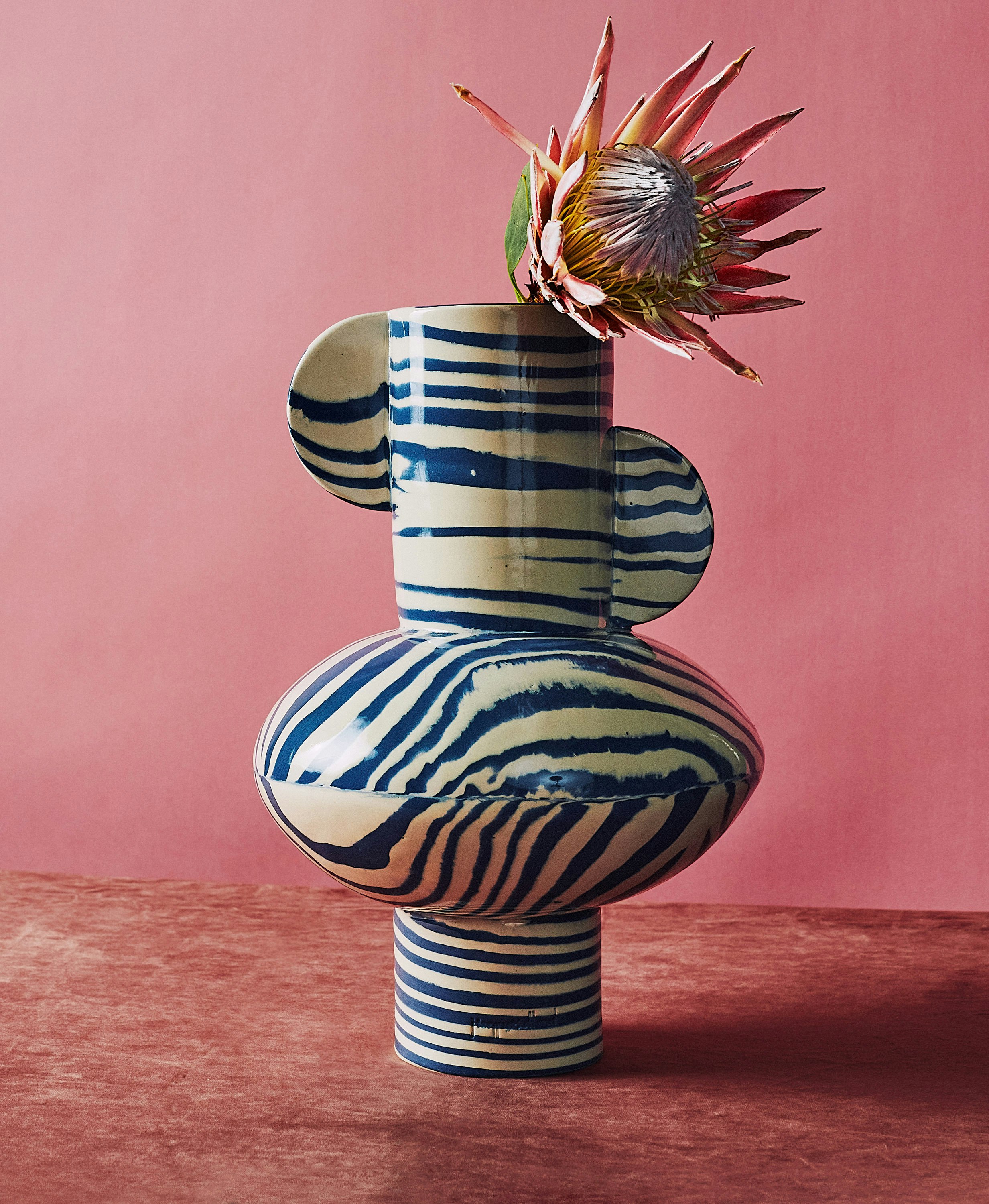
The journey continues to Grottaglie, Puglia, Italy, referred to as the "city of ceramics." Here, the _smamriato_ or _schizzato_ method of splatterware has been used for centuries, originally to disguise imperfections. The abundance of red clay in the region has sustained pottery production since the Middle Ages. Today, Grottaglie boasts a ceramics district with workshops and a museum. The article notes how this splatterware technique has spread globally, with artists like OWO and Helen Levi adopting similar styles, though traditional Pugliese pieces are often green.
Following this, the article explores Imbe, Okayama Prefecture, Japan, the origin of Bizen ware. This wabi-sabi, unglazed stoneware dates back to the sixth century and involves a meticulous, year-long process starting with the creation of the clay from _hiyose_ soil, which is aged for extended periods. The firing process is slow and can take up to two weeks, resulting in unique earthy colorings and patterns like _goma_ (speckled from ash) and _hidasuki_ (vermillion from rice straw). Contemporary ceramists like Veronica Morris, Clair Catillaz, and Jonathan Cross are mentioned for their work inspired by the wabi-sabi ethos.
Finally, the article introduces Horezu, Romania, where a ceramics tradition is closely linked to the 1690 monastery. Potters here use local clay and glazes made from materials like _ruseala_ (iron-rich soil) to create warm reddish-brown, cobalt blue, green, and ivory pieces. Horezu ceramics are distinguished by intricate decorations made with traditional tools like wild boar bristle brushes and hollowed ox horns, creating patterns resembling peacock feathers. Spiritual symbols like the tree of life and the Horezu rooster are common motifs. Modern interpretations by Noelle Hiam and Henry Holland are highlighted.
The article concludes with practical advice on how to safely transport fragile ceramic treasures, provided by Paul Speh, a fine arts packer at the Brooklyn Museum. Key tips include cushioning items with a "bird’s nest" of packing material, allowing two inches of air space around pieces to prevent overpressure, protecting delicate surfaces with plastic wrap, and opting for hard-shell carry-on luggage for air travel.
#CeramicTraditions #GlobalPottery #LaChamba #TamegrouteCeramics #ItalianSplatterware #BizenWare #HorezuPottery #HandmadeCrafts #HomeDecor #TravelSouvenirs #CeramicTraditions #GlobalPottery #LaChamba #TamegrouteCeramics #ItalianSplatterware #BizenWare #HorezuPottery #HandmadeCrafts #HomeDecor #TravelSouvenirs
 No comments yet
Travel Talk