




1/10
If You Pour Molten Aluminum on Wood. . .
The article presents the innovative furniture design technique developed by Hilla Shamia, an industrial designer trained at the Holon Institute of Technology. Shamia's "Wood Casting" method involves combining molten aluminum and whole tree trunks to create unique furniture pieces. This technique focuses on preserving the natural form of the wood while integrating it with metal, creating distinct boundaries and a unique aesthetic.
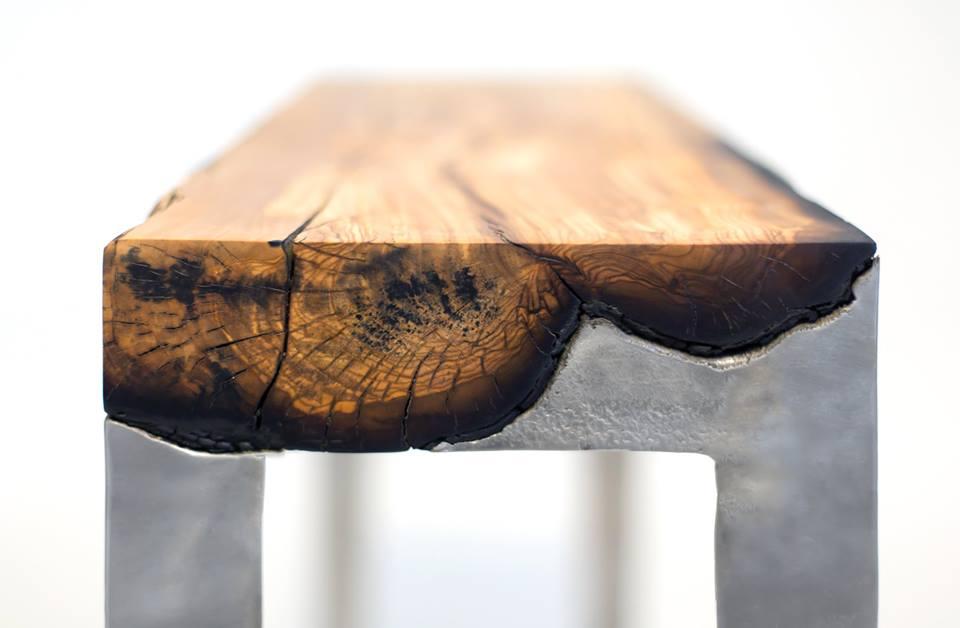
The core of the "Wood Casting" technique involves pouring molten aluminum, which reaches a temperature of 1220 degrees Fahrenheit, directly onto wood. Given that wood ignites at 572 degrees Fahrenheit, the molten metal causes the surface of the wood to char. This charring creates a natural transition zone between the two materials, which is a key aesthetic and structural element of Shamia's designs. Instead of being a destructive process, the burning of the wood is transformed into a positive, emotional, and artistic value, as it preserves the tree trunk's natural form within defined structural boundaries.
Shamia utilized entire tree trunks of cypress and eucalyptus for her furniture series. The process required collaboration with metalsmiths who were willing to experiment with this unconventional approach. Pouring molten aluminum directly onto the wooden surface allowed the metal to seep into the natural niches and crevices of the tree trunk. This interaction results in the aluminum solidifying within these organic patterns, creating an effect described as the metal being "frozen into that moment of melting" into the carbonized wood.
The initial burning process shapes the exterior of the wood. Subsequently, the entire wooden plank is cut lengthwise and integrated into a metal frame, forming the final furniture structure. This method allows for a juxtaposition of the artificial, geometric feel of the metal with the organic, natural profile of the wood. The designer emphasized the challenge of finding metalsmiths adventurous enough to participate, as such a casting process could extend up to two weeks.
The furniture series highlights how a seemingly destructive interaction between materials can be harnessed to create visually striking and structurally integrated designs. Shamia's work transforms raw materials into functional art, showcasing the beauty of material contrasts and the preservation of natural forms through an industrial process. The impact of this process on contemporary furniture design is noted as intriguing, demonstrating a novel approach to material combination and aesthetic expression in the field of industrial design.
#WoodCasting #FurnitureDesign #MoltenAluminum #HillaShamia #IndustrialDesign #MaterialInnovation #WoodMetalFusion #WoodCasting #FurnitureDesign #MoltenAluminum #HillaShamia #IndustrialDesign #MaterialInnovation #WoodMetalFusion
 No comments yet
Finishes preserve wood and are food-safe: Ethan reviews