1/5
Mother Nature Knows Best
The author, a licensed architect, reflects on her journey in the design world, emphasizing the importance of continuous discovery and learning, particularly through books. At 91, she shares three insights gained from her extensive experience and study, primarily focusing on color in interior and architectural design.
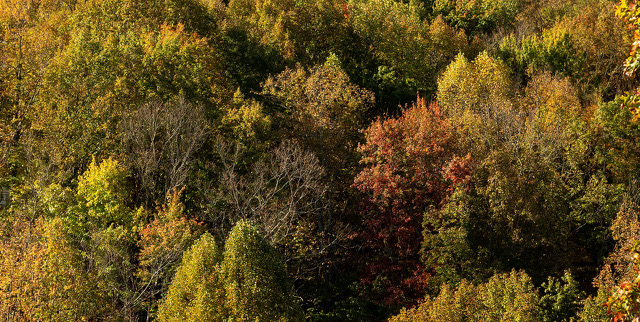
The first insight addresses the pervasive use of beige and 'greige' in the built environment despite the vast spectrum of colors available in nature. She questions why designers often limit themselves, pondering if it's due to the 'less is more' philosophy or an overwhelming array of choices coupled with complex color theories. The author recounts her experience on Route 17, where the natural beauty inspired her to 'take a cue from nature,' leading her to publish a book titled 'The Nature of Color in Interior Design.' She details the traditional artist's color wheel, which originates from Sir Isaac Newton's early eight-spoke invention based on additive light, and contrasts it with subtractive color models used for pigments and inks. The article explains the complexities arising from various color models—additive (for projected light, like computer screens) and subtractive (for reflected light, like paints)—and the challenges designers face in translating colors between them.
The author further explores different harmonious color combinations derived from color wheels, such as analogous, complementary, split complementary, double split, triad, and square schemes, noting their inherent complexity. She references a Cooper-Hewitt exhibition, 'Saturated: The Allure and Science of Color,' which showcased almost 200 items and numerous rare books spanning from antiquity to the present, all exploring color perception and application. The exhibition highlighted the historical and ongoing debates about color design, featuring works from Newton, Goethe, Le Blon, Itten (Bauhaus), and Munsell. It also displayed the 1915 'Standard Color Card of America' and contemporary digital color models like CSS3, CSS4, HTML, hex, RGB, HSL, HSV, and CGA, along with Crayola crayons. This diverse array of systems underscored the lack of a universal, clear method for color selection, a problem experienced by both designers and clients, as exemplified by a Wells Fargo property manager's confusion over paint company fan decks. The author concludes that creating a color palette often feels like an unpredictable exploration, further complicated by environmental dynamics such as changing light conditions.
The second insight emerges from the author's continued reflection on Donald Kaufman's book, 'Color and Light,' which emphasizes the 'path of light' and the interplay of light, air, and surface. This leads her to observe nature's flawless color choices and question its underlying principles. She discovers that nature fundamentally uses four primary colors: red, yellow, blue, and green, a concept she notes is not new, tracing back to Aristotle, Leonardo da Vinci, and Ewald Hering's opponent-process color theory. This theory suggests that the human brain perceives colors as opposing pairs (red vs. green, blue vs. yellow), explaining how our trichromatic eyes interpret four primaries. Frank Lloyd Wright's 'Fallingwater' color scheme is cited as an example of adopting nature's colors, with shades like 'Covered Wagon' and 'Mountain Forest.'
The third and final insight is that Mother Nature's palettes are inherently complementary, diverging from the complex analogous, triad, square, and compound schemes often taught in design. This realization, a culmination of her experiences, leads her to a simplified, intuitive color theory. She promises to elaborate on these particulars in future articles, encouraging readers to observe nature directly—through forests or slow drives—to appreciate its impeccable taste in color.
#Architecture #Color #ColorTheory #InteriorDesign #Nature #DesignPhilosophy #ColorWheels #ColorPerception #ArchitecturalDesign #Architecture #Color #ColorTheory #InteriorDesign #Nature #DesignPhilosophy #ColorWheels #ColorPerception #ArchitecturalDesign
 No comments yet
Natural Mystique
Nature Nurtures