1/10
The Rise, Fall, and Rise of Philadelphia Brick
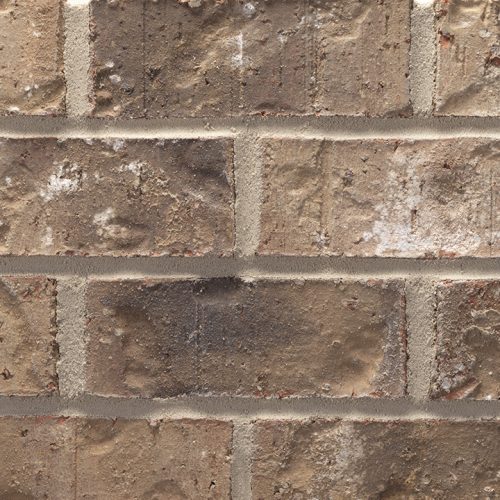
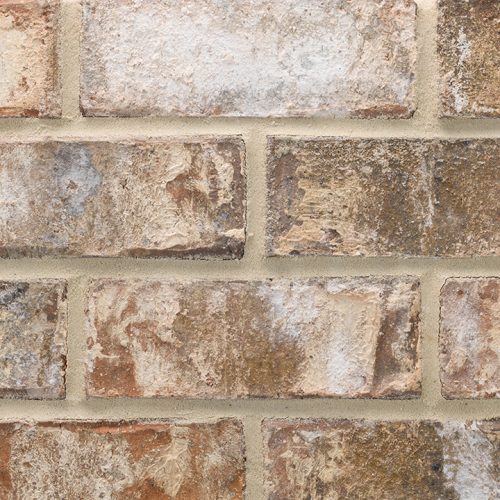
Philadelphia's identity is deeply intertwined with brick, a material so ubiquitous that its significance is often overlooked. The city's foundation in 1683 by William Penn, following the Great Fire of London, emphasized brick construction for safety, a practice that quickly took root. Philadelphia was uniquely positioned for brick production due to vast geological deposits of clay, formed over millennia from glaciofluvial sediments of the Delaware River. Early colonial brickmaking involved simple processes: mixing clay, water, and dried grass in a 'ring pit,' hand-pressing into molds, air-drying, and then firing in kilns. These early bricks, though made from drab gray clay, transformed into the characteristic orangish-red seen in historic structures like Elfreth's Alley and Independence Hall. Colonial walls often featured a Flemish bond, with headers frequently blackened by fire or glaze.
As Philadelphia expanded, so did its brick industry. The 19th century saw dramatic increases in production, with up to 50 brickyards employing thousands and producing over 200 million bricks annually. Technological advancements in kilns led to hotter, more consistent firing, which caused iron molecules in the clay to form ferrous oxide, imparting deeper, burgundy hues. This distinct color became a hallmark of 19th-century Philadelphia brick, exemplified in buildings like the Academy of Music and numerous rowhouses. The quality of Philadelphia brick garnered national acclaim, with contemporaries comparing its color to "Philadelphia golden butter" and brickmakers elsewhere using it as a benchmark for excellence. Its desirability even led to fanciful claims of gold content, further enhancing its mystique.
Philadelphia brick was exported widely, particularly to New York City, where the absence of local clay deposits made imported bricks essential. Elegant homes and significant structures in Brooklyn and Manhattan, such as The Benedick and the Temple Court building, proudly featured Philadelphia brick. Its reach extended even further to cities like Los Angeles and Pensacola, Florida, where it was celebrated for its contribution to architectural beauty. Beyond aesthetics, the appeal of Philadelphia brick stemmed from its craftsmanship. Philadelphia's brickmakers maintained a strong tradition of hand labor, even as industrialization advanced. This preference for handmade bricks was valued for their superior quality and aligned with the architectural philosophies of figures like John Ruskin, who championed handcraft as an expression of the worker's freedom and inherent imperfections as integral to beauty.
Frank Furness, a prominent late 19th-century Philadelphia architect, masterfully utilized the city's bricks in his Ruskinian Gothic designs. His buildings, like the Fisher Fine Arts Library at the University of Pennsylvania, blended Victorian technology with traditional masonry, celebrating the city's industry and a unique blend of culture and nature. However, the architectural tastes shifted dramatically after the 1893 Chicago Columbian Exposition, ushering in an era of neoclassical preference where white stone facades superseded brick. Furness's industrial realism fell out of favor, and his library was disparaged, leading to neglect and even threats of demolition. The term "Philadelphia brick" likewise faded from prominence as the local industry declined.
Despite this "fall," a "rise" began in the mid-20th century. Figures like Denise Scott Brown defended Furness's library, and Robert Venturi's *Complexity and Contradiction in Architecture* sparked renewed interest in overlooked architectural styles, including Furness's work. A significant restoration of the Fisher Fine Arts Library in the early 1990s, led by Venturi Scott Brown, revealed its "flaming rust brick and terra-cotta arches" and transformed it into a beloved landmark. Today, the library stands as a testament to the enduring value of Philadelphia brick, a local material that embodies the city's industrial, geological, and cultural heritage, celebrating human creativity and craftsmanship embedded within its very fabric.
#PhiladelphiaBrick #ArchitecturalHistory #FrankFurness #BuildingMaterials #UrbanDevelopment #Craftsmanship #VictorianArchitecture #IndustrialHistory #PhiladelphiaBrick #ArchitecturalHistory #FrankFurness #BuildingMaterials #UrbanDevelopment #Craftsmanship #VictorianArchitecture #IndustrialHistory
0 comment in total
 No comments yet
You may also like

Brooklyn architecture: The Five Oldest Houses in Brooklyn Heights (Updated)

Is exposed brick still on trend? Designers debate whether this 'timeless' look really is a classic

Acme Brick, Tile and Stone – Oklahoma City

Acme Brick, Tile and Stone – Birmingham
Ten buildings animated by expressive brick facades
Statement bricks are the latest design trend

Acme Brick, Tile and Stone – Dallas-Fort Worth
Glamorous Glass Bricks Are Booming – Again

Long-format brick slips from Klay Tiles and Facades

Acme Brick, Tile and Stone – Memphis
Masonry reinvented: One brick at a time

Exposed Brick and Interior Design: An Ancient Material Meets the Realm of Retail
Three decorative metal signs reveal the history of Philly’s Brewerytown neighborhood | Inga Saffron

This Designer Brought Brick Back Into a Colonial in a Big (But Sneaky) Way

An urban architectural installation rises and reflects in New York
These 15 brick houses prove this age-old material deserves icon status

Another brick in the wall
12 brick floors that will take your breath away
Photos from Flint Faience's History

Acme Brick, Tile and Stone – Bluffton