Douglas-fir: Exceptionally strong and abundant species
Douglas-fir (Pseudotsuga menziesii) stands out as a prominent species within Western forests, recognized for its exceptional strength relative to its weight and its widespread abundance. These trees can attain impressive heights exceeding 250 feet, with the initial 150 feet often clear of knots and branches, and diameters surpassing 6 feet. Some specimens have been observed to be over 800 years old. The responsible harvesting of these "old-growth" trees necessitates careful consideration to prevent environmental degradation and the depletion of these ecological icons. However, recent forest fires, partly attributed to past forest management practices, have raised questions regarding the proactive removal of trees to mitigate fire risks and the extent of such interventions.
Currently, a significant portion of Douglas-fir lumber originates from "second-growth" trees, typically less than 100 years old. While the properties of this lumber may not reach the same peak as those from old-growth trees, it remains a superior product, exhibiting strength, clarity, appealing grain, and favorable processing characteristics. The primary applications for Douglas-fir today leverage its high strength, yet its inherent beauty also makes it a preferred material for millwork, furniture, cabinetry, and flooring.
There are two main varieties of Douglas-fir: Coastal Douglas-fir, found from British Columbia to California with optimal growth west of the Cascade Mountains, and Interior Douglas-fir, predominantly from the Rocky Mountains. Most wood processors favor the Coastal variety due to its superior strength, stiffness, clarity (fewer knots), and better processing attributes. The data presented in this context specifically pertains to the Coastal variety. Clear wood, valued for its high strength and consistent aesthetic, commands a considerable price.
In terms of processing, Douglas-fir has a green specific gravity (SG) of 0.45, increasing to 0.50 at 6% moisture content (MC). When dry, its weight is approximately 32 pounds per cubic foot, or about 2.0 pounds per board foot after planing to 3/4-inch thickness. The majority of Douglas-fir lumber is sold dried and planed (S4S). The dry wood exhibits an ultimate strength (MOR) of 12,400 psi, a stiffness (MOE) of 1.95 million psi, and a hardness of 710 pounds. When very dry, Douglas-fir can be prone to splitting, which may necessitate predrilling for fasteners.
Douglas-fir dries rapidly with minimal risk of quality degradation, and most suppliers offer only kiln-dried (KD) stock. Shrinkage during drying is relatively low, with overall shrinkage from green to 6% MC being 6.9% tangentially (across the width of flatsawn lumber) and 3.8% radially (through the thickness of flatsawn lumber). Once dried, the wood demonstrates good dimensional stability, with little movement even when exposed to significant fluctuations in relative humidity. An ideal final moisture content range is typically 9% to 10.5%. After drying, a 4% change in moisture content results in a 1% tangential size change, and a 7.5% change in moisture content leads to a 1% radial size change.
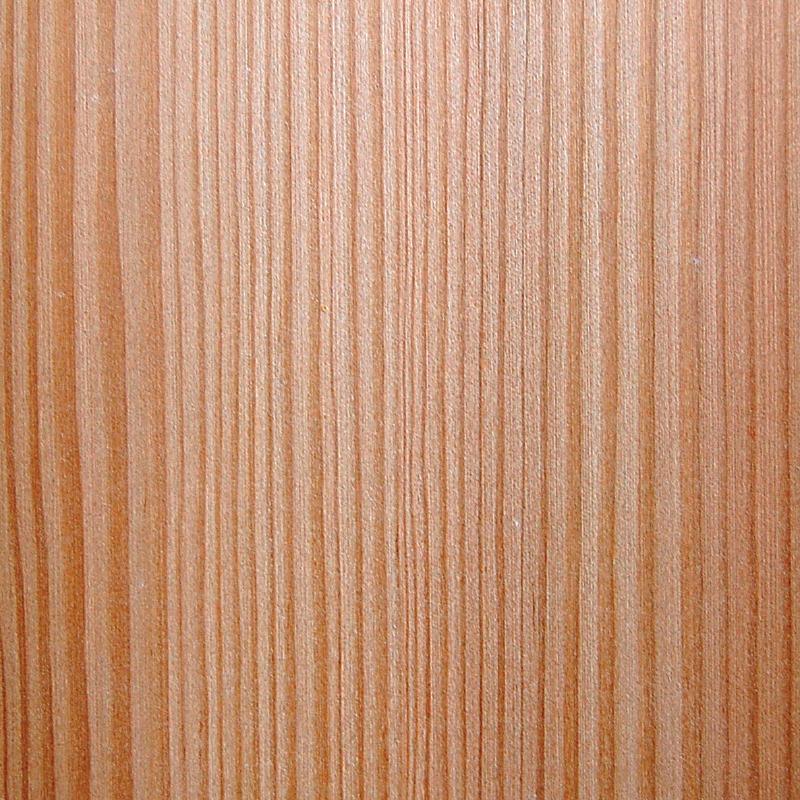
Machining and gluing operations are generally performed well, provided the moisture content is not excessively low (below 9% MC). The wood glues effectively without difficulties. The color of Douglas-fir ranges from reddish to yellowish, and it tends to darken slightly upon exposure to light. The contrast between the light earlywood and darker latewood imparts a distinct and prominent grain appearance.
#DouglasFir #WoodSpecies #WoodCharacteristics #LumberProperties #Forestry #WoodProcessing #WoodDrying #WoodMachining #WoodApplications #DouglasFir #WoodSpecies #WoodCharacteristics #LumberProperties #Forestry #WoodProcessing #WoodDrying #WoodMachining #WoodApplications
 No comments yet
5 Tall Indoor Plants That Make Such an Impact in Your Home


Trending Houseplants Shaping the Year Ahead