Zebrawood
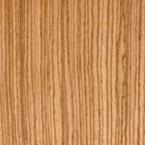
Zebrawood, also known as zebrano, is a popular exotic wood characterized by its dramatic dark and light stripes. Its use has evolved over time, transitioning from a primary material for car dashboards to a versatile material in furniture and architectural millwork. While it was once primarily an accent wood due to cost and availability, the supply of zebrawood has improved, though its price has not yet reflected this change. Historically, civil wars in West Africa contributed to the scarcity of zebrawood. Despite improved availability, its distinctive strong pattern means it is still often favored for smaller applications, border work, diamond matching, and specialty items, although some larger projects like solid conference tables and home office floors have been created. The wood is commonly used as a sliced veneer for cabinetry, casework, flush doors, marquetry, and paneling.
Zebrawood is botanically classified as Microberlinia brazzavillensis, belonging to the Family Leguminosae. Trees typically reach an average height of 150 feet with trunk diameters of 4-5 feet, yielding a seasoned weight of 46 pounds per cubic foot. The wood presents challenges in drying, with specific kiln schedules recommended to prevent buckling in veneers. Its texture is medium to coarse with a lustrous surface, and its grain is often wavy or interlocked. Despite its hardness and weight, it works well with both hand and machine tools. It is known for its stability and high stiffness, though it is susceptible to attack from common furniture beetles and is not suitable for steam bending. Zebrawood glues and finishes satisfactorily, and exhibits minimal movement during its service life.
Other applications for zebrawood include inlay, crossbandings, brush backs, tool handles, wine corks, and various "fancy goods." The wood is frequently quarter-sawn, which not only enhances its distinctive stripe pattern but also addresses its inherent instability. Working with zebrawood can be challenging due to the alternating hard and soft nature of its grain; belt sanders are often recommended for achieving a smooth finish. The heartwood displays a light golden yellow color contrasted with dark brown to black streaks, creating the characteristic zebra-like appearance. It is important to note that many other species are also referred to as "zebrawood"; however, the true, authentic variety is identified as Microberlinia brazzavillensis. A distinct, strong, and often described as "barnyard-like" odor is emitted when the wood is cut, which serves as a reliable identifier and typically dissipates once the material has dried.
Today, darker exotic woods, including zebrawood, Brazilian walnut, ipe, and wenge, are experiencing a surge in popularity, indicating a continuing trend in the market for dramatic and distinctive wood aesthetics.
#Zebrawood #ExoticWood #WoodVeneer #ArchitecturalMillwork #FurnitureDesign #WoodProperties #WoodWorking #InteriorDesign #MaterialScience #Zebrawood #ExoticWood #WoodVeneer #ArchitecturalMillwork #FurnitureDesign #WoodProperties #WoodWorking #InteriorDesign #MaterialScience
0 comment in total
 No comments yet
You may also like
Timber


For Ombré Window Treatments, Zak Profera Finds Inspiration in Madagascar Folklore

econitWood™ turns timber scraps into new material resources

R5 Zen and the Zimbards

Wood Treatments
Cypress siding: It's what the pros choose

15 Types Of Wood That Are Easy To Build With