1/3
Is A Silicone Countertop Protector Worth The Purchase Or A Hoax?
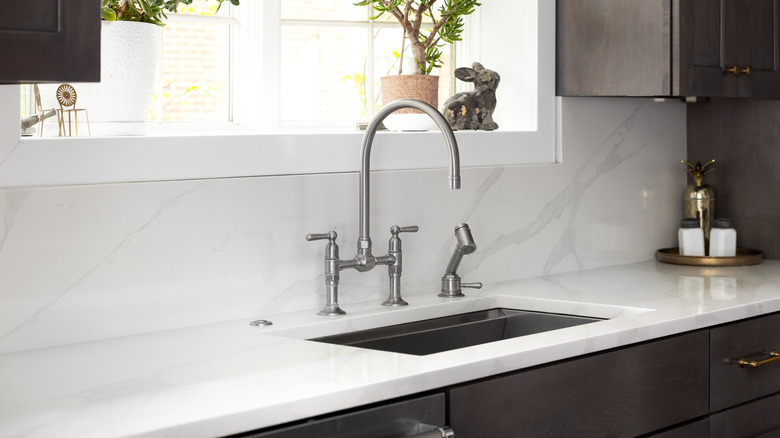
When planning a kitchen renovation, key considerations include layout, countertop material, and appliances. While common mistakes like choosing outdated finishes or exceeding budget exist, a significant oversight, according to Carmine Argano, owner of a Long Island kitchen remodeling company, is neglecting to use silicone sealant on countertops after installation. This sealant is crucial for providing a clean, finished look and protecting moisture-prone areas like wooden cabinets from damage. Argano strongly recommends silicone sealant for all kitchen countertop installations, particularly around sinks and backsplashes, emphasizing its role in safeguarding underlying materials from moisture, which poses a major long-term threat in kitchens. He notes that this step is often skipped, despite a simple bead of silicone sealant, such as the DAP 100% Silicone Rubber Sealant, being inexpensive, easy to apply, and highly effective at preventing water intrusion, thereby extending the lifespan of countertops. Argano advises investing in a high-quality product, as a $10 tube of superior sealant will consistently outperform a $3 alternative.
Silicone sealant is described as a waterproof, flexible adhesive used to seal joints, gaps, and seams around kitchen surfaces like sinks, countertops, and backsplashes. It is typically applied where two different materials meet, preventing water, grease, and food from seeping into cracks. A key advantage of silicone is its flexibility, which it retains even after curing. This allows it to accommodate slight expansions or contractions of countertop materials due to temperature or humidity changes without cracking. Additionally, silicone sealants are heat and mold resistant. While selecting a durable countertop material is important for longevity, silicone sealant further enhances this by bonding effectively to non-porous materials such as quartz, granite, stainless steel, and laminate. Argano prefers silicone over acrylic caulk or latex-based sealants due to its superior protection against water and humidity, noting that a good-quality silicone sealant can last over 10 years without replacement.
However, silicone sealant also has disadvantages. It is more challenging to clean than other types of caulk, requiring mineral spirits or a silicone remover rather than simple wiping. Furthermore, it cannot be painted over, which can be an issue if applied near painted surfaces. Despite these drawbacks, Argano asserts that for kitchens and bathrooms, the benefits of silicone sealant consistently outweigh its cons. Before applying silicone sealant, it is crucial to observe safety precautions. Standard silicone sealant is not food-safe and should not be used directly on food preparation surfaces like cutting boards or butcher block tops. However, when used as intended in seams and gaps, there is no safety risk. For those still concerned about health implications, Argano suggests looking for non-toxic sealants labeled as "NSF-certified" or "food zone safe," commonly used in commercial kitchens, such as Silco RTV 4500 Food-Grade Silicone.
For application, Argano advises using painter's tape to mask off both sides of the seam to achieve a clean, mess-free bead. The nozzle should be cut at a 45-degree angle, and consistent pressure should be applied to create a smooth bead along the joint. It is important to "tool it immediately" using a caulk finishing tool or a wet finger to smooth the bead before it forms a skin, which typically occurs within five to ten minutes. Finally, proper ventilation is essential during and after application, as silicone emits fumes while curing. The area should remain well-ventilated for at least a few hours post-application.
#SiliconeSealant #KitchenCountertops #HomeRenovation #MoistureProtection #DIYHomeImprovement #CountertopMaintenance #KitchenDesign #SealantApplication #SiliconeSealant #KitchenCountertops #HomeRenovation #MoistureProtection #DIYHomeImprovement #CountertopMaintenance #KitchenDesign #SealantApplication
 No comments yet
Is Stone Coat's Countertop Epoxy Kit Worth It? Here's What Buyers Say

Do Peel and Stick Countertops Live Up to the Hype? Here's What the Pros Say

Should You Give Your Kitchen Countertops A Faux-Concrete Finish? What To Know

Designers Say This Unexpected Countertop Material Is A Smart Long‑term Investment