




1/3
How We Lost “Javacore,” and the Communal Coffee Shop With It
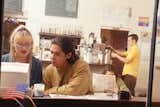
The article explores the evolution of coffee shop aesthetics, highlighting a significant shift from the warm, homey, and communal 'javacore' style of the 1990s and early 2000s to the minimalist and often less welcoming designs prevalent today. In the past, coffee shops were designed as 'third places,' fostering social interaction with features like worn-in couches, local art, and evening events. Trend forecaster Alexa Penn coined the term 'javacore' to describe this nostalgic aesthetic. This era was characterized by a focus on encouraging patrons to linger, exemplified by establishments akin to Central Perk from 'Friends.'
Over the last 15 years, a noticeable transition has occurred, resulting in coffee shops that are more sterile and minimalist. This modern aesthetic often features uncomfortable seating, small tables, and bare walls, with designs that are 'too crisp and white,' according to Penn. This minimalism typically manifests in two forms: a stereotypically feminine look with millennial pink, brass accents, and pastel colors, or a masculine aesthetic with black tables, dark wood, and metal furniture. Both styles commonly include a few plants and a peg letter board menu, with little else in terms of decorative elements.
The shift in aesthetics reflects a change in the intended purpose of coffee shops. Many contemporary cafes are no longer set up to encourage conversation or extended stays. Some employers even intentionally choose uncomfortable chairs to promote customer turnover. The prioritization of to-go orders and earlier closing times further emphasize this shift. Coffee shops have increasingly become environments for individual productivity, resembling co-working spaces rather than social hubs, with seating arranged in rows and often equipped with outlets.
Evan Collins, co-founder of the Consumer Aesthetics Research Institute, attributes earlier design shifts to pendulum swings in aesthetics, noting that the 'global village coffeehouse' (GVC) aesthetic of the '90s moved away from the sleek '80s style towards earthiness and warmth. 'Javacore' is seen as a blend of 'GVC' and 'shabby chic,' incorporating faux-worn furniture and a thrift shop aesthetic. Collins suggests that the widespread adoption and subsequent commercialization of this style by chains like Starbucks led to its loss of charm, prompting independent shops to move towards minimalism to differentiate themselves.
Economic factors, particularly following the 2008 recession, also played a role. Business owners began opting for more affordable and readily available furniture and decor from suppliers like Ikea and Amazon, simplifying designs with white walls and minimal embellishments. Kyle Chayka's term 'AirSpace,' coined in 2016, describes the 'globalized sameness' in modern design, characterized by elements like raw wood and exposed brick in cafes, designed for the 'digital nomads' who prioritize productivity and comfort across various locations.
Modern coffee shop owners face higher operational costs, necessitating quicker customer turnover. Companies like Blank Street Coffee exemplify this approach, focusing on providing a 'really good cup of coffee' that is consumed frequently rather than being a place for lingering. This economic reality has led to the decline of the communal 'third place' that coffee shops once represented. While some mourn the loss of these cozy, communal spaces, it is also acknowledged that customer priorities have shifted towards speed and efficiency, and there is a growing trend of at-home coffee consumption, exemplified by the 'cafecore' trend.
#Javacore #CoffeeShopAesthetics #MinimalistDesign #ThirdPlace #ConsumerCulture #CafeDesignEvolution #SocialSpaces #EconomicImpact #Javacore #CoffeeShopAesthetics #MinimalistDesign #ThirdPlace #ConsumerCulture #CafeDesignEvolution #SocialSpaces #EconomicImpact
 No comments yet