




1/9
Yes, We Swapped Out Our Own Beds for These 8 Designs—Here's What We Think
A sturdy and well-designed bed frame plays a crucial role in ensuring a good night's sleep, complementing the quality of mattresses and pillows by providing solid support and optimal height. In an extensive in-home testing process, eight different bed frames were evaluated over a period exceeding a year, with some models observed for up to two years. The evaluation criteria focused on durability, ease of assembly, aesthetic appeal, and functionality in real-world household settings, including use by children and pets. This rigorous testing aimed to identify bed frames that offer lasting performance and cater to various preferences and needs.
Key considerations for selecting a bed frame include precise measurements, as bed frames are significant furniture pieces that can dominate a room's aesthetic. It is recommended to mock up bed dimensions using painter's tape to visualize their impact and ensure compatibility with existing furniture like nightstands. The ideal bed height typically ranges from 12 to 18 inches from the floor to the bottom of the mattress, allowing for comfortable sitting with feet flat on the ground. Taller mattresses might necessitate lower-profile frames, while thinner mattresses could benefit from taller frames. Proportionality with other bedroom furniture is essential for both aesthetics and functionality.
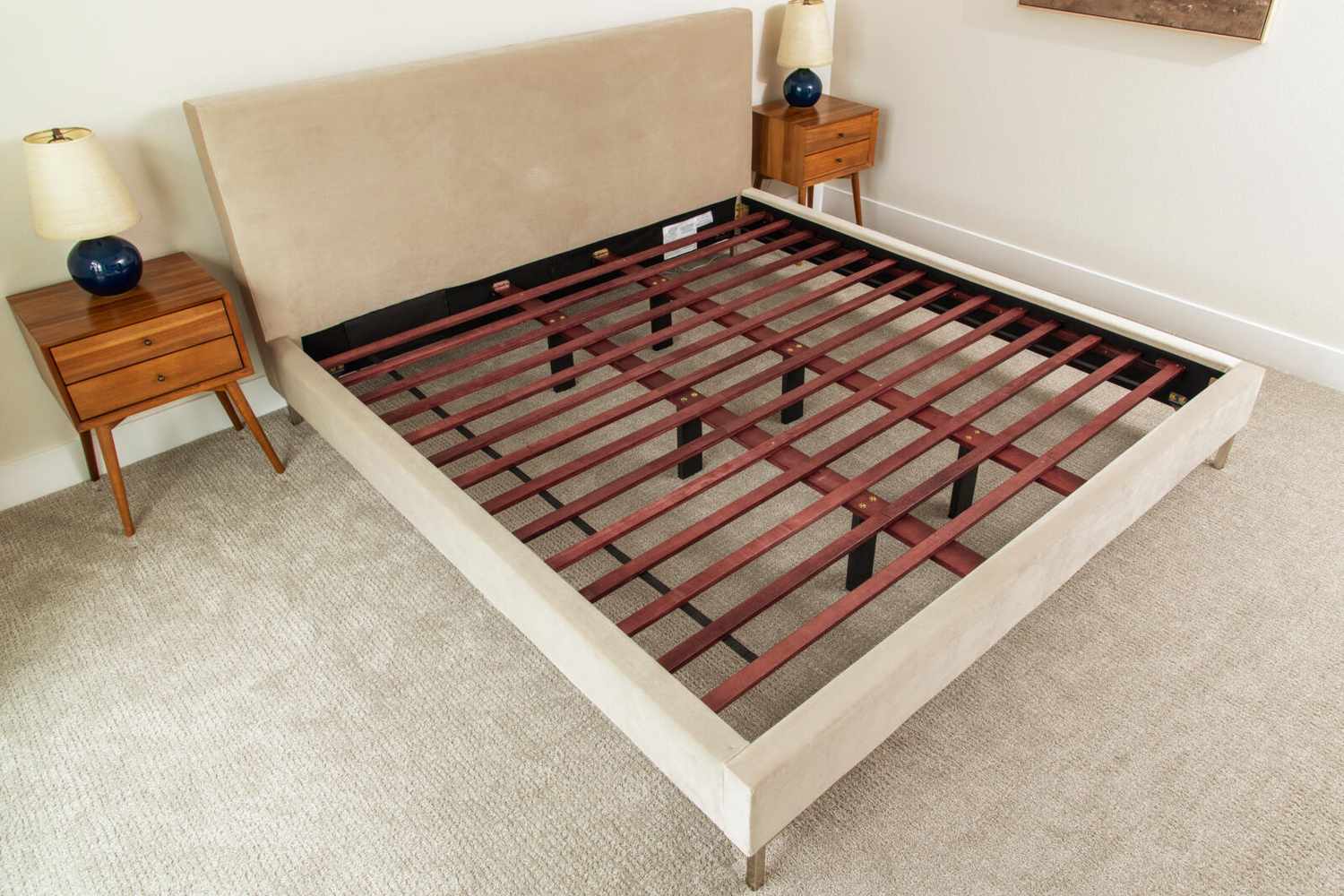
Mattress support is another critical factor. Most modern bed frames are designed with integrated support systems, such as slats, that eliminate the need for a box spring. Slats provide uniform support, prevent mattress sagging, and promote airflow. Some innovative designs feature fabric-connected slats for easy rolling and consistent spacing, simplifying relocation. However, certain traditional bed frames may still require a box spring due to wider slat spacing or the absence of a central support beam. The bed frame's weight capacity should also align with the combined weight of its users to ensure safety and longevity, with larger frames generally supporting more weight.
Beyond functionality, the design of a bed frame should complement rather than overwhelm the room's decor, favoring timeless styles that can adapt to evolving tastes. Decorative elements like throw pillows and comforters can personalize the bed's appearance without requiring a new frame. The presence and type of headboard are also important design choices, ranging from minimalist designs without headboards to statement-making, upholstered, or traditional wooden options. Headboards can offer practical benefits, such as comfortable support for reading or watching TV in bed.
Additional features, such as under-bed storage, USB charging ports, and modular designs, enhance the bed frame's value and user experience. Under-bed storage, whether integrated drawers or space for separate storage solutions, is particularly beneficial for maximizing space in smaller bedrooms. Modular bed frames offer customization and the flexibility to expand or reconfigure as needs change. The tested bed frames demonstrated varied approaches to these features, with some offering built-in charging ports for convenience and others providing extensive storage options or modularity for long-term adaptability. The testing process involved evaluating the entire setup process, material quality, stability, and overall value, confirming that all selected bed frames represented a worthy investment due to their ease of assembly, durability, and attractive designs.
#BedFrames #HomeDecor #BedroomFurniture #FurnitureReviews #InteriorDesign #SleepComfort #HomeImprovement #ProductTesting #BedFrames #HomeDecor #BedroomFurniture #FurnitureReviews #InteriorDesign #SleepComfort #HomeImprovement #ProductTesting
 No comments yet