




1/16
15 Kitchen Lighting Mistakes Everyone Makes
Effective kitchen lighting is crucial for both functionality and aesthetics, yet many homeowners and renters overlook its importance, leading to common mistakes that can diminish the overall appeal and usability of the space. While significant budgets are often allocated to kitchen renovations, lighting, a vital component, is frequently an afterthought. Proper lighting is essential for cooking tasks, creating ambiance for gatherings, and ensuring safety during off-hours, making it a critical element in the kitchen's workflow.
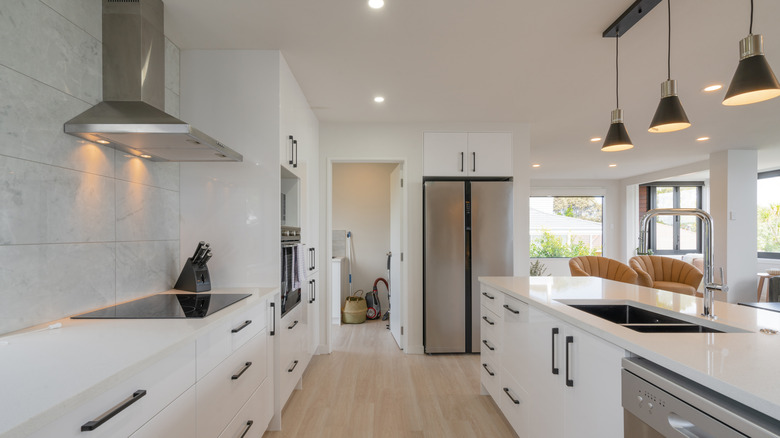
One of the most prevalent errors is relying on a single light source, typically an overhead fixture, to illuminate the entire kitchen. This approach creates uncomfortable dark spots and shadows, especially under cabinets and in corners, making tasks like knife work more hazardous and less efficient. Instead, a balanced lighting plan should incorporate a combination of ambient, task, and accent lighting, layered to ensure uniform illumination and prevent overly lit or shadowed areas. This often involves using multiple light sources at different heights, such as pendants over an island, recessed lighting for general coverage, and under-cabinet lights for specific tasks.
Direct overhead lighting, particularly when positioned behind a person working at a countertop, can also create problematic shadows, obstructing visibility. Bringing overhead light sources closer to the work surface, like with pendant lights over an island, can significantly improve task lighting and enhance the room's aesthetic. Additionally, neglecting low-level lighting is a common oversight. Incorporating lights under cabinets, or even toe-kick lighting near the floor, provides crucial illumination for tasks, reduces shadows, and offers soft guidance lighting for nighttime navigation, enhancing safety and comfort without harsh brightness.
Accent lighting, often overlooked, plays a significant role in adding depth and drama to the kitchen. LED strip lights can highlight architectural details, artwork, or textured tiles, drawing attention to unique elements and adding warmth. Statement pieces, such as chandeliers or sculptural pendants, can elevate the kitchen's design, acting as a focal point and combining functionality with aesthetic appeal. However, care must be taken to choose appropriately sized fixtures and consider their placement to avoid overwhelming or undersizing the space.
Leaving certain areas unlit, even with layered lighting, remains a frequent mistake. Corners, areas near the stove, and specific task zones often get neglected. Zoning the lighting, where different areas like prep, cooking, dining, and cleaning stations have their own lighting schemes, can ensure every nook is adequately illuminated. Maximizing natural light by avoiding obstructions like heavy curtains or large plants and strategically placing task areas near windows can also significantly enhance the kitchen's brightness and energy efficiency.
The absence of dimmer switches limits adaptability, as they allow users to adjust lighting based on time of day, task, or mood, providing complete control over the kitchen's ambiance. Similarly, choosing inappropriate fixtures, like glass-globe lights near sinks and stoves, can lead to constant cleaning and poor appearance due to water and grease splatter. Opting for powder-coated or matte finishes in these high-spatter zones is a more practical choice.
Inconsistent light temperatures, where bulbs with conflicting white and warm tones are mixed, can create a visually jarring effect. Maintaining a single temperature throughout the kitchen, typically around 2,700K to 3,000K, ensures a cohesive and comfortable glow. Furthermore, overlooking the lighting needs of interior spaces like pantries, cabinets, and drawers makes items difficult to find. Motion-activated stick-on LED lights offer an affordable and effective solution for these often-dark storage areas.
Finally, disregarding the human element and the impact of lighting on the user experience is a fundamental mistake. Lighting should enhance comfort, efficiency, and enjoyment for cooking, eating, and entertaining. Planning for future technological upgrades, such as voice or motion control, by installing conduits or capped junction boxes during renovations ensures flexibility and cost-effectiveness for future enhancements. Reflective surfaces, while useful for amplifying light, require careful consideration to prevent harsh glare. Using frosted lenses or gauzy curtains can mitigate excessive reflection from materials like granite or polished tile. The choice of paint color also profoundly affects lighting, with complementary colors in the same temperature range as the lighting fixtures creating a cohesive and intentional design.
#KitchenLighting #HomeDesign #InteriorDesign #LightingMistakes #TaskLighting #AmbientLighting #AccentLighting #SmartHome #KitchenRenovation #KitchenLighting #HomeDesign #InteriorDesign #LightingMistakes #TaskLighting #AmbientLighting #AccentLighting #SmartHome #KitchenRenovation
 No comments yet