1/16
JR exhibition in Hong Kong
The article discusses the 'Pattern' exhibition by French street artist JR in Hong Kong, highlighting his unique approach to art that prioritizes anonymity and social commentary over commercialism. JR, an internationally recognized artist, chooses to remain anonymous, using only his initials. This anonymity, he explains, was initially a practical measure to avoid being caught for graffiti, but it now allows him to work freely and ensures that the focus remains on the subjects of his art rather than himself.
JR's work often involves photographing residents in specific areas and then pasting monumental images of them on buildings within those communities. His most famous projects include 'Women are Heroes,' where he photographed mothers in a dangerous Rio de Janeiro favela who had lost their sons to gang violence. The black-and-white portraits of their eyes, pasted on favela homes, generated significant international attention, underscoring his belief that the subjects' narratives are more powerful than his own. Another notable project involved displaying parallel portraits of Israelis and Palestinians with similar professions on both sides of the Palestinian border, which sparked dialogue about perceptions of enemies.
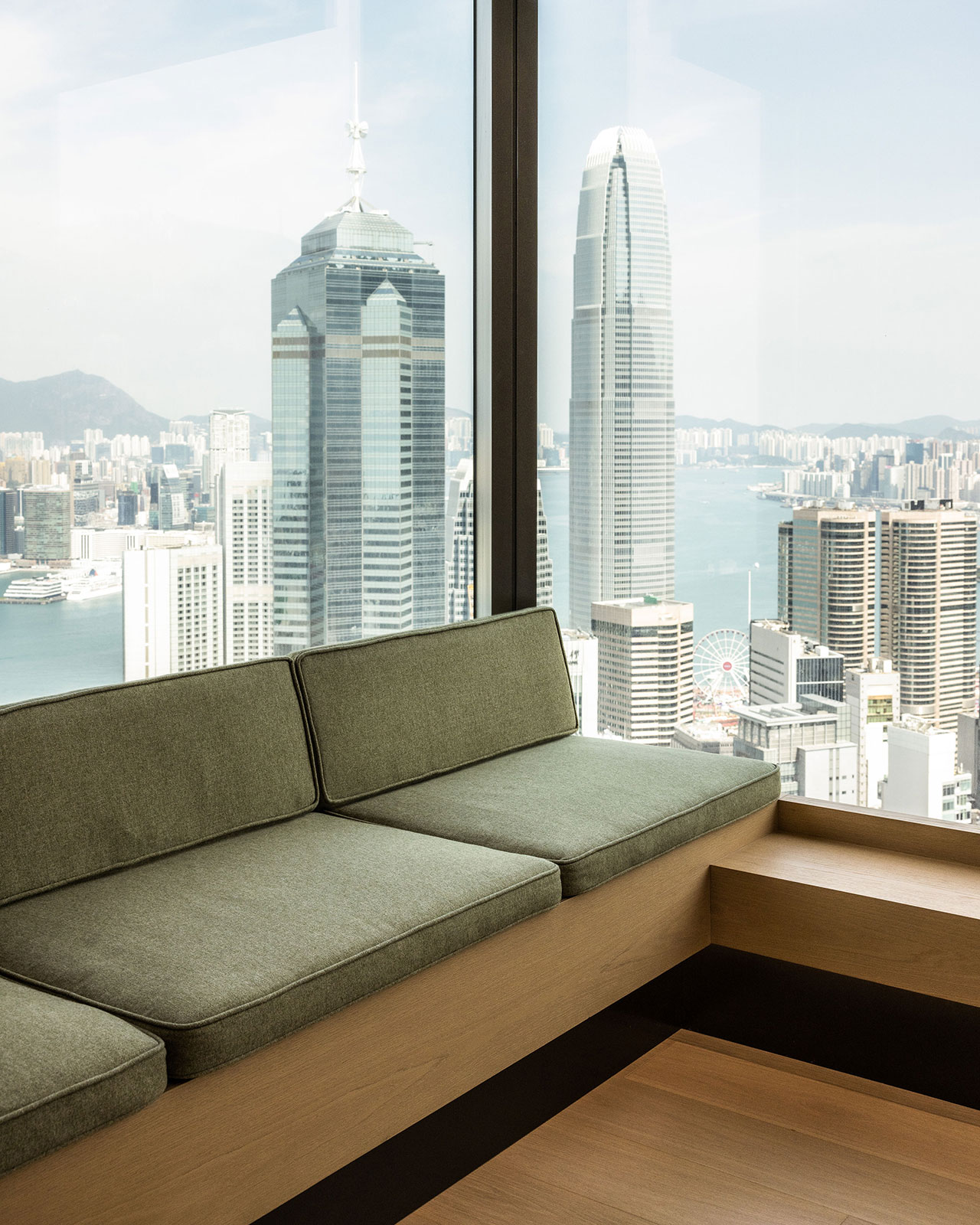
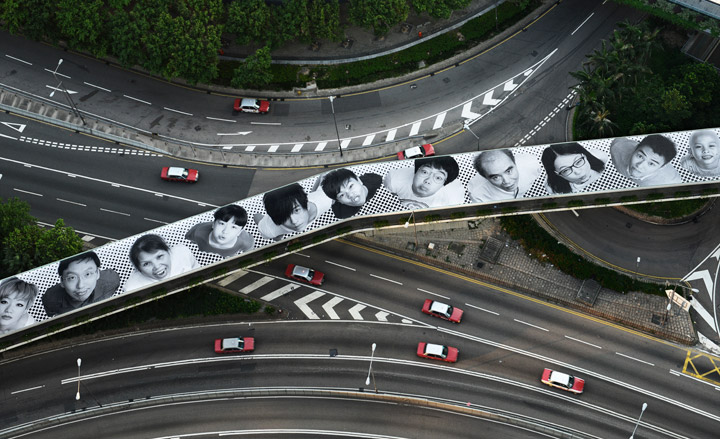
The 'Pattern' exhibition in Hong Kong is a culmination of JR's TED prize-winning project, 'Inside Out.' For this project, JR invited a diverse group of Hong Kong citizens to participate by having their portraits taken in his itinerant photo booth. Sixteen of these portraits were then pasted onto an elevated footbridge, strategically placed to be visible from the Cesar Pelli-designed IFC complex, where Galerie Perrotin, the exhibition's sponsor, is located, and the surrounding skyscrapers. The exhibition extends inside Galerie Perrotin, where JR showcases his first series of 'crinkled' cast aluminum sculptures and photographs on wood panels.
In an interview, JR explains his philosophy, emphasizing that his work is not about political statements but rather a byproduct of engaging with people and their stories. He avoids brand sponsorships, believing they dilute the message. He also highlights the importance of architecture in his art, adapting his pictures to the specific buildings and urban landscapes, whether it's small Liberian structures or the vast scale of Paris. The Hong Kong bridge installation, he notes, was chosen to foster a dialogue between the city's workers and the portrait subjects.
The Hong Kong exhibition marks a new direction for JR with the introduction of sculptures, which he sees as a way to bring his street art practice indoors. These sculptures, made from 'crinkled' cast aluminum, mimic the appearance of crumpled paper but are permanent pieces. He also presents photographs on wood panels, where the image is painted in reverse and then slowly revealed by peeling off the paper, allowing the wood's natural grain and marks to become part of the artwork. The 'Pattern' title also references the use of dots, or pixels, in his images, which helps accommodate lower-quality camera photos and integrates this technical aspect into the artistic concept. JR concludes by reiterating that his 'Inside Out' project is ultimately about the participation of thousands of other artists who use art to express themselves, making it their faces and their stories.
#JR #ArtExhibition #HongKong #StreetArt #Photography #InstallationArt #Anonymity #SocialCommentary #GaleriePerrotin #JR #ArtExhibition #HongKong #StreetArt #Photography #InstallationArt #Anonymity #SocialCommentary #GaleriePerrotin
0 comment in total
 No comments yet
You may also like
Tokujin Yoshioka show, Seoul

From ordinary to extraordinary: Takahiro Iwasaki’s push on perspective
A Japanese Design Inspired Pied-à-Terre in the Heart of Hong Kong

Harbour North brings Japan's famous wisteria gardens to Hong Kong

Toyin Ojih Odutola explores race and identity in black and white
China in Epcot -- World Showcase

Trevor Yeung’s “Courtyard of Detachments”
Restoration Hardware transforms Yorkdale in swanky kickoff party

detour 2025 takes over hong kong's PMQ uncovering meaning of everyday objects
Sip and savor traditions of Japanese tea ceremonies at Art Complex Museum in Duxbury

What are Yuko Mohri’s living installations all about?

Object & Thing’s latest exhibition takes over LongHouse in East Hampton
zim & zou's flying horse paper installation adorns Hermès tokyo window display
Dancing Squares by Nendo