1/8
Artists Bisect the US-Mexico Border Fence with Balloons
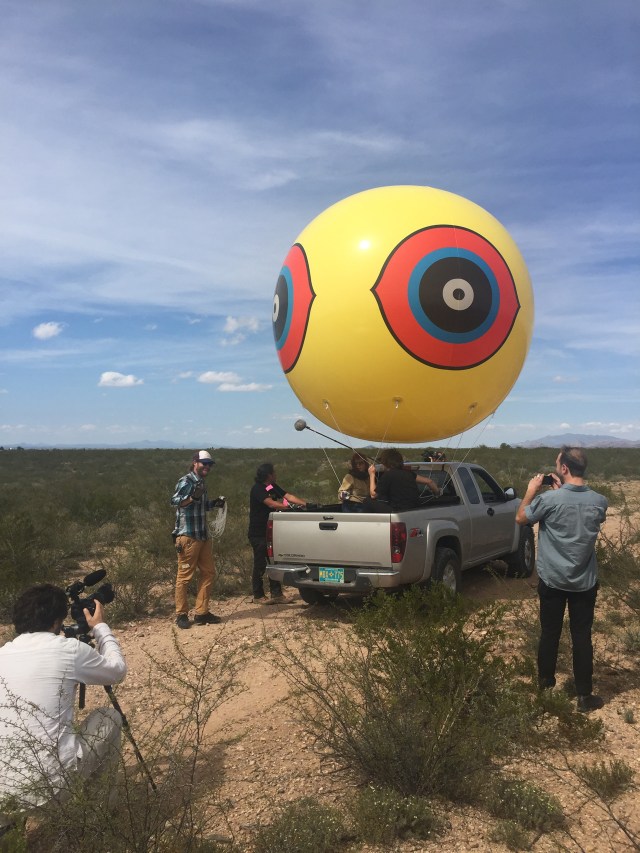
The article details "Repellent Fence," an art installation by the artist collective Postcommodity, which involved bisecting a two-mile section of the US-Mexico border fence with 26 helium-filled scare-eye balloons. The installation, which was active for four days in October 2015 near Douglas, Arizona, and Agua Prieta, Mexico, aimed to create a symbolic suture across the physical barrier. Postcommodity, comprising indigenous artists Raven Chacon, Cristóbal Martínez, and Kade Twist, utilized scare-eye balloons—typically used to deter birds—due to their eye-like iconography and traditional indigenous colors, which resonate with Native art throughout the Americas.
The project required extensive logistical planning and community engagement. Initially considering the Tohono O’odham Nation Reservation, the artists decided against it due to heavy Border Patrol presence and cartel activities, which made the location unsuitable for a public art statement. Instead, they chose Douglas/Agua Prieta, where a pre-existing binational framework, a memorandum of understanding (MOU), facilitated cross-border collaboration and community participation. This MOU, rooted in a time before the border fence, served as a symbolic foundation for the project's binational aspirations.
Douglas, Arizona, and Agua Prieta, Mexico, though distinct in character, maintain a fluid connection despite the imposing border fence. Douglas exhibits a classic old West aesthetic with neat streets, while Agua Prieta is more vibrant and chaotic, characterized by local businesses and impromptu street performances. Postcommodity partnered with local artists and community organizers, such as Jenea Sanchez and Roberto Uribe in Douglas, to host a series of lectures and a guided binational art walk. The art walk, themed "I crossed the line for art," encouraged participants to experience both sides of the border, highlighting the interconnectedness of the communities.
Despite challenges, including a 24-hour delay in the balloon installation due to high winds and occasional communication issues between teams on either side, the project fostered a spirit of resilience and community self-determination. The art walk, though having some organizational kinks, successfully brought people together from both sides of the border to appreciate local art and shared cultural experiences. The installation itself, located several miles from the art walk, served as a powerful visual statement, with the balloons representing a symbolic bridge over the physical divide. The artists intended for "Repellent Fence" to underscore a human rights crisis affecting indigenous people across the hemisphere and to draw attention to the often-overlooked indigeneity of the borderlands.
Ultimately, "Repellent Fence" aimed to challenge dominant narratives of violence and deportation by presenting an alternative perspective of life on the border, characterized by interwoven communities and shared experiences. The artwork, while seemingly benign in its use of swaying balloons, made a quietly insistent statement about the artificiality of the border and the enduring human and cultural connections that transcend it. The installation was viewed not as a definitive endpoint but as a starting point, symbolizing a potential for unity and a reminder of the historical absence of the current border structure.
#Postcommodity #USMexicoBorder #ArtInstallation #IndigenousArt #BorderArt #CommunityEngagement #BinationalProject #Postcommodity #USMexicoBorder #ArtInstallation #IndigenousArt #BorderArt #CommunityEngagement #BinationalProject
 No comments yet
5 Artists Creating Murals And Wall-Based Art Inspired By Nature


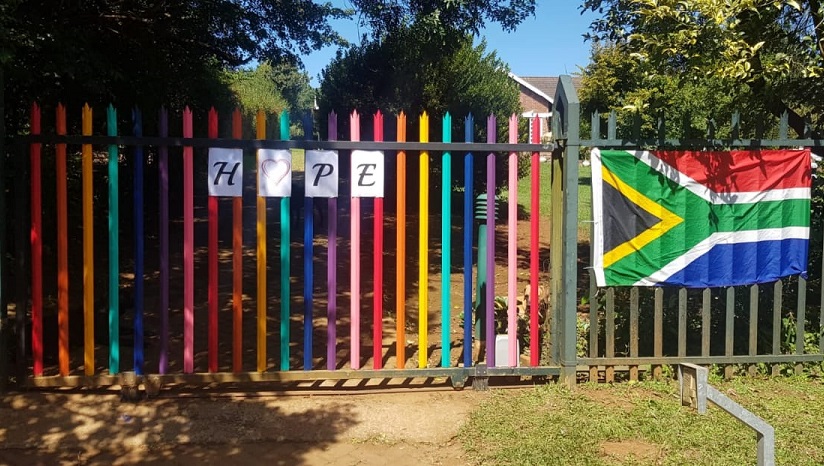
Family paint gate rainbow colours to give neighbours hope during lockdown

Outside Entertainment

Fences