



1/2
Mystery of the African Violet
This article, written as a letter to the African Violet Society of America, details the author's accidental discovery of what he believes to be the 'extinct' African violet species, *Saintpaulia pusilla*, in Tanzania's Udzungwa Mountains. The author, a self-proclaimed traveler rather than a plant enthusiast, expresses deep care for plants despite his frequent travels leading to occasional neglect of his own houseplants. He recounts encountering rare species on previous journeys, such as an all-black penguin near Antarctica and a 12th-century celadon bowl in Kyushu, emphasizing his dedication to exploring rare places.
The author explains that the African violet, *Saintpaulia*, is considered one of the world's rarest flowers, with its origin tracing back to Baron Walter von Saint Paul-Illaire's discovery in Tanganyika in 1892. The Baron sent seeds to his father, Ulrich, who successfully cultivated the 'vielchen' or 'violets' from Africa, leading to the genus *Saintpaulia*. Botanical experts currently recognize six major species of *Saintpaulia*, with *Saintpaulia pusilla* being classified as entirely extinct in the wild. The author questions the authority and methodology behind such definitive claims of extinction.
His journey to Tanzania's Udzungwa National Park was initially without a specific aim beyond exploration. The park, established in 1992, is a highly protected area known for its diverse habitats, ranging from lowland rainforest to highland cloud forest, and boasts over 2,500 plant species and 400 bird species, including numerous endemic species found nowhere else. The author describes the challenging hike with his guide, Mr. H, who possesses extensive knowledge of the local flora and fauna, including their English, Latin, and Swahili names, as well as local folklore and history.
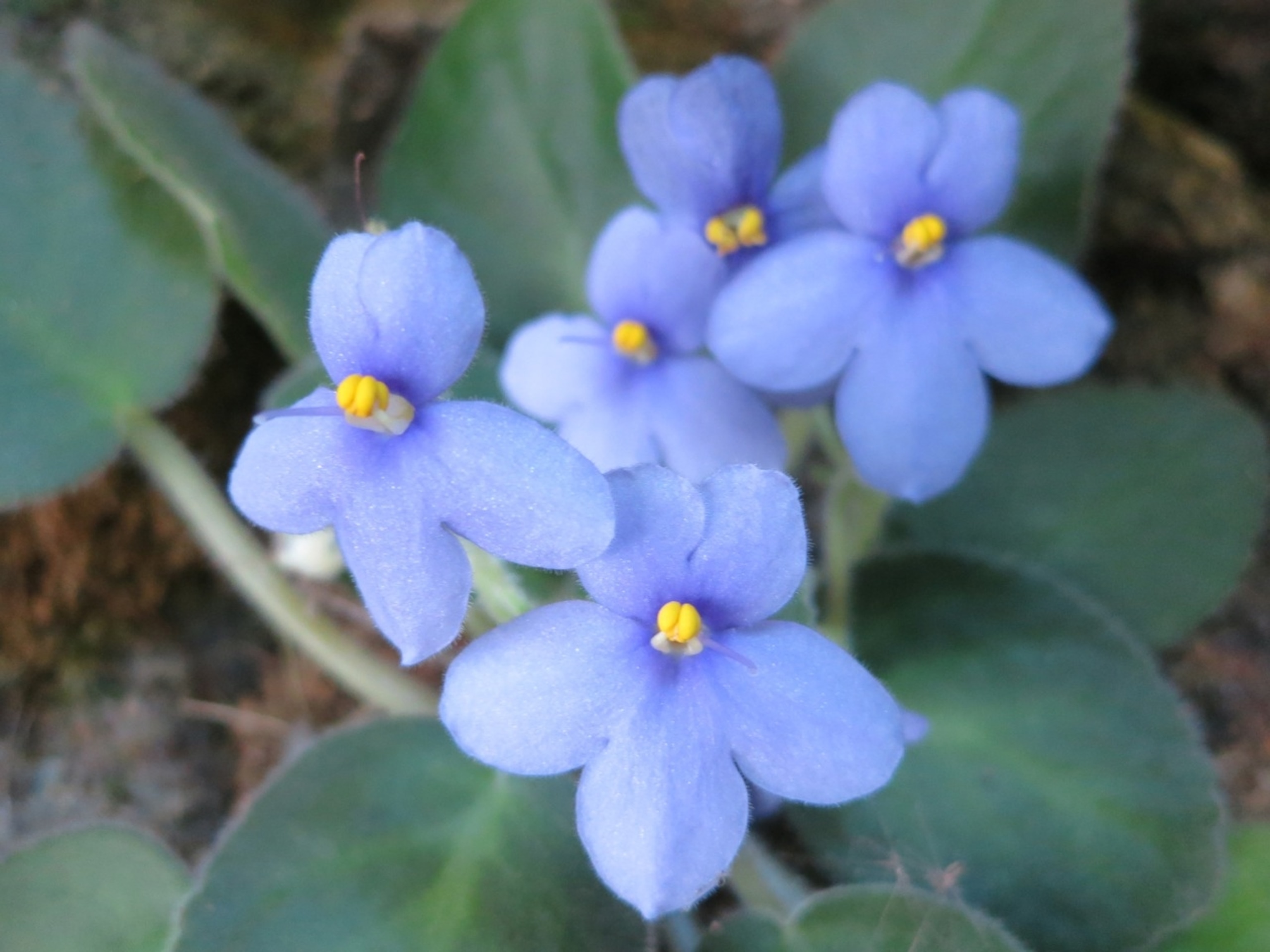
During their arduous trek up a mountain to an altitude of approximately 1,500 meters, Mr. H led the author to a high pool fed by a small waterfall. There, against a wet granite rock face, a clump of African violets was discovered. The author immediately recognized them and, after consulting with Mr. H, identified them as *Saintpaulia pusilla*. Mr. H expressed concern about revealing the precise location of the flowers, fearing that collectors might take them away, acknowledging the historical destruction of rare flora and fauna by enthusiasts. The author assures Mr. H that he will not disclose the exact location, referring to the area only as Tanzania's Udzungwa National Park.
The author acknowledges his lack of scientific qualification to confirm the species' identification but relies on his guide's expertise. He notes that online research consistently describes the flower as highly localized with specific climatic requirements met only by cloud-forest conditions and humidity in these mountains. The experience left the author with a newfound desire to cultivate African violets in his home, a stark contrast to his previous neglectful plant-owning habits, and a profound appreciation for their natural habitat. He seeks further information from the African Violet Society of America to understand his discovery better and expresses interest in a personal meeting given their shared Texan roots.
#AfricanViolets #UdzungwaNationalPark #SaintpauliaPusilla #EndangeredSpecies #TanzaniaTravel #BotanicalDiscovery #RareFlowers #CloudForest #Biodiversity #AfricanViolets #UdzungwaNationalPark #SaintpauliaPusilla #EndangeredSpecies #TanzaniaTravel #BotanicalDiscovery #RareFlowers #CloudForest #Biodiversity
 No comments yet
Why Do My African Violets Change Colors? Grumpy Explains