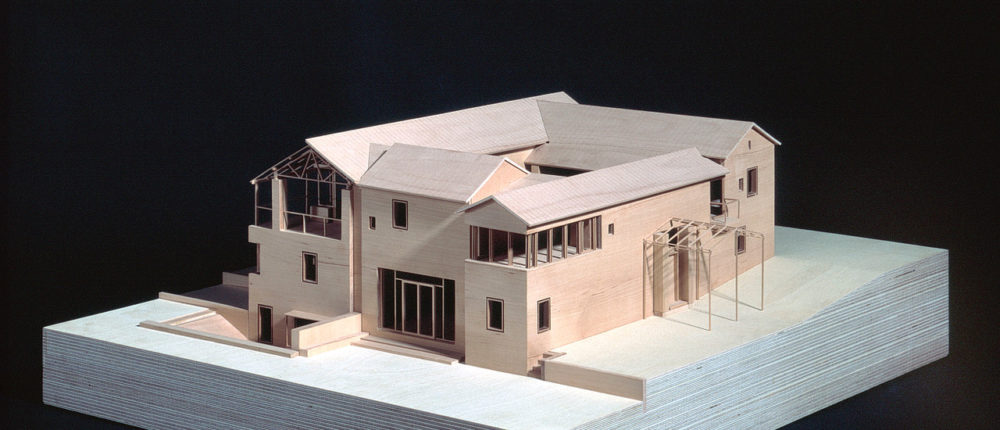
Whatever Happened to “The Architects’ Architect”?
The concept of an “architects’ architect” is explored, drawing parallels to “musicians’ musicians”—artists highly appreciated within their respective fields for their craft rather than mass appeal. The article outlines a series of exclusionary criteria for what an architects' architect is not: they are not too commercial, too famous, or too branded. This means commercial architectural firms like SOM, HOK, OMA, ZHA, and BIG are ineligible due to their focus on pleasing a wide audience and commercial success. Similarly, architects who are household names or Pritzker Prize winners, such as Peter Zumthor, are excluded because architects' architects are typically known and appreciated by other architects, but not necessarily by the general public. A signature style, while often a mark of recognition, also disqualifies an architect, as it implies a consistent application of a particular aesthetic rather than problem-specific solutions. This criterion eliminates architects like Richard Meier, Shigeru Ban, Santiago Calatrava, Frank Gehry, and Alejandro Aravena.
Further criteria for exclusion include architects who proselytize through teaching, writing, lecturing, or engaging extensively with social media. Architects who play media games or make their versatility a brand, like Herzog & de Meuron or Jean Nouvel, are also deemed ineligible, as their approach, while appearing to prioritize client needs, also serves to showcase their own creativity and adaptability. The article suggests that these exclusions leave a very small pool of architects who fit the traditional definition.
The defining characteristics of an architects' architect are then identified. They are individuals who tread their own path, embodying the mythical lone creative. Their work is artistically driven, often characterized by a "search for something" that, while undefined, is admired by peers. These architects also exhibit an exceptional attention to detail, ensuring consistency in thought and thoroughness in execution, where every element seems intentionally designed. Finally, they possess a distinct way with materials, selecting and using them in a manner that is fit for purpose and photographs well, often in their natural state.
While this idealized image of an architects’ architect is appealing, the article also highlights its negative aspects. Their buildings tend to be conventional, appealing to established tastes rather than challenging norms, in contrast to figures like Oswald Ungers, whose work was intellectually and physically unconventional. Such work can also be seen as irrelevant to broader societal needs, focusing on converting property and wealth into elegant forms rather than addressing issues of affordability or social impact, as exemplified by Studio Mumbai compared to Lacaton & Vassal. The concept is also deemed elitist, as the appreciation of such architects often signifies belonging to an exclusive professional club, which can be detrimental to a profession that aims to understand public needs.
The article concludes by suggesting that the concept of an "architects’ architect" is likely dead. In contemporary architecture, the pressure to be commercial, famous, and branded is overwhelming, making it nearly impossible for an architect to avoid these traits. The modern architectural landscape is instead dominated by "self-aware media heroes" who are explicitly commercial, famous, and branded—the antithesis of the traditional architects' architect. The author laments that while the faults of the old ideal (conventional, irrelevant, elitist) are now viewed as positives, the focus has shifted from true innovation, appropriateness, and inclusivity to novelty, appeal, and populism, often prioritizing media engagement over the intrinsic quality of the buildings themselves. The article proposes three architects who, in the author's opinion, fit the description: Kazuo Shinohara, Jørn Utzon (excluding the Sydney Opera House), and Heinz Bienefeld, all of whom are deceased.
#Architecture #ArchitectsArchitect #ArchitecturalCriticism #DesignPhilosophy #ArchitecturalProfession #CommercialArchitecture #SignatureStyle #ArchitecturalHistory #CreativeProcess #Architecture #ArchitectsArchitect #ArchitecturalCriticism #DesignPhilosophy #ArchitecturalProfession #CommercialArchitecture #SignatureStyle #ArchitecturalHistory #CreativeProcess
0 comment in total
 No comments yet
You may also like
An Architect’s Life in a Diehard Profession


School of Architecture

Architect's Notebook: A Progression of the Imagination


Building Knowledge, Not Just Structures: Redefining the Architect’s Role in Times of Uncertainty

These 20 Architectural Styles Were Once Popular But Suddenly Disappeared


Confessions of a (Mostly) Analog Architect
Richard Neutra’s Architectural Vanishing Act

Championing Chief Architects

The Second Studio Podcast: Executive Architect and Design Architect Roles Explained
The Architect as Writer: Expanding the Discipline Beyond Buildings

Meet the Architect: Q&A with Thomas E. Austin
Designing Beyond Buildings: An Architect’s Strategic Shift


School of Architecture

Architecture articles: building design, architects