1/10
Hanami on the Hill: Cherry Blossom Season on U.S. Capitol Grounds
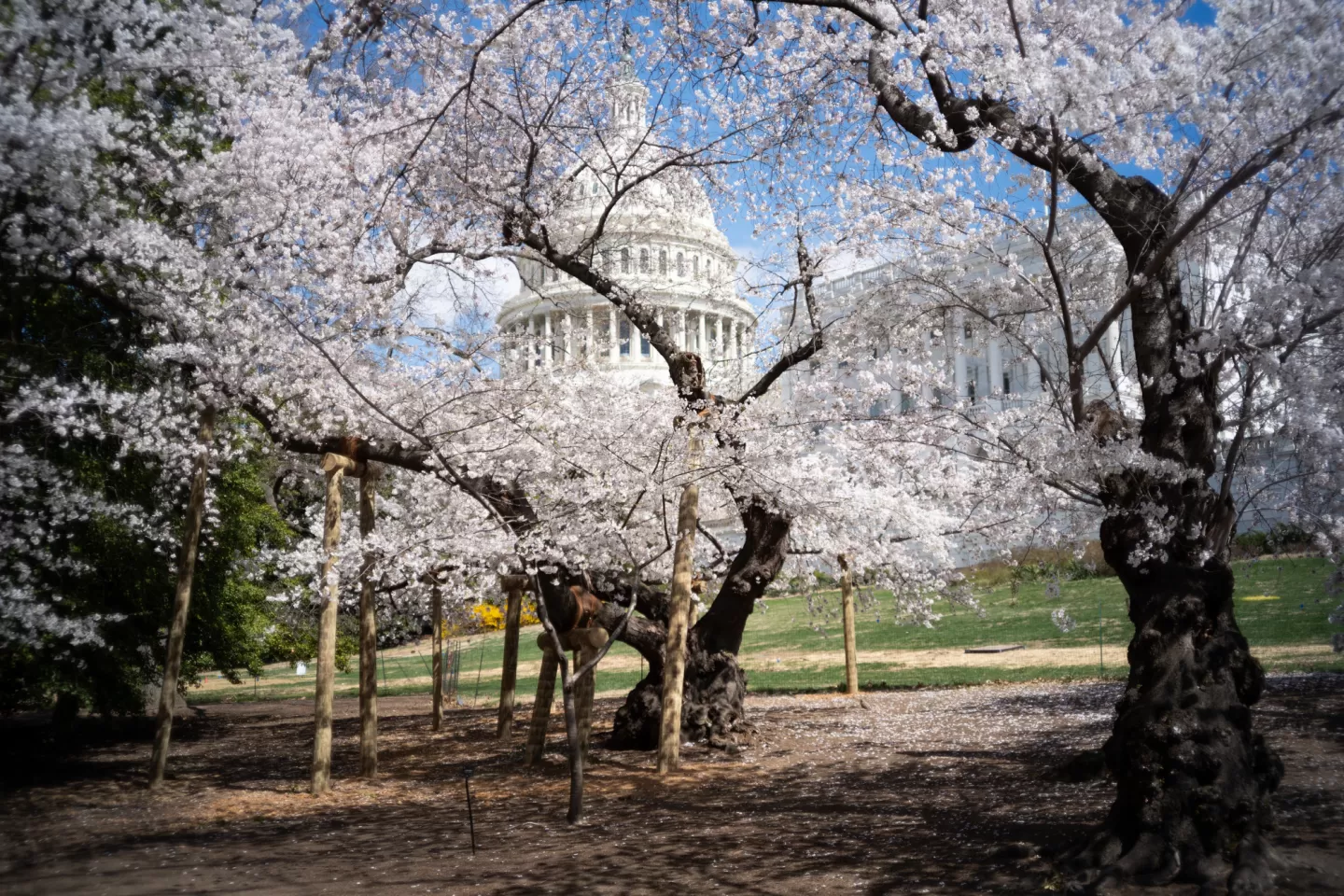
The article discusses the cherry blossom season on the U.S. Capitol Grounds, highlighting the significance of these trees as symbols of renewal and spring. It notes that a few of the oldest trees recently received specialized preservation care. Each March, over a million people visit Washington, D.C., to experience the cherry blossoms, with significant collections found at the U.S. Capitol and Library of Congress, in addition to the more widely known Tidal Basin. Some of these trees are as old as those at the Tidal Basin and are integral to the Capitol Grounds' aesthetic.
The Architect of the Capitol (AOC) employs a team of arborists from the Capitol Grounds and Arboretum jurisdiction to maintain these historical assets throughout the year. The article explains that while the 3,020 cherry trees at the Tidal Basin and East Potomac Park were a 1912 gift of friendship from Japan, a lesser-known fact is that some of the original trees were transplanted to the U.S. Capitol and Library of Congress grounds in 1922. Capitol Square now features several groves of Yoshino cherries, including one tree from the 1912 gift, and about half a dozen other varieties. The Senate Parks host an even greater diversity of cherry trees, such as Yoshino, Kanzan, Higan, and Okame cultivars.
The article describes the characteristics of various cherry blossom types: Yoshino cherries, which bloom early with pale, translucent petals; Kanzan cherries, known for their large, cotton candy-colored blossoms that appear later; Higan cherries, identifiable by their weeping form; and Okame cherries, which are among the earliest to bloom, transitioning from fuchsia to hot pink. These varieties collectively contribute to the spring landscape of the city.
Attention is drawn to the preservation efforts for older trees. A significant event last July involved an almost 70-year-old Yoshino cherry tree that collapsed due to drought and the weight of its foliage. This incident underscored the need for robust support systems, as a 113-year-old neighboring tree in the same grove has survived partly due to steel props installed over a decade ago. The article contrasts American and Japanese approaches to tree care. In Japan, ancient cherry trees, sometimes considered sacred, receive extensive preventative care and physical support, with structural supports openly integrated rather than concealed. This philosophy prioritizes the tree's longevity, leading to cherry trees surviving over a thousand years in Japan.
Adopting this Japanese arboricultural philosophy, the AOC engaged Master Gardener Kurato Fujimoto from Kenroku-en, Japan, to instruct Capitol Grounds arborists on the use of "hoozue." These wooden braces are designed to gently support heavy branches and prolong the life of the trees. The process involves evaluating trees, determining the appropriate size and placement of hoozue, and installing them by loosening soil with compressed air, positioning the wooden poles, and securing them with palm fiber rope and padding to prevent bark damage and rot. These timber props replace older steel props that could potentially harm the trees and aim to redirect the tree's resources towards photosynthesis rather than structural reinforcement.
In preparation for the 2025 cherry blossom season, AOC arborists installed 19 hoozue on trees near the U.S. Capitol and the Library of Congress Thomas Jefferson Building. The preservation of these cherry trees is presented as a crucial aspect of safeguarding historic living assets, honoring the trees' Japanese origins, and recognizing their symbolic importance as emblems of friendship, resilience, and cultural exchange for future generations.
#CherryBlossoms #USCapitol #Arboriculture #JapaneseHorticulture #TreePreservation #WashingtonDC #CulturalExchange #AOC #CherryBlossoms #USCapitol #Arboriculture #JapaneseHorticulture #TreePreservation #WashingtonDC #CulturalExchange #AOC
 No comments yet
Lush Canopies of Hundreds of Purple Flowers Erupt from Japan’s Wisteria