



1/2
Handyman: Tank versus tankless hot water heater
The article discusses the ongoing debate between traditional tank hot water heaters and tankless hot water heaters, highlighting how a narrowing price gap has made tankless options more accessible. It explains that government regulations, specifically the National Appliance Energy Conservation Act (NAECA) of April 2015, have increased the cost and size of standard tank water heaters by mandating improved energy efficiency features such as additional insulation, new flue baffling technologies, and electronic ignition. These changes have made tank water heaters wider, potentially causing installation issues in homes with standard 24-inch wide doors, thus making tankless units a more appealing alternative.
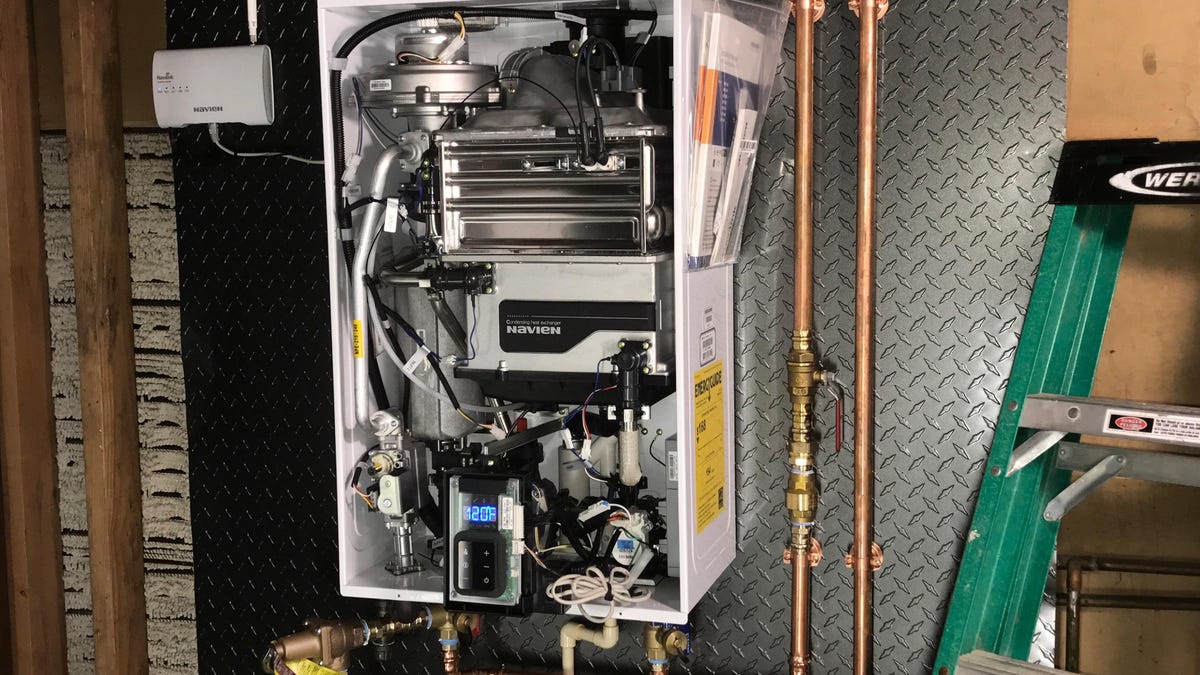
According to Dan McClary, Vice President of Balfrey & Johnston Inc., a representative for Navien tankless water heaters, a high-end 50-gallon power vent tank water heater can cost between $1,500 and $2,000 installed. In comparison, a Navien tankless unit typically ranges from $2,500 to $4,000, depending on the model and specific installation requirements. This closer pricing has shifted tankless water heaters from a niche product to a more affordable luxury item for many homeowners.
The operational principle of whole-home gas tankless water heaters is similar to tank heaters but without a storage tank. When a hot water tap is opened, a flow sensor activates a gas burner, which heats a heat exchanger. Cold water passes through this exchanger, gets heated to a preset temperature, and is delivered on demand. This system ensures an endless supply of hot water and is more energy-efficient because it only heats water when needed, unlike tank units that maintain a full tank of hot water constantly. Despite the energy efficiency, the monthly gas bill savings are modest, typically around $10 to $12 for average hot water usage.
One disadvantage of tankless systems is a potential reduction in hot water flow rate when multiple hot water sources are used simultaneously. A tank heater, while providing a consistent flow until its supply is exhausted (e.g., eight minutes for two concurrent showers), will eventually run out. A tankless unit, conversely, provides continuous hot water, but the flow rate might decrease under high demand. Warranties also differ significantly; most tank water heaters come with a three-year warranty, while tankless systems like Navien often offer 10 or 15-year warranties. This extended warranty period means that, despite a higher initial cost, a tankless unit might be more cost-effective in the long run as homeowners would likely replace a tank heater multiple times before a tankless unit's warranty expires.
The article advises consumers to research thoroughly before purchasing a water heater. For households with low hot water demand, a standard 40 or 50-gallon tank heater may be sufficient. However, for larger families with high and continuous hot water needs, such as those with teenagers taking long showers and frequent use of washing machines and dishwashers, a tankless water heater may be a practical necessity rather than just a luxury. Other prominent manufacturers of tankless systems mentioned include Rinnai and Takagi, while leading tank-based water heater manufacturers include A.O. Smith, Bradford White, Rheem, State, and Whirlpool. Home improvement advice is also available through "The Handyman Show With Glenn Haege" on WJR-AM (760).
#WaterHeater #TanklessWaterHeater #HomeImprovement #EnergyEfficiency #ApplianceComparison #GlennHaege #HomeMaintenance #NAECA #WaterHeater #TanklessWaterHeater #HomeImprovement #EnergyEfficiency #ApplianceComparison #GlennHaege #HomeMaintenance #NAECA
 لا توجد تعليقات بعد