


Best Mid-Century Modern Furniture & Decor Ideas to Transform Your Space
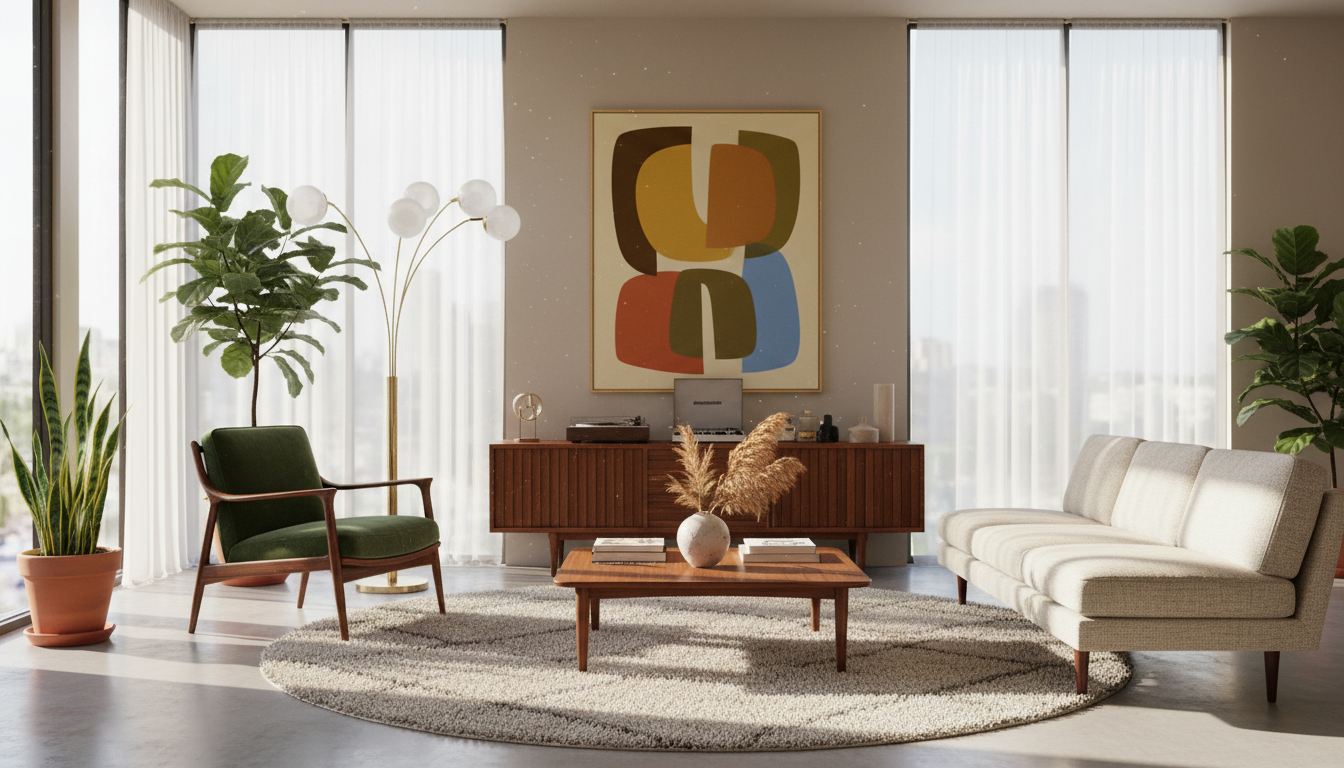
Mid-century modern design has captivated homeowners for decades with its clean lines, organic curves, and timeless simplicity. It’s a style that feels both nostalgic and refreshingly contemporary, effortlessly bridging the past and present. But how do you bring this iconic look into your own space without making it feel like a time capsule? And how can you be sure that a vintage-inspired piece will truly fit your home's aesthetic before you commit?
This is where a tool like Ideal House's Interior Remodel becomes invaluable. Before you start hunting for that perfect teak credenza or Eames-style chair, you can use AI to visualize the entire look. Simply upload a photo of your room, select "Mid-Century Modern" from the diverse style library, or even describe specific elements like "add a walnut sideboard and a green velvet sofa." This allows you to experiment with furniture placement, color palettes, and decor, ensuring every piece you choose contributes to a cohesive, beautifully designed space.

What is Mid-Century Modern Decor?
The Mid-Century Modern (MCM) movement emerged in America roughly between the 1940s and 1970s. Born from the optimism of the post-World War II era, it was a rebellion against the ornate, heavy styles of the past. Influenced by the German Bauhaus school and Scandinavian functionalism, designers sought to create pieces that were simple, functional, and accessible to the growing middle class through mass production.
This design philosophy emphasized that form should follow function, leading to uncluttered spaces and furniture that was as practical as it was beautiful. The result is a style defined by honesty in materials, purposeful design, and an elegant, understated aesthetic.
Key Characteristics of Mid-Century Modern Design
To truly master the MCM look, it’s helpful to understand its core tenets. These characteristics are the building blocks for creating an authentic and sophisticated mid-century space.
- Clean Lines and Simplified Forms: MCM furniture is known for its sleek, uncluttered silhouettes. You’ll see straight lines, gentle curves, and geometric shapes without any fussy ornamentation. The focus is on the piece's structure and form.
- A Mix of Natural and Manmade Materials: One of the style's hallmarks is the juxtaposition of materials. Rich, warm woods like teak, walnut, and oak are often paired with industrial materials such as metal, glass, vinyl, molded plastic, and fiberglass.
- Organic Shapes: Inspired by nature, MCM design frequently incorporates organic, free-flowing curves. Think of the kidney bean shape of a coffee table or the sculptural form of an Arne Jacobsen Egg Chair.
- Functionality is Paramount: Every piece has a purpose. From modular storage walls to multi-functional furniture, MCM design prioritizes practicality. Spaces are designed to be lived in, not just admired.
- Integration with Nature: This style seeks to blur the lines between indoors and outdoors. Large windows, sliding glass doors, and the prominent use of indoor plants (like monsteras and snake plants) are common features.
- A Distinctive Color Palette: The MCM color palette is rooted in earthy, natural tones complemented by pops of saturated color. Neutrals like white, black, and brown create a backdrop for accents of mustard yellow, olive green, burnt orange, and rich teal.
- Furniture with Legs: Many MCM pieces, from sofas to sideboards, are elevated on slender, tapered legs. This creates a sense of lightness and makes rooms appear more spacious and airy.
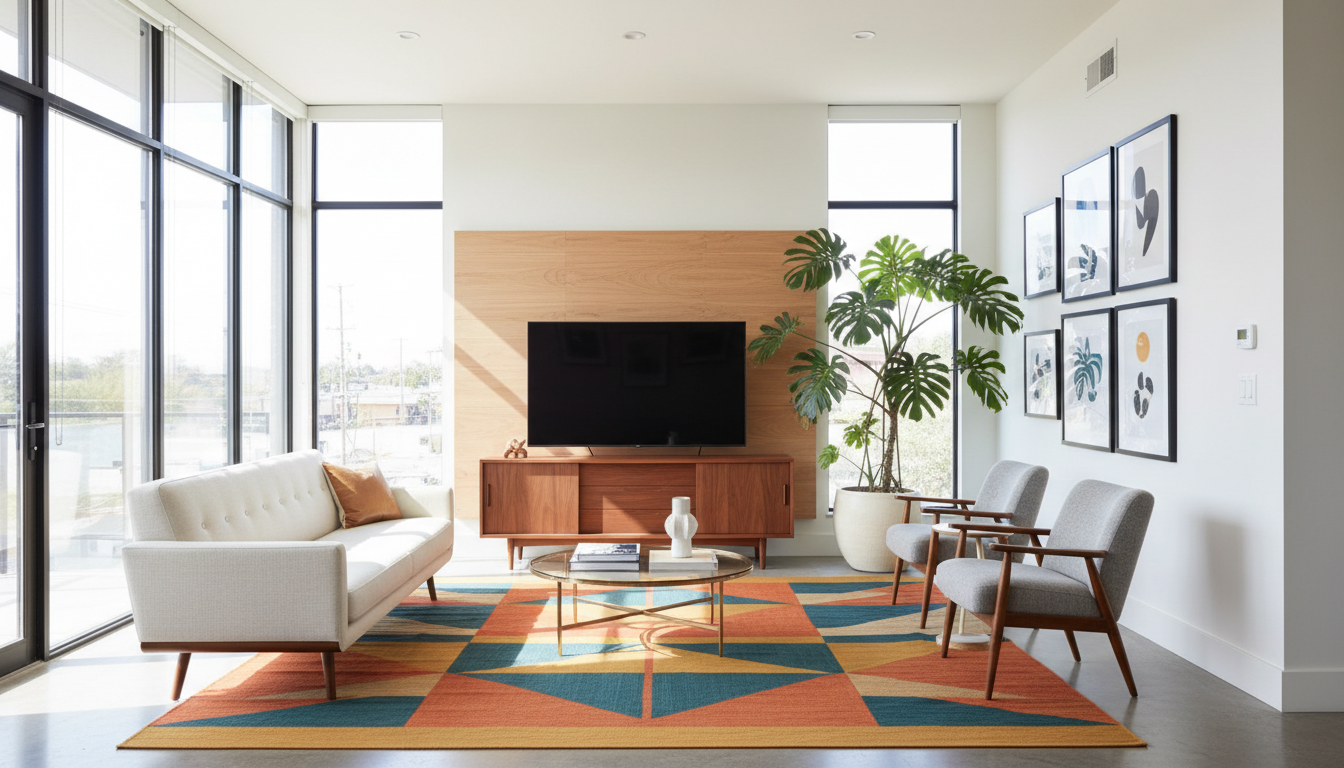
How to Bring Mid-Century Modern Style into Your Home
Decorating with mid-century modern pieces is about creating a balanced, inviting space. You don't need to live in an original 1950s home to embrace this style. Here are some practical tips for incorporating MCM decor into any room.
Build Around Statement Pieces
Start by choosing one or two significant pieces to anchor your room. This could be an iconic piece of furniture like a teak credenza, a low-profile sofa with tapered legs, or a sculptural lounge chair. Use these focal points to inform the rest of your design choices, from the color palette to accent decor.
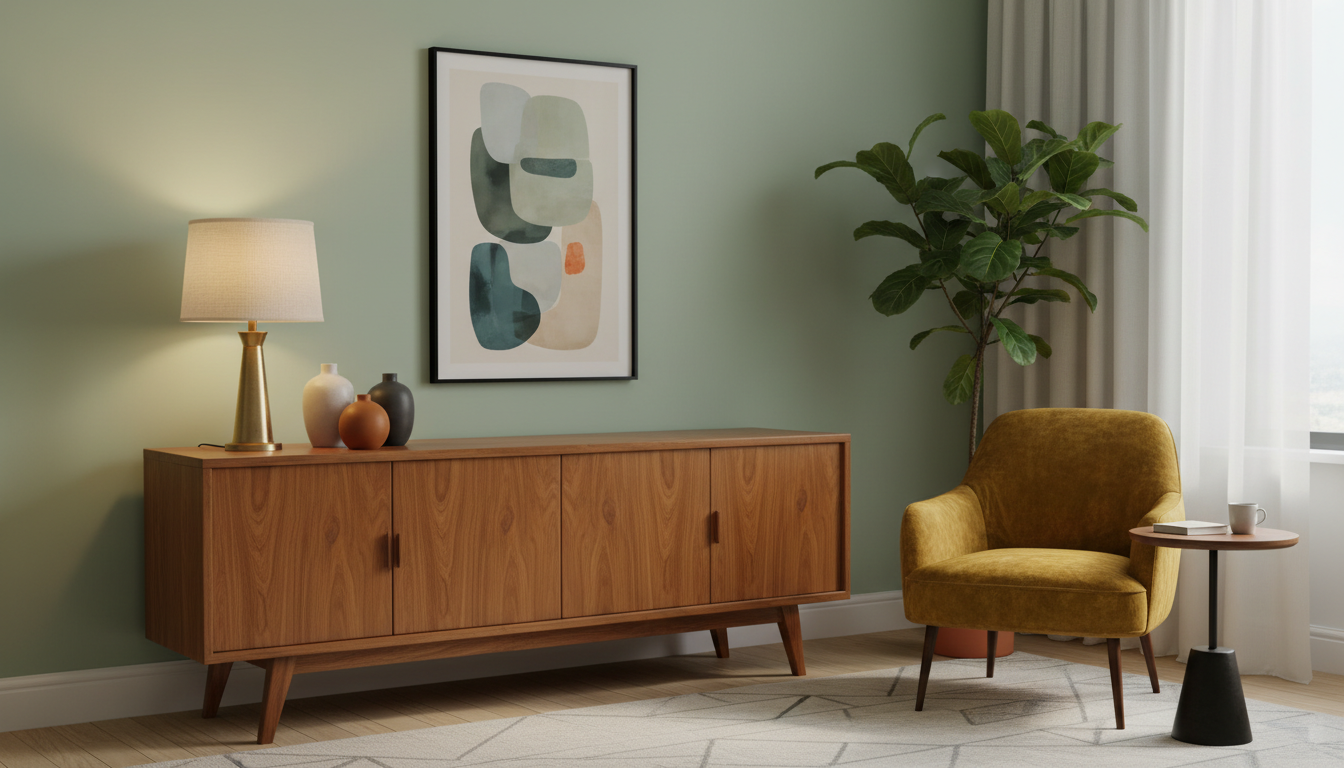
If you're unsure how a statement piece will look, the Smart AI Furniture Replacer by Ideal House can help. Upload a picture of your space, and the tool can intelligently detect your existing furniture and let you swap it with new, style-appropriate options. For example, you can prompt it to "replace sofa with a mid-century modern leather couch" to see an instant preview.
Master the Color Palette
Color is essential for capturing the MCM vibe. Stick to a primarily neutral and earthy base with white or cream walls and warm wood tones. Then, introduce bold accent colors strategically. A mustard yellow accent chair, a teal area rug, or a collection of vibrant ceramic vases can add personality without overwhelming the space.
Illuminate with Iconic Lighting
Lighting in an MCM home is both functional and sculptural. Look for statement fixtures that double as art.
- Sputnik Chandeliers: With their starburst shape, these fixtures are a quintessential element of the Atomic Age sub-style.
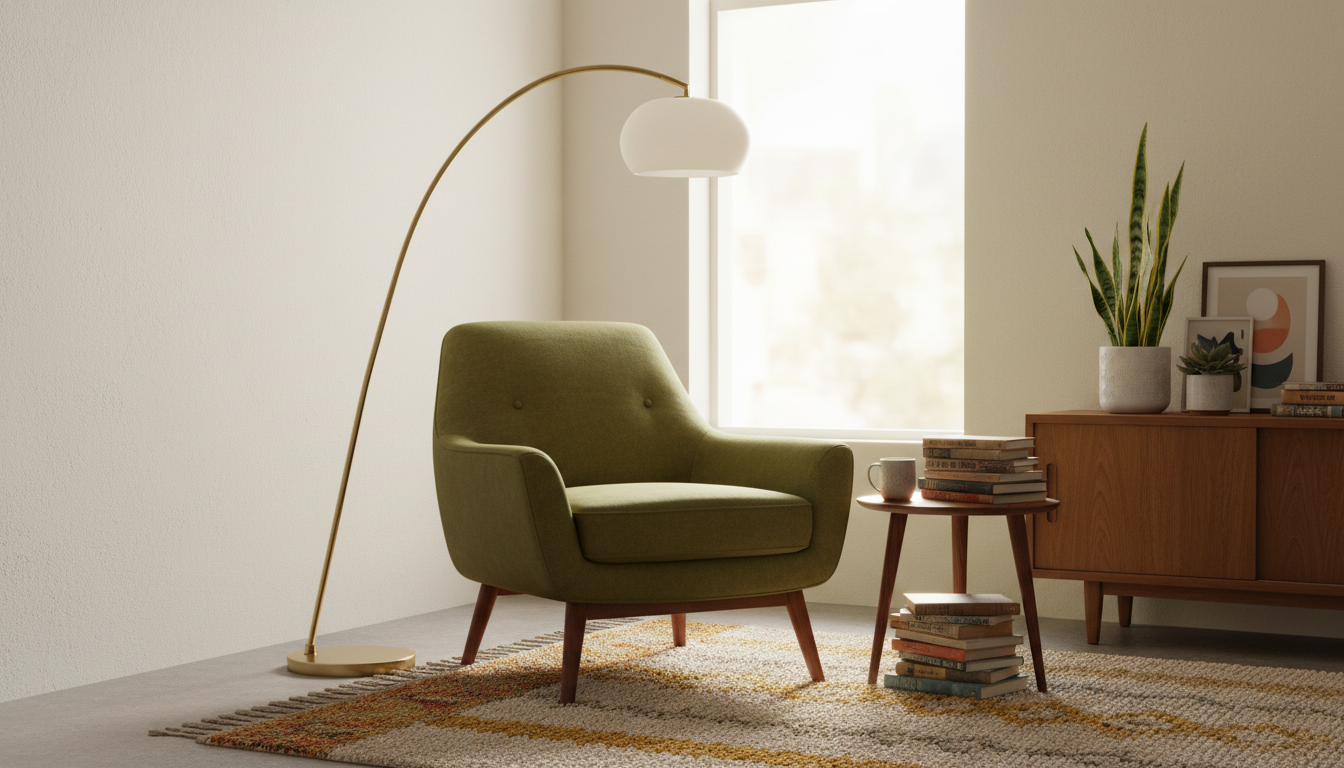
- Arc Floor Lamps: A large, sweeping arc lamp can provide targeted light over a sofa or reading nook while adding dramatic flair.
- Globe Pendants: Simple and elegant, glass globe pendants work well in clusters over a dining table or kitchen island.
- Nelson Bubble Lamps: Designed by George Nelson, these lamps, available from brands like Herman Miller, are iconic for their soft, diffused light and sculptural shapes.
Mix Vintage and Contemporary
To avoid creating a space that feels like a museum exhibit, blend authentic vintage pieces with contemporary furniture and decor. A classic Eames lounge chair can look fantastic next to a modern sofa. The simplicity and clean lines of MCM furniture make it incredibly versatile, allowing it to pair well with other styles like Bohemian, Industrial, or Scandinavian.
Iconic Mid-Century Modern Designers and Furniture
Familiarizing yourself with the pioneers of the movement can provide endless inspiration. These designers created pieces that are still celebrated and produced today.
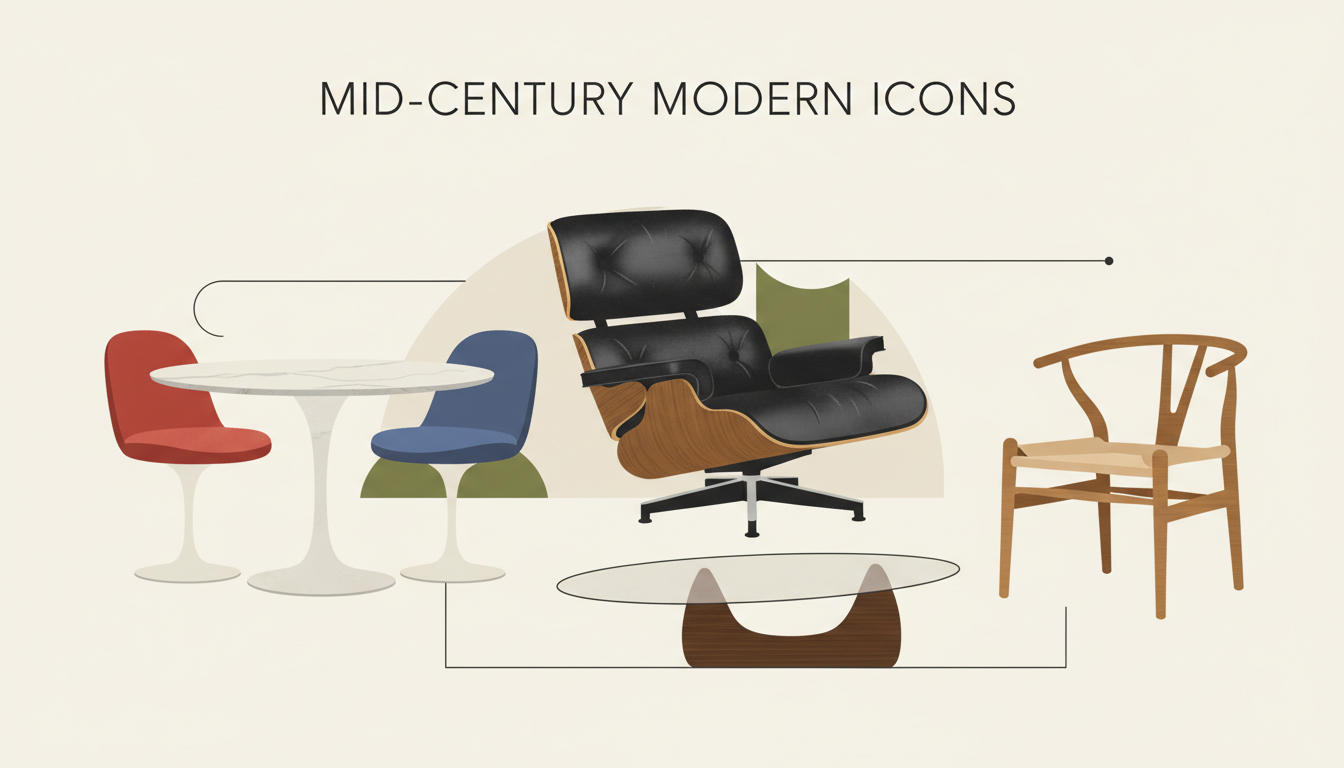
- Charles and Ray Eames: This husband-and-wife duo pioneered molded plywood and fiberglass. Their most famous works include the Eames Lounge Chair and Ottoman, the Eames Molded Plastic Chair, and the Hang-It-All.
- George Nelson: As the Director of Design for Herman Miller, Nelson was a foundational figure. He designed the Nelson Ball Clock, the Marshmallow Sofa, and the Coconut Chair.
- Eero Saarinen: Known for his sculptural and futuristic forms, Saarinen designed the Tulip Table and Tulip Chair to eliminate the "slum of legs" and the enveloping Womb Chair.
- Hans Wegner: A master of Danish Modern design, Wegner created over 500 chairs, including the iconic Wishbone Chair.
- Arne Jacobsen: Another Danish master, Jacobsen is famous for the sculptural Egg Chair and Swan Chair, originally designed for the SAS Royal Hotel in Copenhagen.
- Isamu Noguchi: A sculptor and designer, Noguchi created the iconic Noguchi Coffee Table, which is celebrated as a perfect fusion of art and furniture.
Finding and Identifying Quality Mid-Century Pieces
Whether you're shopping at a vintage store, flea market, or an online marketplace like Vinterior, knowing what to look for is key.
- Check for Markings: High-end pieces often have a manufacturer's label or stamp on the underside or inside a drawer. Look for names like Knoll, Herman Miller, Drexel, Lane Furniture, or Broyhill.
- Examine Construction: Quality MCM furniture features solid construction. Look for dovetail joints in drawers rather than staples or glue. The wood should be high-quality, often teak, walnut, or rosewood, though veneers over solid wood cores are also common and a sign of quality.
- Avoid Poorly Designed Pieces: Not all furniture from the era is created equal. Be wary of low-end trends like step-up side tables or excessive use of faux-wood laminate. Authentic MCM design prioritizes quality materials and thoughtful construction.
By focusing on these core principles, you can create a mid-century modern home that feels authentic, sophisticated, and perfectly suited to contemporary life.