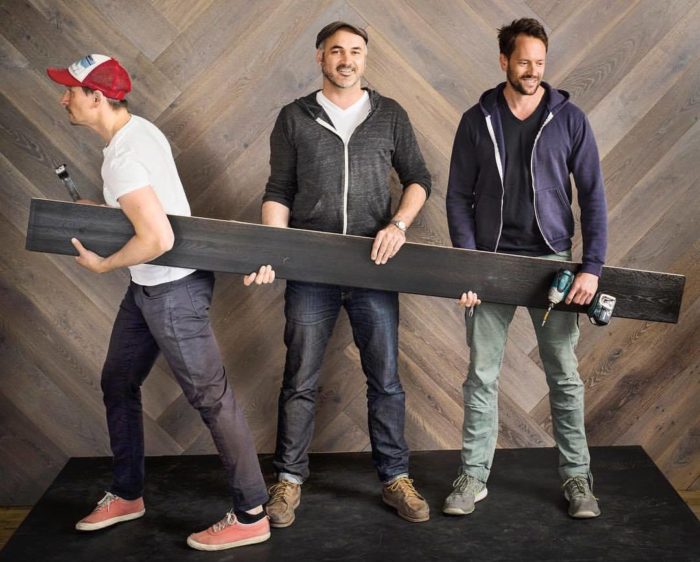
1/4
Where in the World Did This Wood Come from?
The Brooklyn-based company Madera specializes in hardwood flooring and wall coverings, distinguishing itself through a commitment to sustainable sourcing, thoughtful design, and health-conscious finishes. Founded in 2012 by James Robb and Swedish-American brothers Daniel and Mikael Clason Höök, Madera has become a prominent supplier for residential and commercial projects, from TriBeCa lofts to the Brooklyn Bowl in Las Vegas. The company particularly caters to Brooklyn homeowners undertaking renovations, offering them a balance of quality and affordability. Madera's collections, including the “Brooklyn” series with styles like “Grand Army” and “Fulton Ferry,” are showcased at their Waverly Ave. office and showroom, featuring various timber species, cuts, and colors in different furniture arrangements.
Initially inspired by a trip to Ecuador where they observed a sustainable bamboo-building materials cooperative, the founders aimed to create sustainable and affordable flooring solutions. Although they later shifted focus from bamboo, Madera now primarily utilizes durable and steadily supplied white oak, black walnut, and ash from sustainably managed plantations across New York, Pennsylvania, and Georgia. This strategic sourcing aligns with industry trends, particularly the demand for the "Brooklyn rustic-chic look," which often incorporates reclaimed wood and deep stains.
Madera actively sources reclaimed wood from structures slated for demolition across the U.S., including wine tanks from Finger Lakes wineries, tobacco barns, warehouses in the Carolinas, a Kentucky bourbon distillery, and even the old Domino Sugar refinery in Williamsburg. The company also procures 19th-century longleaf heart pine, a once-decimated resource, from industrial buildings in cities along the Mississippi and Ohio rivers, and from old industrial structures in New York City. The processing of this reclaimed wood, which involves tasks like nail removal and sanding, is often outsourced to Amish communities, known for their craftsmanship, reliability, and cost-effectiveness. While reclaimed wood is typically more expensive due to labor intensity, its greater density contributes to superior strength compared to newer timber.
Recognizing the finite supply of reclaimed wood, Madera continuously explores new, lesser-known timber species. Robb anticipates a resurgence in softwoods like hickory and red oak. He notes that modern finishing processes can now extract the red hues from red oak, offering a contemporary aesthetic distinct from its 1970s popularity. Additionally, Madera addresses the current preference for bright, 'white,' marble-esque finishes through a desaturation process applied to ash, maple, and walnut. This not only meets design demands but also contributes to energy efficiency by maximizing natural light within interiors. The company’s growing reputation is evidenced by significant projects, such as supplying floors for the Park Avenue Armory’s $200 million renovation and their floors being a selling point for new condominium developments like 280 St. Marks in Prospect Heights. Madera's “Bone White” collection was featured at NYCxDESIGN, a major design celebration, further cementing its position in the design industry.
#HardwoodFlooring #SustainableSourcing #ReclaimedWood #HomeDesign #BrooklynDesign #InteriorFinishes #WoodManufacturing #EcoFriendlyMaterials #HardwoodFlooring #SustainableSourcing #ReclaimedWood #HomeDesign #BrooklynDesign #InteriorFinishes #WoodManufacturing #EcoFriendlyMaterials
 ยังไม่มีความคิดเห็น
Timber

Here's the Truth About Wood Veneers