




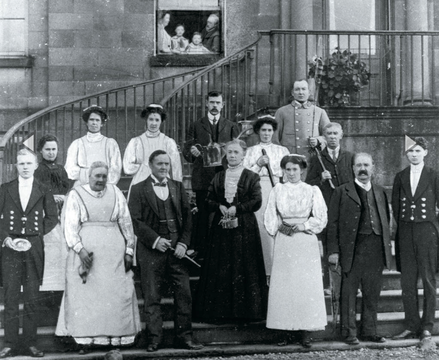
The real Downtown Abbey - servants’ lives below stairs
The article delves into the lives of servants in Britain's grand country mansions, contrasting the imagined luxurious lives of the owners with the demanding realities faced by the domestic staff. While visitors often romanticize the opulent lifestyles associated with stately homes, the vast majority of residents were servants whose daily existence was characterized by arduous labor and strict regimentation. Accounts from the early 20th century, such as that of the sixth Marquess of Bath, highlight the sheer number of servants employed in these estates; for instance, Longleat had 43 indoor servants for a single child, and the Earl of Lichfield employed 107 at Shugborough Hall in 1827. These large staffs were essential for maintaining the extensive properties, preparing meals, caring for children, and ensuring the comfort of the aristocratic families.
The organizational structure of the servant hierarchy was rigid, with the butler or house steward overseeing male staff like footmen and valets, and the housekeeper supervising female staff, including various grades of maids and cooks. Upper servants such as governesses and housekeepers occasionally came from impoverished gentlefolk backgrounds, often finding themselves in an uncomfortable social position, caught between their employers and the working-class servants. Even within the working-class servant ranks, a strict pecking order existed, with junior servants subject to the authority of those higher up.
Servants' lives were governed by stringent rules designed to keep them out of sight. Examples include Lord Crewe's decree that no housemaids be seen in Crewe Hall except in Chapel, and the Duke of Bedford's rule prohibiting female servants from being seen after midday at Woburn Abbey. This meant early starts, often before 5:30 a.m., to complete tasks like cleaning and lighting fires before the family awoke. Servants were relegated to back stairs, side entrances, and hidden accommodations such as attics or remote brick bothies for gardeners, which were often uncomfortable due to extreme temperatures.
Meal times for servants were also regimented, with dinner typically around 2 p.m. in the servants' hall, where seniority dictated serving order. Despite this brief respite, servants had minimal free time and were rarely allowed to leave the house, constantly on call via a system of bells. Working days effectively had no end, with perhaps one day off a month. Maids often made their own uniforms, while male servants, particularly in earlier centuries, might receive elaborate liveries. A significant disparity in pay existed between male and female servants, even for comparable roles, with butlers earning significantly more than housekeepers and valets more than ladies' maids. However, servants did benefit from provided accommodation and food, which could be quite generous in aristocratic households, allowing even lower-paid staff to save some money.
The hierarchical system, while demanding, also offered a clear career path, allowing junior servants to progress to more senior and better-paid positions. This aspect contributed to many servants staying in the same household for their entire working lives, as exemplified by Erddig Hall, where the Yorke family honored their servants with portraits and poems. Modern visitors to preserved stately homes like Erddig, Tatton Hall, and Shugborough Hall can experience the stark contrast between the opulent living spaces of the owners and the functional, often austere, servants' quarters, gaining insight into the immense labor required to run these estates. The article concludes by noting that World War I and subsequent societal changes led to a decline in domestic service as more opportunities arose, rendering the highly structured servant's life of the past largely obsolete.
#ServantLife #StatelyHomes #VictorianEra #EdwardianEra #BritishHistory #SocialHierarchy #DomesticService #HistoricEstates #ServantLife #StatelyHomes #VictorianEra #EdwardianEra #BritishHistory #SocialHierarchy #DomesticService #HistoricEstates
 ยังไม่มีความคิดเห็น