




1/2
Let's Go! An Electric Explainer, and where we go from here!
The Inflation Reduction Act introduces a comprehensive set of programs and incentives aimed at accelerating the transition to an electrified future and mitigating climate change impacts. A key component, the High Efficiency Electric Home Rebate Act (HEEHRA), allocates $4.5 billion in direct rebates for low- and moderate-income households to install efficient electric appliances. This includes up to $8,000 for heat pump installations for space heating, $1,750 for heat pump water heaters, and $840 each for electric stoves and clothes dryers. Additionally, households can receive up to $4,000 for upgraded breaker boxes, $2,500 for electrical wiring upgrades, and $1,600 for insulation and ventilation improvements. Moderate-income households qualify for 50 percent of these rebates, intending to enable approximately one million households to transition to electric systems. An additional $4.5 billion is provided for efficiency and electrification rebates under the Home Energy Performance-Based, Whole-House Rebates.
The Act also features various tax deductions for electric upgrades. The Energy Efficient Home Improvement credit (25C) allows households to deduct up to 30 percent of upgrade costs, including heat pumps, insulation, and breaker box upgrades, with a limit of $600 per measure and $1,200 annually per household. A notable exception permits a 30 percent deduction, up to $2,000, for heat pump water heaters or heat pumps for space heating and cooling. The New Energy Efficient Home credit (45L) offers up to $5,000 to developers constructing homes that meet the Department of Energy’s Zero Energy Ready Homes standard, applicable to new and retrofitted single-family, multifamily, and manufactured homes. The Commercial Buildings Energy Efficient credit (179D) provides $2.50 to $5.00 per square foot for businesses achieving significant energy reductions. Furthermore, $30 billion is allocated as a production tax credit for domestic manufacturing of solar panels, wind turbines, batteries, and critical mineral processing, with another $10 billion as an investment tax credit for building new manufacturing facilities.
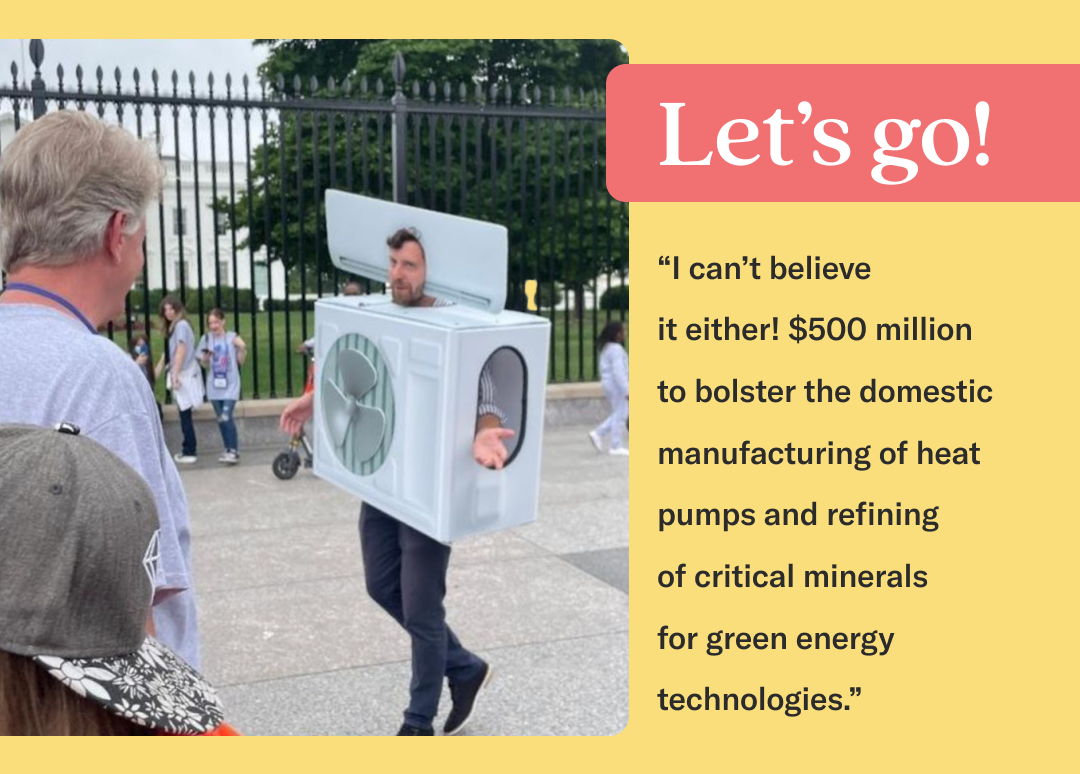
Beyond residential and commercial building efficiency, the Act addresses broader electrification and climate goals. The Enhanced Use of the Defense Production Act allocates $500 million to bolster domestic manufacturing of heat pumps and critical mineral processing. The Greenhouse Gas Reduction Fund provides $27 billion, with $15 billion specifically for low-income and disadvantaged communities to access zero-emission technologies and reduce greenhouse gas pollution. A Methane Fee will impose charges of up to $1,500 per ton on emitters of this potent greenhouse gas by 2026. The Clean Vehicle credit (30D) offers a $7,500 credit for new electric vehicles and a $4,000 credit for used electric vehicles, aiming to make EVs more accessible and affordable, with operational costs equivalent to $1 per gallon of gasoline.
Residential solar and battery storage systems are supported through the Residential Clean Energy credit (25D), allowing households to deduct 30 percent of project costs from their taxes, guaranteed for 10 years and now including battery storage. The Environmental and Climate Justice Block Grants program, funded at $3 billion, supports disadvantaged communities in reducing greenhouse gas emissions, mitigating extreme heat risks, improving climate resilience, and reducing indoor air pollution. An investment of $1 billion is directed towards affordable housing through the Improving Energy Efficiency and Water Efficiency or Climate Resilience in Affordable Housing program, providing grants and loans for retrofits to advance building electrification and efficiency. Tribal communities benefit from the Tribal Electrification Program, with $145 million to transition to clean, zero-emission electric energy systems. The Zero Building Energy Code Adoption provision invests $1 billion to promote zero-emission buildings, aiming to minimize energy bills and improve health and safety. Finally, the Funding for Department of Energy Loan Programs Office (LPO) provides $3.6 billion to guarantee up to $40 billion in loans, fostering the deployment and adoption of innovative clean energy technologies. These measures collectively aim to reduce reliance on fossil fuels, combat inflation, and create a sustainable, electrified future.
#InflationReductionAct #EnergyEfficiency #HomeElectrification #CleanEnergy #TaxCredits #HeatPumps #ElectricVehicles #SolarEnergy #ClimateChangeMitigation #InflationReductionAct #EnergyEfficiency #HomeElectrification #CleanEnergy #TaxCredits #HeatPumps #ElectricVehicles #SolarEnergy #ClimateChangeMitigation
 Ainda não há comentários