


Design Your Child's Dream Bedroom: A Guide to Themes, Storage & Small Spaces
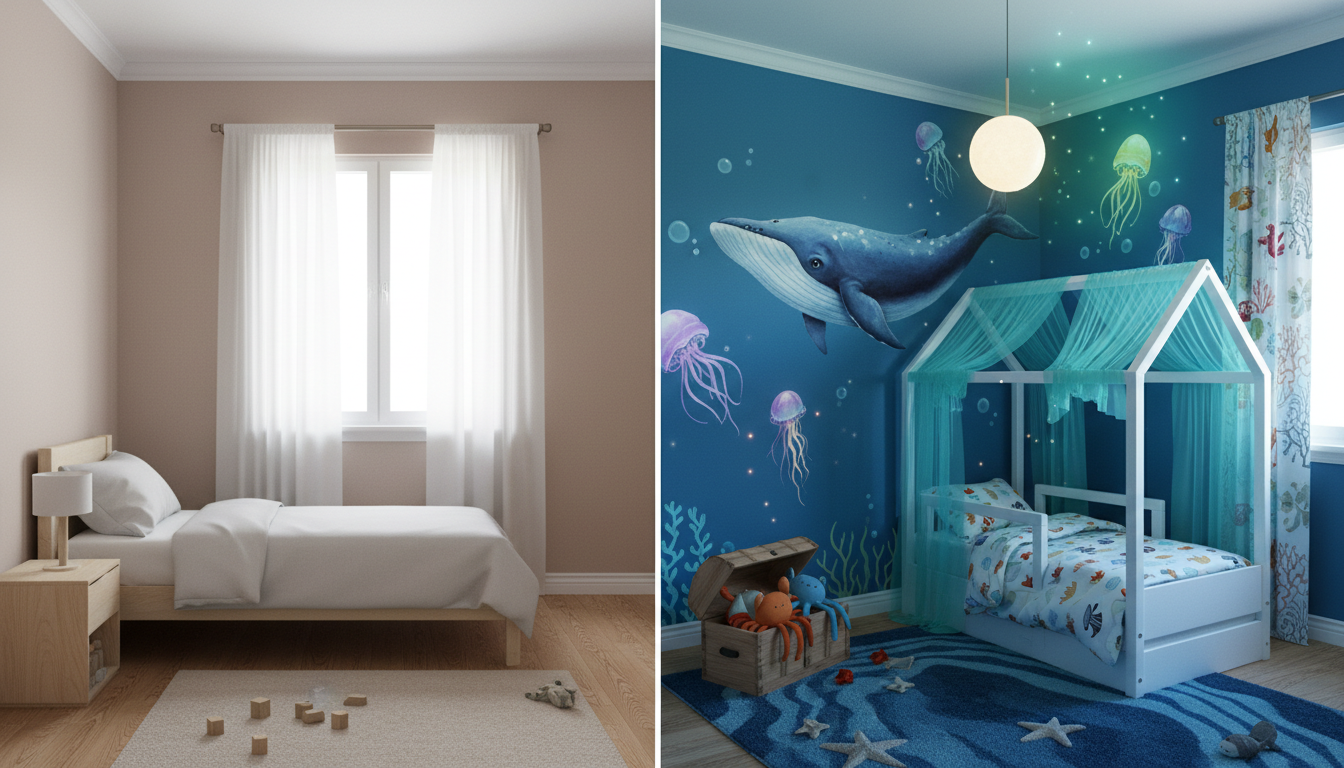
Designing a child's bedroom is one of the most rewarding home projects. It’s a chance to create a personal sanctuary that fuels their imagination, supports their growth, and reflects their unique personality. But between fast-changing tastes, small spaces, and the desire to create a room that lasts, it’s easy to feel overwhelmed. How do you design a space they’ll love today without needing a complete overhaul tomorrow?
The secret lies in visualizing your ideas before you commit. Imagine trying out a dinosaur theme, a new wall color, or a different furniture layout, all without lifting a paintbrush or spending a dime. With the Interior Remodel tool, you can do just that. Simply upload a photo of your child's room, select styles or describe your vision, and let AI generate stunning, photorealistic previews in seconds. It’s the perfect way to experiment risk-free and design a space that’s both magical and practical.
Designing a Room That Grows With Them
The biggest challenge for parents is that kids grow up fast, and their love for space rockets might quickly turn into an obsession with soccer. Creating a flexible foundation is key to designing a room that evolves with them from toddler to teen.
- Start with a Neutral Foundation: Choose timeless, durable furniture and a neutral color for the walls, like a soft white, pale sage green, or warm beige. These pieces can adapt to any theme. A classic wooden dresser or a simple metal bed frame will outlast fleeting trends.
- Go Bold with Accessories: Let their personality shine through easily swappable items. Use bedding, throw pillows, rugs, and wall art to introduce their favorite colors and themes. When their interests change, updating these elements is a budget-friendly way to refresh the room.
- Invest in Versatile Furniture: Look for pieces that can serve multiple purposes or adapt over time. A crib that converts into a toddler bed, a low bookshelf that can later hold textbooks, or a desk with a timeless design are smart investments that will last for years.
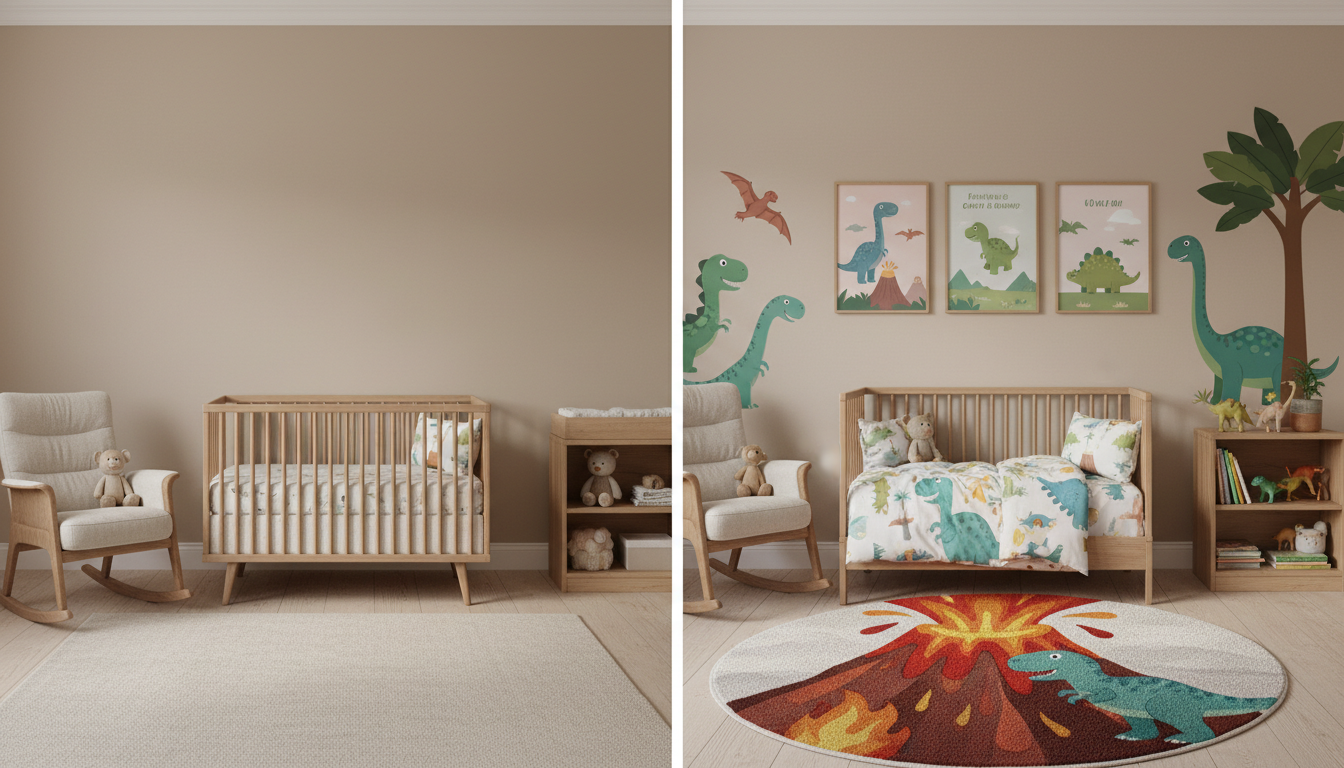
You can use Ideal House's Room Visualizer to test different neutral wall colors and see how they pair with existing furniture before making a permanent change.
Unleashing Imagination with Themes (Without the Full Commitment)
A themed bedroom can be a child’s dream, but you don't have to be locked into a single concept forever. Instead of painting a permanent mural, think in layers.
- Jungle & Animal Themes: Bring the wild indoors with animal-print bedding, stuffed animal wall mounts, and botanical wall decals. A green and beige bedroom provides a calming, nature-inspired backdrop.
- Outer Space & Adventure: A night sky ceiling with glow-in-the-dark stars is a classic for a reason. Add planet-themed lamps, rocket ship wall art, and navy blue accents to create a galaxy false ceiling effect.
- Unicorn & Fairytale Rooms: Create a fantasyland nursery or a whimsical wonderland nursery decor with pastel pinks, floral patterns, and iridescent accessories. A canopy over the bed or some magical fairy lights can complete the look.
- Car & Racing Themes: A car shaped bed is the ultimate centerpiece. Complement it with road-themed play rugs, checkered flag patterns, and wall art featuring vintage cars or race tracks.
Pro-Tip: Use removable wallpaper or wall stickers to create a high-impact accent wall. When your child is ready for a new theme, you can simply peel it off. Experiment with different patterns using Ideal House's Smart Replacer to see how a themed wall would look before you buy.
Smart Storage for a Clutter-Free Oasis
A tidy room feels more calming and creates more space for play. The key is to make organization simple enough for kids to manage themselves.
-
Kid-Level Cubbies and Bins: Systems like the IKEA TROFAST are popular for a reason. Open bins at a child's height make cleanup easy. Use picture labels for pre-readers so they know exactly where the LEGOs and dolls belong.
-
Utilize Vertical Space: Wall-mounted bookshelves, like the FLISAT wall storage, are perfect for displaying favorite stories and small toys. For stuffed animals, a corner toy hammock is a fun solution that frees up floor space.
-
Under-the-Bed Storage: Don't let this prime real estate go to waste. Rolling bins or flat containers are perfect for storing off-season clothes, puzzles, or extra blankets.
-
A Place for Everything: Create designated spots for different activities. An over-the-door organizer can hold art supplies, while a rolling cart can serve as a mobile craft station. For dress-up clothes, a simple clothing rack makes costumes a fun feature of the room.
Creating Zones for Sleep, Play, and Study
Even in a small room, creating distinct zones helps organize the space and a child’s activities.
The Cozy Reading Nook
Encourage a love for reading by carving out a special corner.
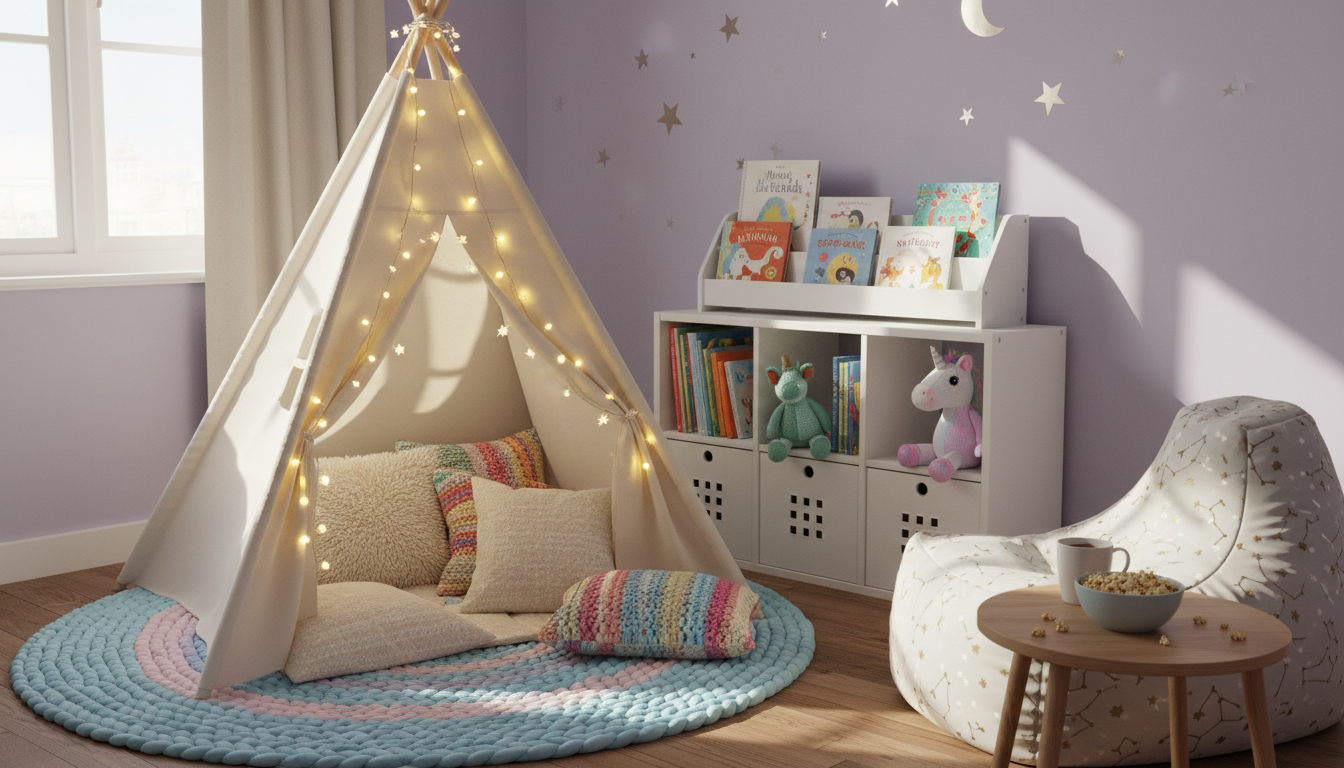
- Make it Comfortable: Use a soft rug, a pile of floor cushions, or a beanbag chair.
- Add Ambiance: A canopy or a small teepee can make the space feel like a secret hideout. String up some fairy lights for a magical glow.
- Accessible Books: Use low, front-facing bookshelves so kids can easily see and grab their favorite stories.
The Play Zone
Define the play area with a rug that invites fun.
- Interactive Play Rugs: A city life road rug is perfect for toy cars, while a hopscotch kids rug encourages active play.
- Open Floor Space: Keep the main play zone free of bulky furniture to allow room for building block cities or imaginative games.
The Study Area
As children grow, a dedicated spot for homework becomes essential.
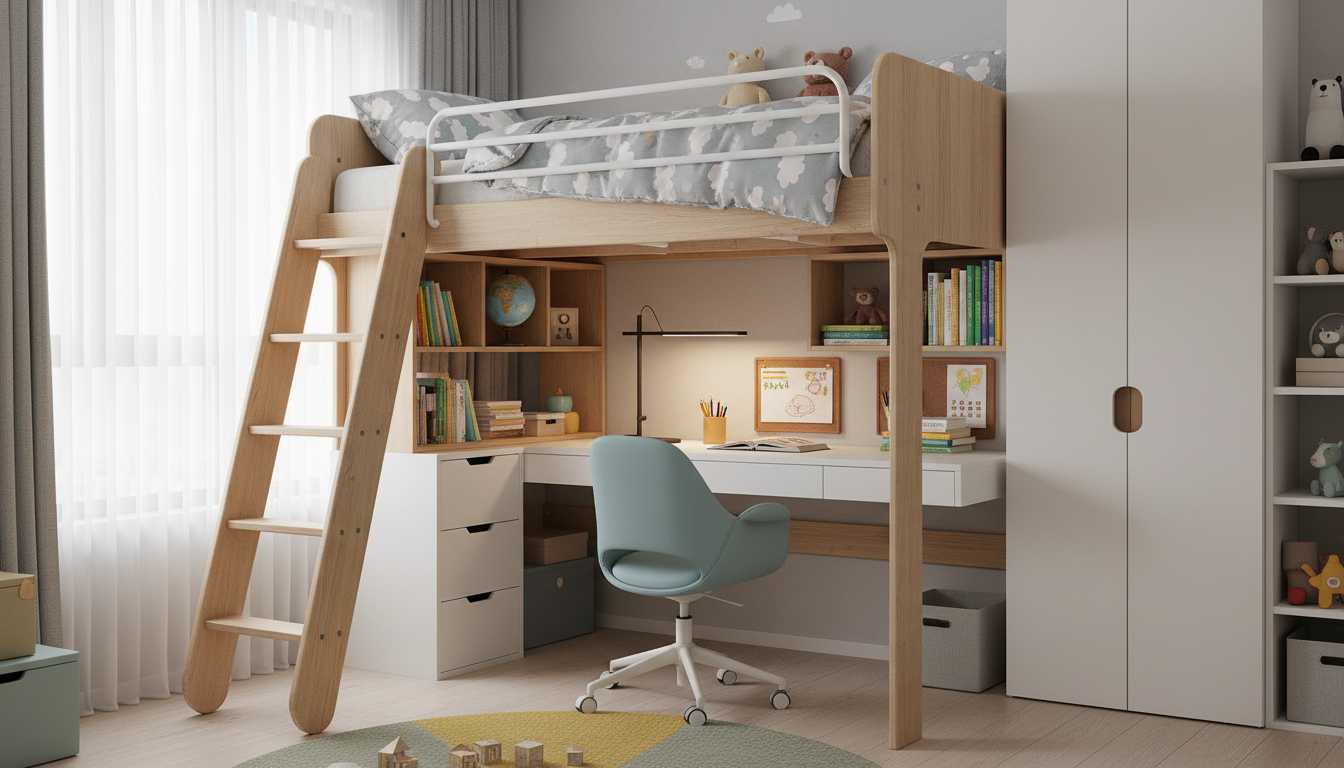
- Loft Bed with Desk: This is a brilliant space-saving solution for small rooms. The area underneath the bed becomes a perfect study station.
- Proper Lighting and Organization: Ensure the desk has good task lighting and simple organizers for pens, paper, and school supplies.
Tackling Tricky Spaces: Small Rooms & Shared Bedrooms
Limited space or multiple occupants requires creative thinking.
Small Kids Room Ideas
- Go Vertical: Bunk beds or loft beds are a small room’s best friend. They free up valuable floor space for play or a desk.
- Multi-Functional Furniture: Opt for beds with built-in drawers, benches with hidden storage, or fold-down desks.
- Use Light Colors: Lighter wall colors can make a small room feel larger and more open.
Shared Bedroom Ideas
Designing a room for two children, especially a boy and a girl or siblings with an age gap, is all about creating harmony and personal space.
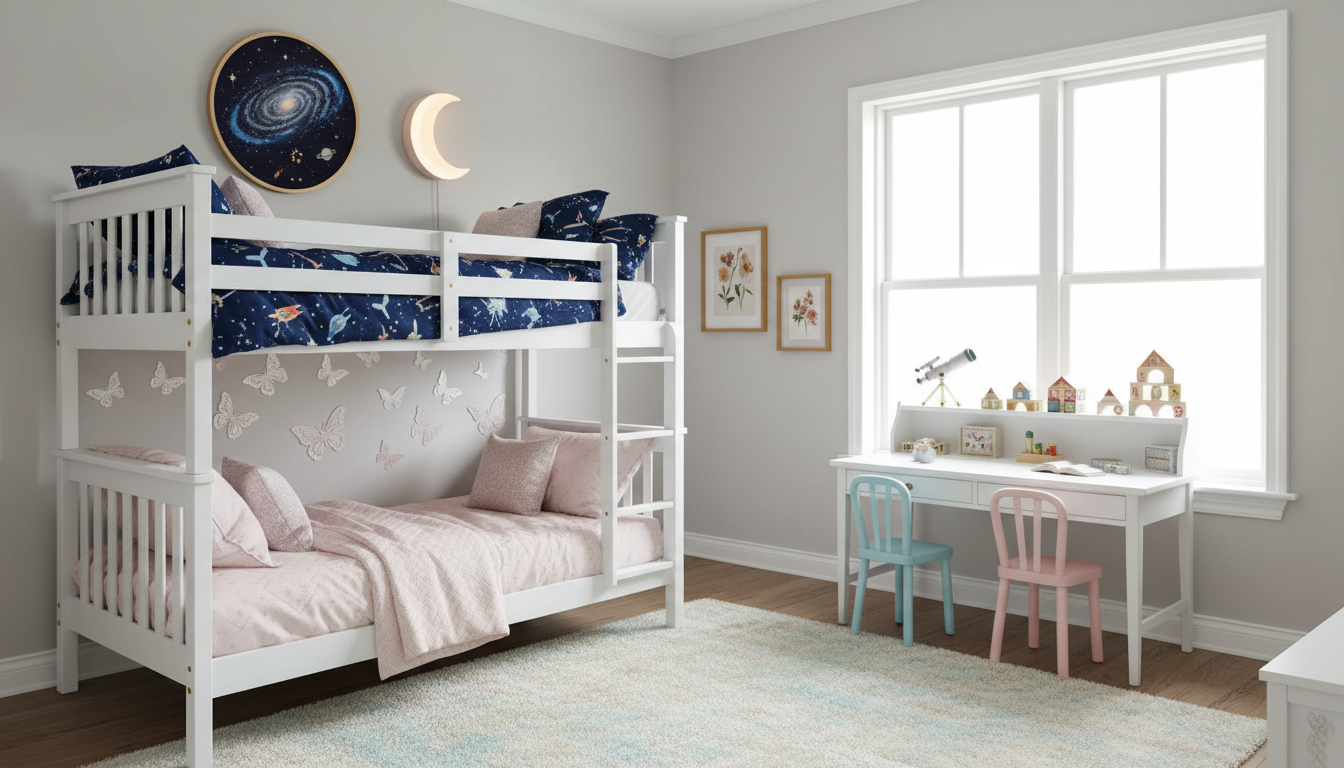
- Create Personal Zones: Use a room divider like a bookshelf to create a sense of privacy. You can also visually divide the room with different colored accent walls or rugs.
- Cohesive but Individual: Stick to a unifying neutral color for the walls and main furniture. Then, let each child choose their own bedding, wall art, and pillows to express their personality. Monogrammed decor is a great way to designate each child’s space.
- Bunk Beds are Key: They are the ultimate solution for a shared bedroom for siblings, maximizing space while giving each child their own defined sleeping area.
FAQ: Your Top Children's Bedroom Decor Questions Answered
What are the best kids' room ideas for small spaces?
Maximize vertical space with bunk beds or loft beds with desks underneath. Use multi-functional furniture like storage benches and under-bed bins. Wall-mounted shelves and over-the-door organizers are also great for keeping floors clear.
How can I keep my child’s room organized?
Make organization easy and accessible. Use open bins with picture labels, place storage at a kid-friendly height, and implement a toy rotation system. A designated spot for everything—books, toys, clothes—makes cleanup a simple routine.
What are some budget-friendly kids' room decor ideas?
Focus on high-impact, low-cost changes. A fresh coat of paint, DIY wall art (like framing their drawings or photos of their favorite toys), and fun bedding can transform a room. Removable wall decals and shopping at thrift stores for frames or small furniture are also great budget-friendly options.
How do I design a room that grows with my child?
Invest in timeless, neutral-colored furniture for big-ticket items like the bed and dresser. Use accessories like rugs, pillows, and wall art to introduce color and themes. These are easy and inexpensive to swap out as your child's tastes evolve.
How can I make a shared room for a boy and girl work?
Start with a gender-neutral color palette for the walls, like gray, white, or sage green. Give each child their own distinct area, even if it's just their side of the room. Let them personalize their space with their own bedding, pillows, and artwork in their favorite colors. A bookshelf can act as a simple, functional room divider.