




1/7
Book Review: The Sediment Must Flow
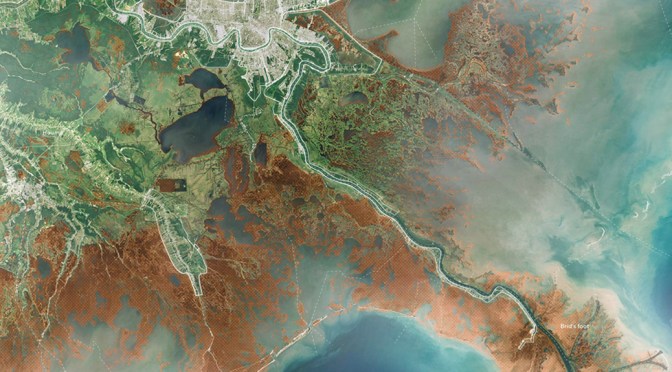
The book "Silt Sand Slurry: Dredging, Sediment, and the Worlds We Are Making" by Rob Holmes, Brett Milligan, and Gena Wirth explores the multifaceted role of sediment in shaping landscapes and economies. It delves into the processes of dredging and the management of sediment, highlighting a central contradiction: the presence of excessive sediment in some areas, like maritime shipping channels, and a deficit in others, such as coastal marshes and wetlands. This imbalance is attributed to human interventions like levees and dams, which disrupt natural sediment flow, impacting both global trade and ecologically vital habitats. The book emphasizes that the handling of sediment is not merely a technical issue but is deeply influenced by a complex interplay of values, policies, political regimes, and ideological stances towards the landscape.
The book is a compilation of essays and interviews, featuring contributions from environmental advocates, government officials, and U.S. Army Corps engineers. It is an extension of the Dredge Research Collaborative and DredgeFest initiatives, which aim to bring dredge and sediment management to the forefront of infrastructural discussions. The authors, academics, and a practicing landscape architect, present sediment as a crucial indicator of the Anthropocene, arguing that human activities have made people “preeminent geologic agents.” They illustrate how the world functions on mud, noting that 300 million cubic yards of sediment are dredged annually in the United States alone, a volume comparable to excavating a new Panama Canal each year. This massive geoengineering effort is driven by the demands of landowners, who seek to protect their investments, and maritime shippers, who require clear shipping channels.
A key concept introduced is the “sedimentshed,” which redefines waterfront ecologies around sediment as the primary active element, with rivers serving as conduits. The authors propose that sediment holds the key to addressing climate change, advocating for a “choreography” of dredge use—a relational, collective, iterative, and dynamic approach. This perspective acknowledges the constant change in littoral environments due to tides, sea-level rise, and natural or intentional alterations to sandbars and sludge. The book prompts reflection on whether the global economy can accommodate such unpredictability and iteration given the ongoing demands for resource extraction and global logistics.
The concluding chapters offer a vision for enlightened sediment ecologies, exemplified by a plan for Northern California’s Alameda Creek. This plan, developed with the landscape architecture firm SCAPE, utilizes dredge to rehabilitate a channelized creek that has suffered from sediment starvation. The project, while resembling a typical landscape architecture design with naturalistic plantings and topography, stands out for its emphasis on dynamic ecological processes and continuous monitoring and maintenance. It aims to create landscapes that adapt to changing ecologies, supporting diverse life forms and human interaction, moving beyond static solutions.
The book positions landscape architects as crucial public-sector environmental infrastructuralists, capable of building ecosystems from the ground up by managing this complex material. It critiques the current economy's impact on life on Earth, suggesting that a technocratic and exclusive world, serving corporate interests, must become more accountable to humanity and all living things. The United States’ significant role in global sediment displacement is highlighted, with policy recommendations such as revising the U.S. Army Corps of Engineers' obligation to dispose of dredged sediment cheaply, instead promoting beneficial ecological uses like wetland restoration. The authors advocate for low-carbon processes that strategically deposit sediment to encourage natural erosion and deposition for ecological benefit. The book's prose occasionally uses academic jargon, but its core message is a call for disciplinary recognition of sediment's importance and public awareness of mud as a unifying force, essential for landscape design and a more sustainable future.
#BookReview #SedimentManagement #Dredging #LandscapeArchitecture #EnvironmentalDesign #EcologicalRestoration #ClimateChange #Geoengineering #WaterManagement #BookReview #SedimentManagement #Dredging #LandscapeArchitecture #EnvironmentalDesign #EcologicalRestoration #ClimateChange #Geoengineering #WaterManagement
 Brak komentarzy jeszcze