




1/8
More Virtuous Circles
The article discusses the growing trend of material reuse and recycling in landscape architecture, particularly in France, driven by new legislation and increasing awareness of embodied carbon in construction. It highlights how designers are adopting circular economy principles to create sustainable landscapes with reduced environmental impact. Architecture 2030 estimates that embodied carbon from materials will account for 72 percent of new construction emissions by 2030, emphasizing the critical role of material choices in reducing carbon footprints.
The Sustainable SITES Initiative further validates the importance of materials, dedicating a significant portion of its rating system points to material selection. While material reuse faces challenges in the United States, such as cost and logistical complexities, France is integrating these practices into mainstream design. The article profiles several French landscape architecture firms and their innovative approaches to material reuse. For example, Wagon Landscaping, co-founded by François Vadepied, specializes in design/build projects that transform on-site demolition debris into nutrient-rich planting soil. Their process involves crushing, sorting, and layering materials, minimizing the need for imported agricultural soils. An example in a Parisian courtyard demonstrates their ability to create thriving gardens using only on-site materials, including asphalt topcoats for mulch, and planting resilient species suited for poorer soils.
The firm's methodology fosters experimentation with materials, which has been further supported by France's 2020 anti-waste law. This legislation increased waste disposal costs, mandated detailed inventories of deconstructed materials, and incentivized reuse, leading to the emergence of reuse consultants. These consultants conduct diagnostic inventories of existing site materials to assess their reuse potential and assist designers with detailing and specifications. Violaine Dubin of Mobius Réemploi notes that material reuse is often more feasible in landscape architecture than in traditional architecture, as landscape design is less regulated and more tolerant of variations in material strength, especially for durable materials like stone or brick.
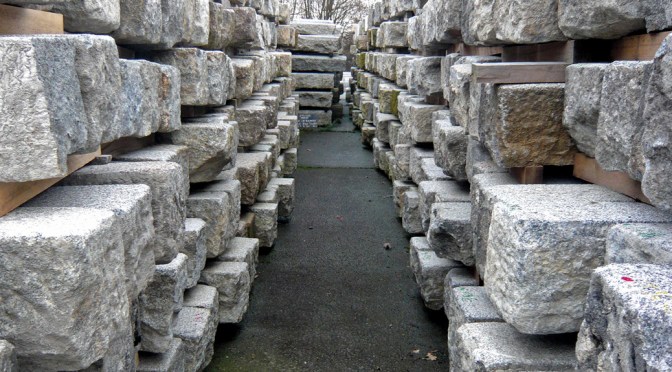
Municipal and regional initiatives also play a crucial role. The city of Paris operates the Center for Materials and Supply (CMA), a facility that stores reusable public realm elements such as pavers, curbstones, and benches recovered from construction sites. The CMA processes 8,000 to 10,000 tons of pavers annually, making reused stone competitive with new materials. Designers like Emma Blanc from Emma Blanc Paysage have successfully integrated these reclaimed materials into prominent Parisian public spaces, such as the Place du Panthéon and Place de la Bastille. Blanc emphasizes the historical and cultural significance of using local, repurposed materials, even for temporary installations.
Despite the benefits, challenges exist, particularly regarding design control. Hugo Bruley of Hugo Bruley Landscape Architecture (HBLA) acknowledges that specifying reused materials requires flexibility due to potential non-uniformity and sourcing limitations. He stresses the importance of prototyping and detailed specifications to manage these variables. In a project in Vénissieux, Lyon, HBLA designed benches from existing concrete slabs, experimenting with cutting methods and mortar thickness to achieve desired outcomes. This prototyping process engages local communities and reinforces public authorities' commitment to sustainable practices. Local development authorities, such as Plaine Commune in the greater Paris region, have set strict requirements for recycled content in landscape materials, including minimum percentages for reused materials. The 2024 Olympic Village construction, managed by Solideo, also incorporates these rigorous standards, demonstrating the scalability of material reuse in large-scale projects. HBLA's work in the Olympic Village includes concrete from recycled aggregates, reclaimed paving stone, and engineered soils from demolition debris. This material renaissance is not exclusive to France; the European Union has mandated similar legislation across member countries, proving that the benefits of material reuse, including environmental and economic advantages, often outweigh the initial costs and logistical complexities.
#CircularEconomy #MaterialReuse #LandscapeArchitecture #SustainableDesign #UrbanPlanning #EmbodiedCarbon #ConstructionWaste #FrenchLegislation #PublicRealm #CircularEconomy #MaterialReuse #LandscapeArchitecture #SustainableDesign #UrbanPlanning #EmbodiedCarbon #ConstructionWaste #FrenchLegislation #PublicRealm
 Nog geen opmerkingen