




1/2
Mid-century style: What to know about the décor that you are seeing everywhere
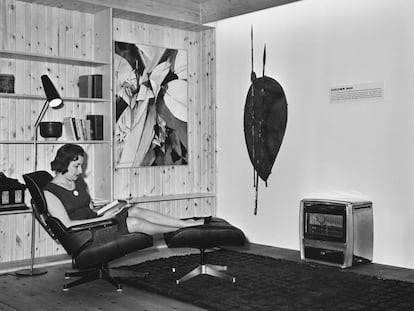
Mid-century style, originating in Europe and significantly influenced by post-World War II American designers and architects, including elements from the Bauhaus School, has experienced a resurgence in popularity. This aesthetic trend, prevalent from the mid-1940s to the late 1960s, is characterized by its emphasis on functionality, simple lines, and quality materials, extending its impact to the 1990s and continuing to be highly visible in contemporary interior design. The style is often associated with a sense of taste and aligns with the principle that “less is always more” in aesthetics.
The widespread appeal of Mid-century design is evident in various media, from popular television series like *Mad Men* and *Frasier* to contemporary shows like *And Just Like That...*, where elements such as Eames chairs, wooden office furniture, and vintage Italian glasses define sophisticated environments. Social media platforms and interior design publications frequently feature this style, with dedicated Instagram pages like Mid-Century Home and real estate agencies such as The Modern House showcasing homes adorned with wood paneling, low-slung furniture, warm fabrics, muted green shades, and terrazzo floors.
According to Africa Salces, an expert in vintage furniture, the Mid-century style prioritizes practicality, eschewing superfluous ornamentation in favor of pure, clean lines. Despite its simplicity, there was an obsessive attention to detail, even in less visible areas of the pieces. The use of fine woods, carefully crafted to create attractive and cozy designs, is a fundamental characteristic. This focus on warmth and comfort emerged from a desire to create safer, cozier spaces in the aftermath of World War II, a sentiment reflected in the selection of materials, color palettes, and textures, including reddish mahogany woods, velvet, and earth tones, occasionally accented by intense but muted greens.
Mid-century furniture typically features short legs, departing from floor-glued frames to add lightness and facilitate cleaning. Iconic elements include sideboards designed for both television and storage, exemplifying functionality. Another distinguishing feature is the slightly inclined, V-shaped legs, often in wood or metal, with a "ufo" finish popular in Italian design. Decorative objects like cocktail armchairs paired with plectrum tables, as well as handcrafted glass, ceramic, or textile pieces, are common. Lighting fixtures from this era also stand out, with designers like Poul Henningsen, particularly his PH4 and PH5 series for Louis Poulsen, creating pieces with strong personalities.
Beyond its aesthetic qualities, the Mid-century style embodies an aspirational desire for peace and connection with nature, a response to the tumultuous early 20th century. Llisa Demetrios, curator of the Eames Institute and granddaughter of Charles Eames, notes that the movement approached design as a problem-solving mechanism. Designers aimed to improve quality standards for everyone through mass production, emphasizing the creation of optimal prototypes and anticipating user needs. This philosophy extended to creating systems for large-scale production, addressing the need for housing for returning soldiers post-war. The enduring allure of Mid-century pieces today suggests a desire for social mobility and a connection to a historical period of innovation and purposeful design, a demand that contemporary brands continue to meet by reproducing iconic designs like Le Corbusier’s LC4 chaise longue, the Eames lounge chair, and Mies van der Rohe’s Barcelona chair. The recent pandemic has further intensified interest in creating cozy and distinctive home environments, reinforcing the appeal of this timeless style in an increasingly interconnected world.
#MidCenturyStyle #InteriorDesign #HomeDecor #FunctionalDesign #VintageFurniture #PostWarDesign #ArchitecturalHistory #DesignTrends #CozyHomes #MidCenturyStyle #InteriorDesign #HomeDecor #FunctionalDesign #VintageFurniture #PostWarDesign #ArchitecturalHistory #DesignTrends #CozyHomes
 Nessun commento ancora