



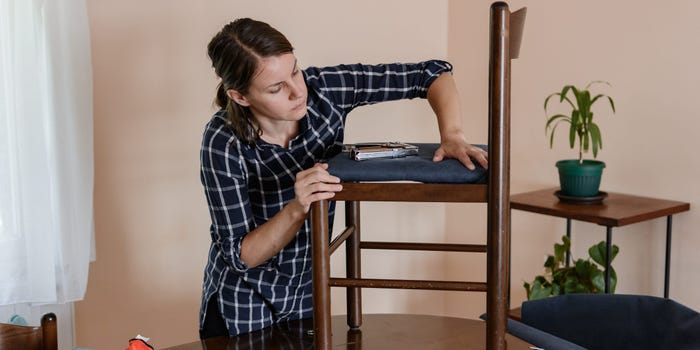
How to reupholster a chair and breathe new life into old furniture
Reupholstering a chair involves replacing its fabric, padding, and other soft materials to revitalize a worn-out piece of furniture. While seemingly complex, simple chairs with straightforward lines, such as dining room chairs, can be successfully reupholstered at home, providing a cost-effective alternative to purchasing new furniture, especially when the original piece is of high quality and well-built. More intricate projects, like armchairs, can be undertaken by those with some experience.
Before embarking on a reupholstery project, it's crucial to assess if the furniture is a good candidate. Pieces made from durable materials like real wood are ideal. It's also important to consider the potential cost, as reupholstering can sometimes be more expensive than buying a replacement, though it often preserves cherished items. A dedicated workspace is recommended, as the process can take a day or more, ensuring materials remain organized and undisturbed. Planning is essential, including considering fabric patterns and identifying reusable components like buttons or trim. Detailed photographs of the chair from multiple angles, especially corners and decorative elements, serve as invaluable visual references during reassembly.
The necessary materials for reupholstering include fabric (approximately ½ yard per dining chair, 7 yards for an armchair), a staple lifter (or flat-head screwdriver/pliers), a screwdriver, an electric staple gun with staples, a knife for cutting foam (utility, bread, or electric carving knives work well), foam padding, batting (cotton or other material for edges), a measuring tape, scissors, and an optional fabric steamer. It is advised to have an extra yard or two of fabric to account for mistakes or miscalculations, which can also be used for matching accessories like pillows.
The reupholstery process begins with unscrewing the seat base from the chair, if applicable, and setting aside the hardware. Next, the old fabric, batting, and foam are carefully removed, labeling each piece and its position to serve as a template. The new foam is then cut to the exact size and shape using the old padding or seat base as a template. Batting is trimmed to overhang the seat by about three inches to soften edges, then stapled tightly around the edges to create a curved appearance. The new fabric is cut, ensuring it overhangs each side by three inches to allow for stapling. The fabric is then centered and stapled, starting with one staple on each side and then adding staples every two inches, about one inch from the edge of the seat, pulling corners tightly for a smooth finish. Excess fabric is trimmed, and an optional dust cover can be added to the bottom for a finished look on dining chairs. Finally, the cushioned seats are reattached to the chair frames.
Several tips can enhance the reupholstering experience. Selecting the right fabric is crucial, with a durability rating of at least 15,000 double rubs recommended for frequently used furniture. If refinishing wooden parts, this should be done before adding new fabric. Extensive photographic documentation throughout the deconstruction phase aids in reassembly. Steaming old fabric cuts can provide more accurate templates. Safety measures, such as wearing eye protection and a mask when handling old or moldy pieces, are also important. The key to successful reupholstering lies in patience, moving slowly, and paying close attention to detail, carefully deconstructing the original piece to guide the rebuild.
#ChairReupholstering #DIYFurniture #HomeDecor #FurnitureRestoration #UpholsteryTips #InteriorDesign #FabricSelection #HomeImprovement #ChairReupholstering #DIYFurniture #HomeDecor #FurnitureRestoration #UpholsteryTips #InteriorDesign #FabricSelection #HomeImprovement
 Nessun commento ancora