1/2
dalit lilienthal creates static movement in tel aviv
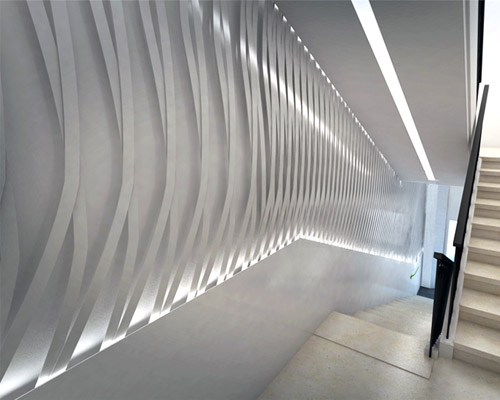
Dalit Lilienthal's installation, 'static movement,' located in a 1920s building in Tel Aviv, Israel, addresses the contrast between the building's inherent immobility and the constant flow of students at the 6B studio design school. The project aimed to introduce a dynamic visual experience within the entrance leading to the secretariat and study halls, an area with high student traffic. The central concept involves creating an illusion of motion on a wall, enhancing the perception of the space for those entering and exiting the building.
The renovation respected existing architectural elements, with specific stipulations that windows and railings could not be altered in size or material. In response, a fresh dark grey paint was applied to the decorative railing, and the handrail was restored to its original wooden state through sanding. These modifications subtly updated the historical features while maintaining their integrity.
The core of the 'static movement' installation lies in its use of aluminum strips. These strips were precisely cut using a laser machine and arranged in two layers on the staircase wall. Each layer consists of 50 strips. A moiré effect is achieved by superimposing one layer over the other and intentionally offsetting their angles by a few degrees. This arrangement creates a visual phenomenon where the static strips appear to ripple and flow, producing a sense of dynamic movement as viewers pass by.
Further extending the design, another set of aluminum bands is incorporated into the corridor. Within these bands, wooden boxes are integrated, serving as a functional information stand where students can access brochures and publications. This thoughtful inclusion combines aesthetic appeal with practical utility, transforming a transitional space into an interactive area. LED lighting is strategically placed between the two layers of aluminum strips, enhancing the visual depth and motion of the moiré effect.
The process involved individually numbering and painting each of the 150 cut strips before they were mounted. Detailed plans illustrate the precise positioning of each numbered strip in the front layer, and how the back layer is tilted by a few degrees to achieve the desired moiré effect when superimposed. This meticulous approach underscores the precision required to bring the 'static movement' concept to life, making a static architectural element appear fluid and alive, thereby engaging the occupants in a unique visual experience.
#ArchitecturalInstallation #MoiréEffect #InteriorDesign #TelAviv #DesignSchool #AluminumArt #StaticMovement #PublicSpaceDesign #ArchitecturalInstallation #MoiréEffect #InteriorDesign #TelAviv #DesignSchool #AluminumArt #StaticMovement #PublicSpaceDesign
 Nessun commento ancora
A Tel Aviv Apartment Uses A Loop Floor Plan For Freedom + Flexibility

Dynamic direction: Abdallah Alayan
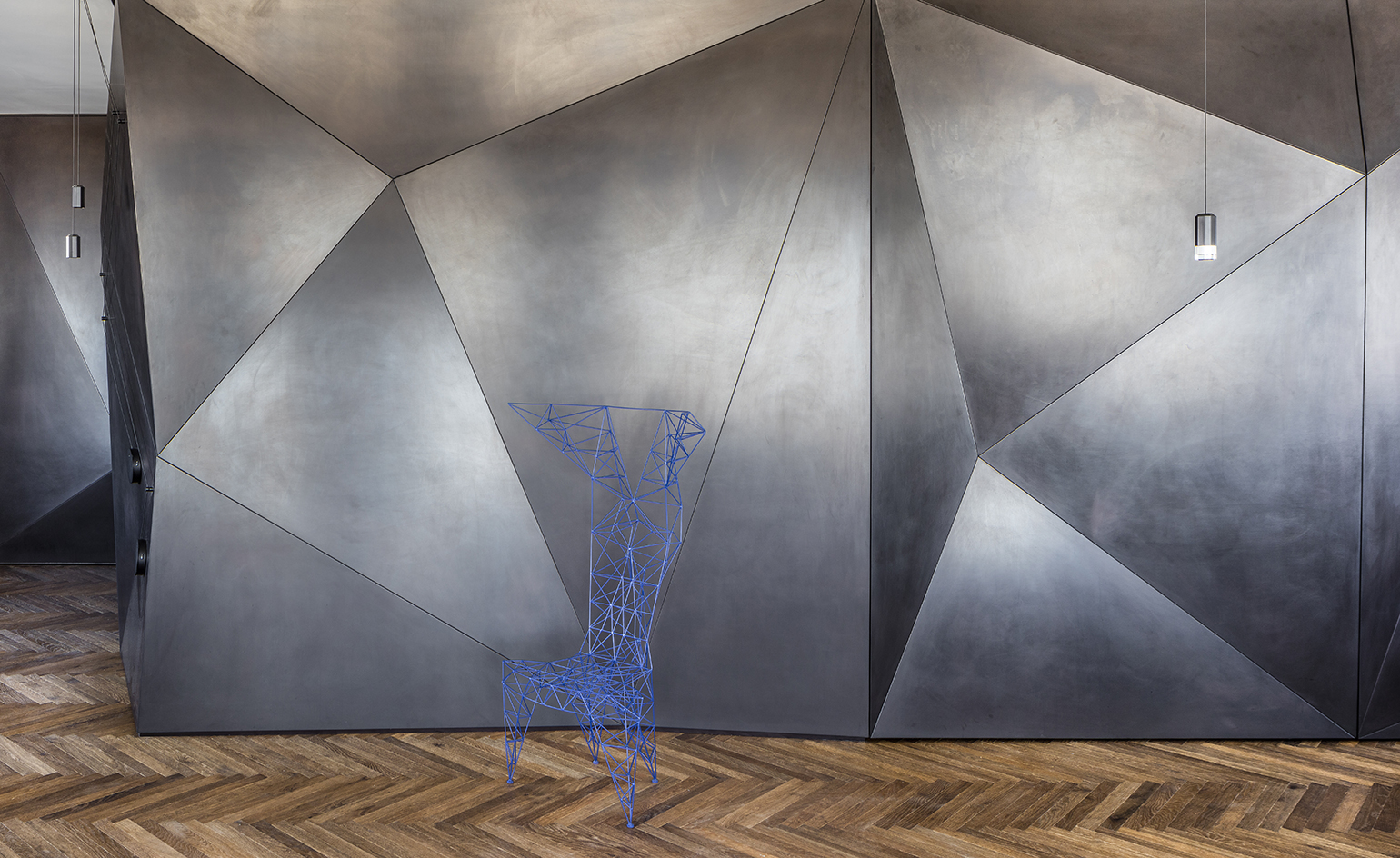
Origami art: Pitsou Kedem adds folded iron feature wall in Tel Aviv loft
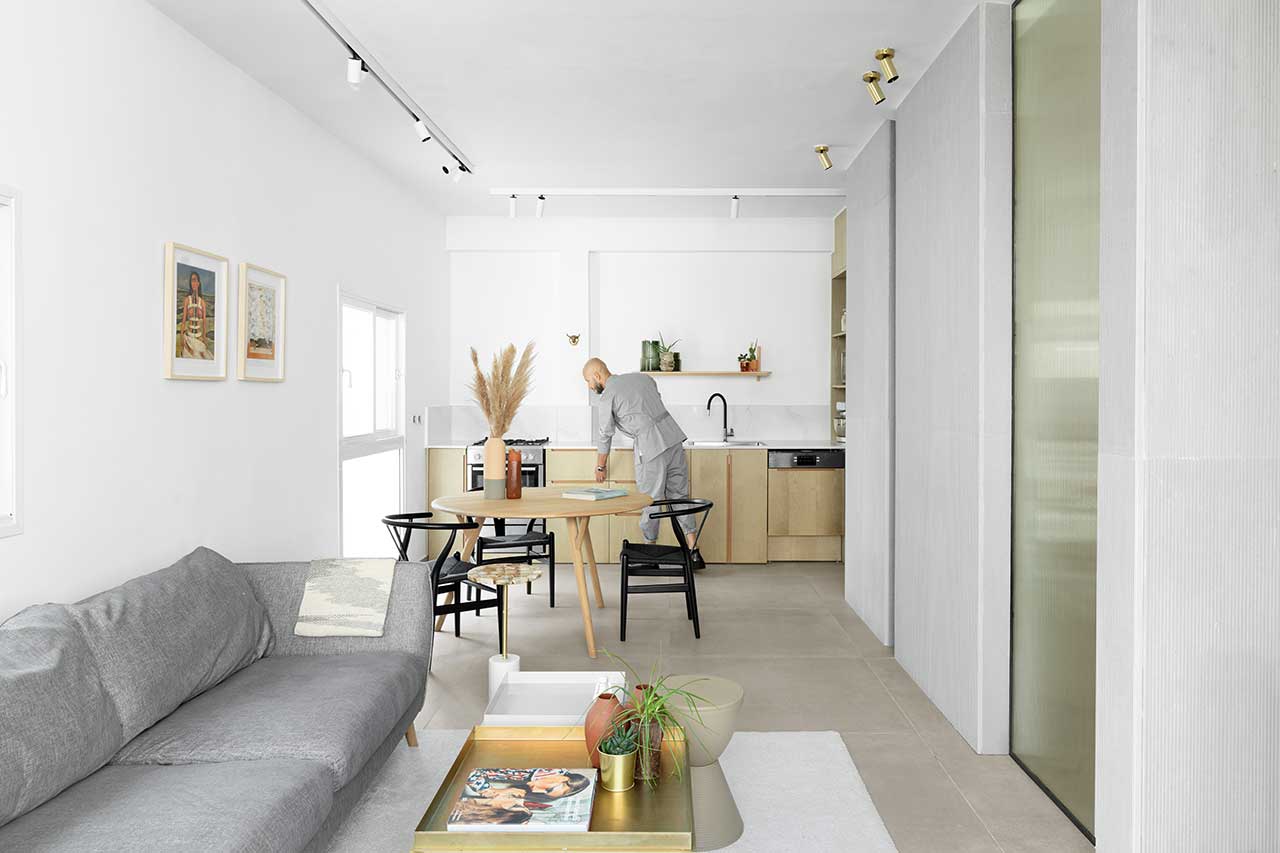
A Hotel-Like Apartment in Tel Aviv for the New Urban Lifestyle