




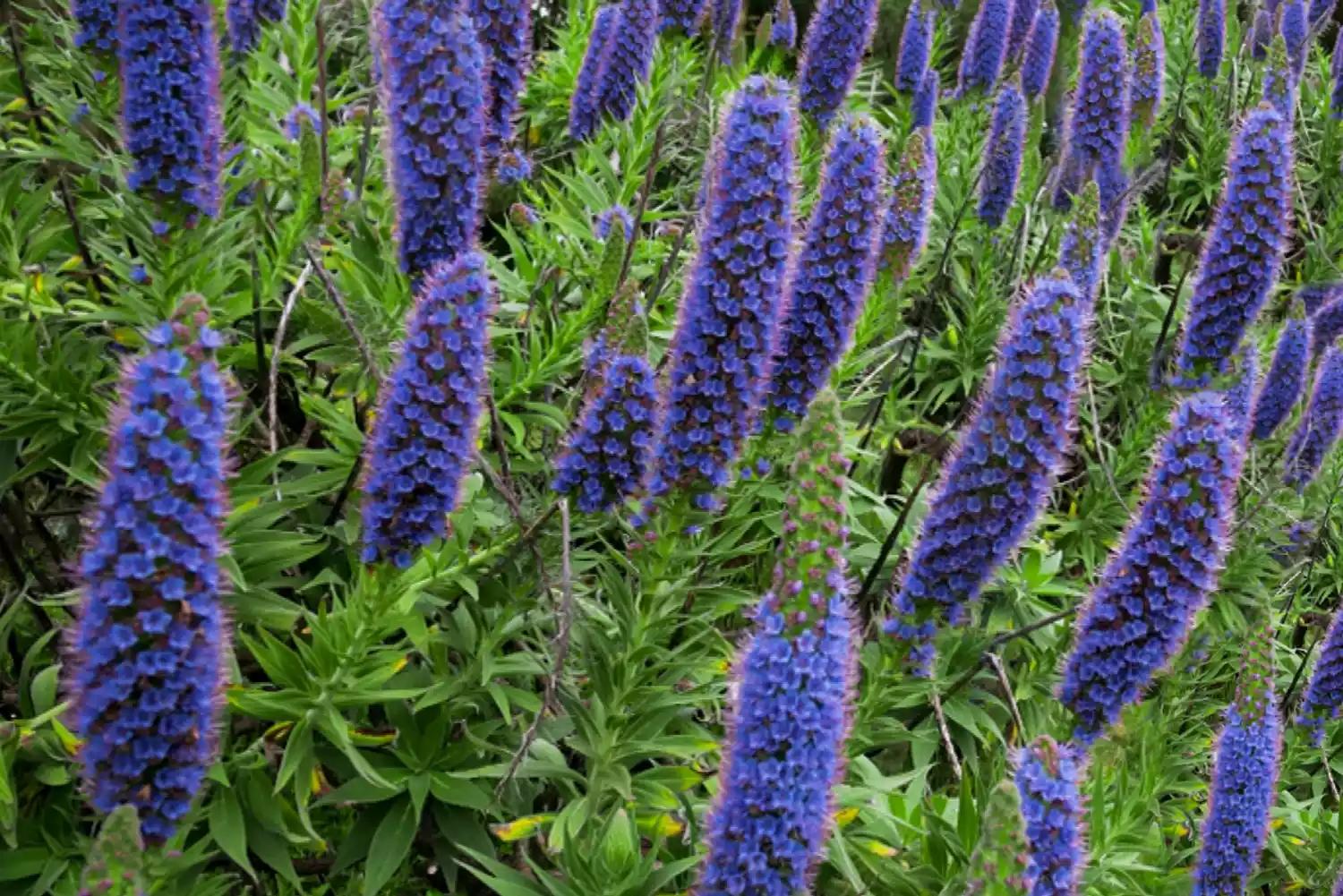
How to Grow and Care for Pride of Madeira
The Pride of Madeira (Echium candicans) is a striking flowering shrub native to the Canary Islands, known for its vibrant purple panicles and spiky grey-green leaves. It typically grows to a mature size of 6-8 feet tall and 6-10 feet wide, exhibiting a mounding, low-branching habit. This plant is classified as a biennial or short-lived perennial and is toxic to both humans and pets. For optimal growth, Pride of Madeira requires four to six hours of full sun daily, though partial sun, particularly in the afternoon, is also acceptable. It adapts well to various soil conditions, including clay, sand, and loam, and can tolerate a wide range of pH levels, but consistently good drainage is crucial. Its island origins contribute to its salt tolerance, making it suitable for coastal environments. While generally drought-tolerant, regular watering during its flowering season enhances bloom health and vibrancy. Signs of dehydration, such as drooping flower heads or yellowing foliage, indicate a need for watering at the base of the shrub. The plant thrives in temperatures above 50°F and prefers humid ocean air. In desert climates, occasional misting may be necessary to maintain foliage and flower appearance. Fertilization is generally not required, as the plant can subsist in low-nutrient soil; however, a light application of compost in the fall and a balanced all-purpose fertilizer in the spring can be beneficial. Maintenance involves regular pruning of spent flower stalks to encourage new growth and maintain a neat aesthetic. Light pruning in summer and late fall helps preserve the foliage's fullness. Propagation can be achieved through cuttings or seeds. Cuttings taken in midsummer will produce genetically identical plants, rooted in a soilless potting mix with rooting hormone under controlled conditions. Growing from seeds involves planting them 1/8-inch deep with a thin layer of sand, misting daily, and maintaining a temperature of 60-70°F during germination. Seed-grown plants, being biennials, typically bloom in their second year. Pride of Madeira can be grown in pots, preferably a 5-gallon container with ample drainage, requiring more frequent watering than garden-planted specimens. In regions where winter temperatures consistently fall below 41°F, the plant needs protection, such as a frost blanket, or overwintering indoors in a bright, frost-free location. The plant is largely disease-free but may attract pests like whiteflies, spider mites, and slugs. Powdery mildew can occur in overly humid conditions, treatable by removing affected foliage and applying an anti-fungal spray. Yellowing leaves often indicate over-fertilization or over-watering. The shrub's sprawling nature may require light pruning to manage its size in smaller spaces. It is considered invasive in some coastal regions, particularly in Southern California, due to its adaptability and rapid growth. To mitigate seed dispersion in these areas, it's recommended to trim flower panicles before they set seed. For those seeking non-toxic, native alternatives, the California lilac (Ceanothus) offers similar bluish-purple floral clusters.
#PrideOfMadeira #EchiumCandicans #GardeningGuide #ShrubCare #PlantPropagation #DroughtTolerant #CoastalGardening #InvasiveSpecies #PrideOfMadeira #EchiumCandicans #GardeningGuide #ShrubCare #PlantPropagation #DroughtTolerant #CoastalGardening #InvasiveSpecies
 Nessun commento ancora