1/2
Wallrock Thermal Liner Review - Is KV600 Effective?
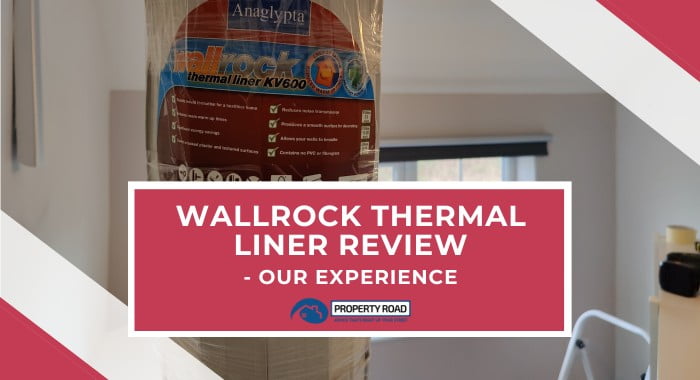
This review details the real-world experience of installing and evaluating Wallrock KV600 thermal liner in an 1850s rural farmhouse with solid brick walls. The primary motivation for applying the thermal liner was to address issues of cold walls, condensation, and mold growth, which were prevalent in the property due to a lack of insulation. Traditional external wall insulation was deemed unfeasible due to cost and structural limitations, while internal wall insulation would significantly reduce room size. Wallrock KV600, a thick thermal lining paper, was chosen as a more cost-effective and less intrusive alternative.
The installation process, undertaken by individuals with no prior wallpapering experience, involved applying Wallrock adhesive directly to the wall before hanging the paper. Key observations during installation included the paper's thickness making it somewhat challenging to handle, especially around windows and doors. The recommended method for cutting was using sharp scissors after marking with a pencil, as knives tended to create rougher edges. For covering joins, flexible Polyfilla was utilized, which, while effective, required careful application to avoid damaging the paper if sanding was needed. The review notes that the 1-meter wide rolls of Wallrock KV600 minimized the number of joins, contributing to a neater finish.
Challenges were encountered when dealing with window recesses and electrical sockets. For window recesses, scoring the paper along the corner rather than butting separate pieces proved to yield a better finish. For electrical sockets, the recommendation is to remove the socket entirely before cutting the paper to ensure a cleaner fit, a lesson learned through initial difficulties. Painting over the installed liner required two coats, with the first coat absorbing a significant amount of paint, but the second coat applied smoothly.
The most significant and immediate benefit observed post-installation was the dramatic change in wall temperature; previously icy cold walls became notably warmer to the touch, resembling internal walls. This eliminated the sensation of cold radiating from the walls and is expected to prevent condensation and subsequent mold issues. While definitive energy bill savings require a full winter season for assessment, the noticeable increase in room warmth suggests a positive impact on heat retention. Despite the relatively high upfront cost of Wallrock KV600, the product is highly recommended as an effective, DIY-friendly insulation method for mitigating cold walls and condensation, particularly for older properties where other insulation options are impractical.
#WallrockThermalLiner #HomeImprovement #ThermalInsulation #DIYHomeRenovation #EnergyEfficiency #CondensationControl #OldHouseProblems #SolidWallInsulation #WallrockThermalLiner #HomeImprovement #ThermalInsulation #DIYHomeRenovation #EnergyEfficiency #CondensationControl #OldHouseProblems #SolidWallInsulation
 Noch keine Kommentare