
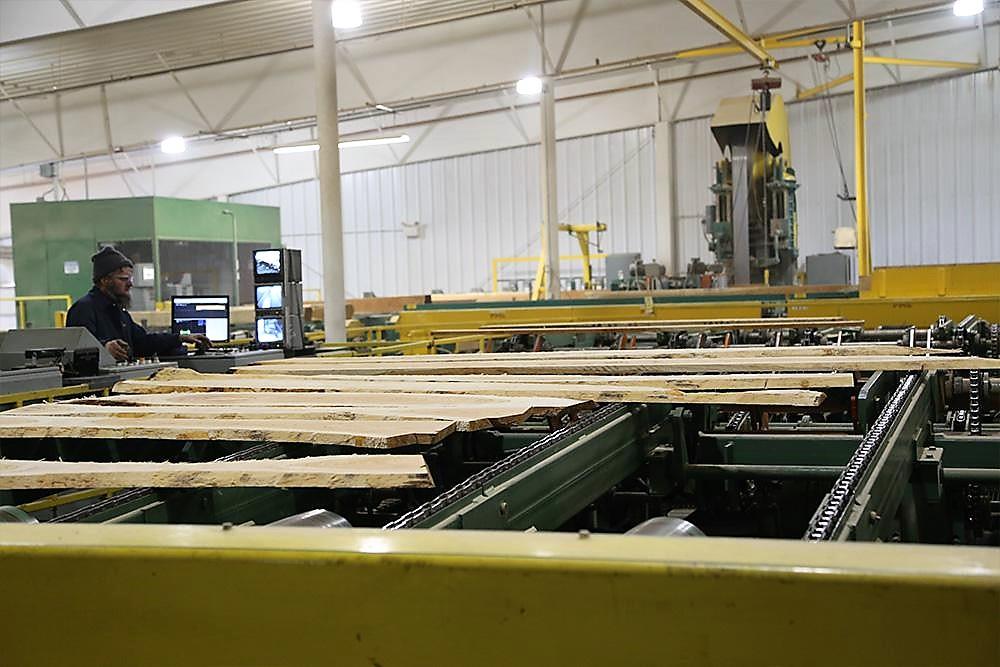
Production scheduling system cuts lead time, inefficiency
Dutch Design, a furniture manufacturer based in Mount Hope, Ohio, has successfully integrated lean manufacturing principles and a new production scheduling software, Resource Manager-DB (RM-DB), to significantly reduce lead times and enhance operational efficiency. The company, which specializes in custom and standard dining tables, cocktail tables, consoles, desks, bedroom furniture, living room furniture, hospitality furniture, and wall display units for residential, commercial, and hospitality markets, operates a 40,000-square-foot facility and employs a unique business model. Dutch Design's approach involves its drafting department creating prints and components, followed by sourcing furniture parts from local Amish craftsmen. These parts are then handcrafted, assembled, and finished in-house. For example, elements like doors, drawers, solid and engineered panel sides and tops are procured from external vendors, while various joinery methods are employed for both standard and custom furniture.
Prior to implementing RM-DB, Dutch Design utilized disparate systems for its operations, including QuickBooks for accounting and order entry, Top Solid for drafting, and Excel for purchasing and tracking. The absence of a unified scheduling and organizational system led to inconsistencies, inefficiencies, and the risk of costly rework, particularly due to manual maintenance of multiple Excel files by different department foremen. The company recognized the need for a robust system that could accommodate changes in schedule and product mix while ensuring accuracy. A key requirement for the new system was its ability to integrate with their existing custom-built Excel interface for initial data input, facilitating immediate adoption and minimizing additional training needs. This integration allowed for the division of weekly product scheduling tasks between an office clerk for basic input and a production scheduler for optimization.
RM-DB was chosen for its flexibility and adaptability, enabling Dutch Design to embrace manufacturing best practices such as lean manufacturing, just-in-time inventory, optimized labor loading, and theory of constraints. The software was reverse-engineered to seamlessly blend with existing processes, providing accurate planning, scheduling, tracking, and job performance data. The implementation of RM-DB has allowed Dutch Design to visualize one-piece flow for each job across all work centers, critical for managing a diverse mix of projects where each item has varying processing times at different work centers. The system facilitates planning and scheduling to balance work center capacities and skill levels by cross-training team members. This visibility into future workloads has resulted in smoother workflows, shorter lead times, and consistent on-time job completion.
The improved scheduling system also highlighted the need to adjust work center priorities to eliminate bottlenecks and ensure a more even process flow. Dutch Design adheres to a principle where no job is started unless it can be completed within one to five days, excluding finishing, to minimize work-in-progress inventory. Most inventory, apart from small universal parts, is kitted immediately upon arrival. The production process begins with drafting, followed by ordering parts from vendors, and then staging these parts on carts until all components for a single job are ready. A team member then preps the parts, which involves drilling, grooving, edge banding, sanding, and shaping. Each craftsman has a dedicated cell equipped with all necessary tools for assembly, and jobs are typically assigned to a single craftsman. After assembly, pieces move to the finish room for final prepping, staining, or painting, leveraging Dutch Design's own color lab and proprietary finishing techniques to create durable, heirloom-quality furniture. The final stages involve inspection, quality control, and staging for shipping. The company's workforce of 40 employees is predominantly Amish, reflecting a corporate culture that combines traditional craftsmanship with modern technological advantages and lean manufacturing principles.
Dutch Design's future plans include continuous sales growth driven by improved customer service and responding to market demands for colors. The company has also streamlined its office structure for point-of-sale and customer service, reducing the time for quote requests to one day and approval drawings to five days. A strategic goal is to achieve a more balanced product mix, moving from an 80% custom to 20% standard ratio. The company's unique approach allows custom pieces that gain popularity to transition into standard offerings, which are then produced in small batches (one or two at a time) to maintain a lean retail inventory and continue utilizing the Kaizen cell method rather than mass production. This strategy ensures that standard pieces are made-to-order rather than made-to-stock, aligning with their lean principles and minimizing inventory for both custom and standard furniture.
#ProductionScheduling #LeanManufacturing #FurnitureManufacturing #SupplyChainOptimization #OperationalEfficiency #AmishCraftsmanship #CustomFurniture #WorkflowManagement #ResourceManagement #ProductionScheduling #LeanManufacturing #FurnitureManufacturing #SupplyChainOptimization #OperationalEfficiency #AmishCraftsmanship #CustomFurniture #WorkflowManagement #ResourceManagement
 Noch keine Kommentare
Cabinet Vision reduces production time