Patterns on Repeat (Published 2014)
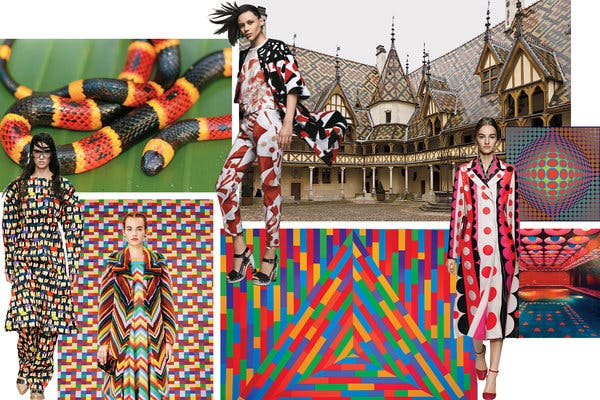
This article explores the resurgence and diverse applications of geometric patterns across fashion, art, and design, highlighting how designers draw inspiration from various sources to create visually impactful effects. The piece opens by showcasing how Valentino's fall 2014 runway look integrates elements reminiscent of Pop Art, specifically referencing Victor Vasarely’s illusory "Vega-200" print from 1968 and the hallucinatory reflections of the pool designed by Verner Panton for the former Der Spiegel headquarters in 1969. This fusion demonstrates a playful yet sophisticated approach to optical illusion within fashion.
Further delving into the origins of geometric motifs, the article notes the natural world's influence, citing the bright stripes of a coral snake as a potential inspiration for Marni’s striking fall design. In architecture, grid-like forms are presented as purveyors of order, exemplified by the rooftop tiles of the 1443 Hôtel-Dieu in Beaune, France, which find a contemporary echo in Fendi’s resort collection. Valentino’s dress and jacket offer a different perspective, with their looser graphic effects recalling the artistic principles of Sol LeWitt’s "Wall Drawing #1113," emphasizing the diverse interpretations of geometric abstraction.
The discussion then shifts to recurring motifs that suggest infinity or a deeper insight, such as Artemide’s LED Net light fixture, which mimics a DNA strand. The article also touches upon the vibrant and sometimes psychedelic prints seen in fall collections from Peter Pilotto and Proenza Schouler, linking them to the iconic scribbles of Keith Haring, as depicted in his Tokyo Pop Shop in 1988. These designs are described as rave-appropriate attire, underscoring their energetic and contemporary appeal. Historical architectural examples, like the white-and-black marble interior of the Siena Cathedral, are presented alongside a poster inspired by Vorticist artist Edward Wadsworth’s "Dazzle-ships in Drydock at Liverpool, 1919," illustrating how geometric forms can guide the eye and create distinct visual experiences, whether in sacred spaces or art.
Finally, the article examines symmetrical designs not merely as decorative backdrops but as central artistic statements. Prada’s printed coat for fall is highlighted for its Art Deco celebration, integrating urban shapes reminiscent of 18th-century Sicilian chain-link tiles. Missoni’s iconic zigzag weave, a bolder interpretation of 16th-century silk Bargello wall tapestries, is noted for its renewal in the house’s resort collection. The transformative power of pattern is further illustrated by Yayoi Kusama’s "Yellow Trees" wrap, which she has used to transform everything from buildings to herself. The article concludes by emphasizing that pure geometric forms are elevated to art in various settings, from the Giacomo Arengario restaurant in Milan, designed by Studio Peregalli, to the exterior of the Chrysler Building, showcasing the pervasive and enduring influence of geometry in art and design.
#GeometricPatterns #FashionDesign #ArtAndArchitecture #OpticalIllusions #DesignInspiration #TextileDesign #ContemporaryArt #InteriorDesign #ArchitecturalDetails #GeometricPatterns #FashionDesign #ArtAndArchitecture #OpticalIllusions #DesignInspiration #TextileDesign #ContemporaryArt #InteriorDesign #ArchitecturalDetails
 Noch keine Kommentare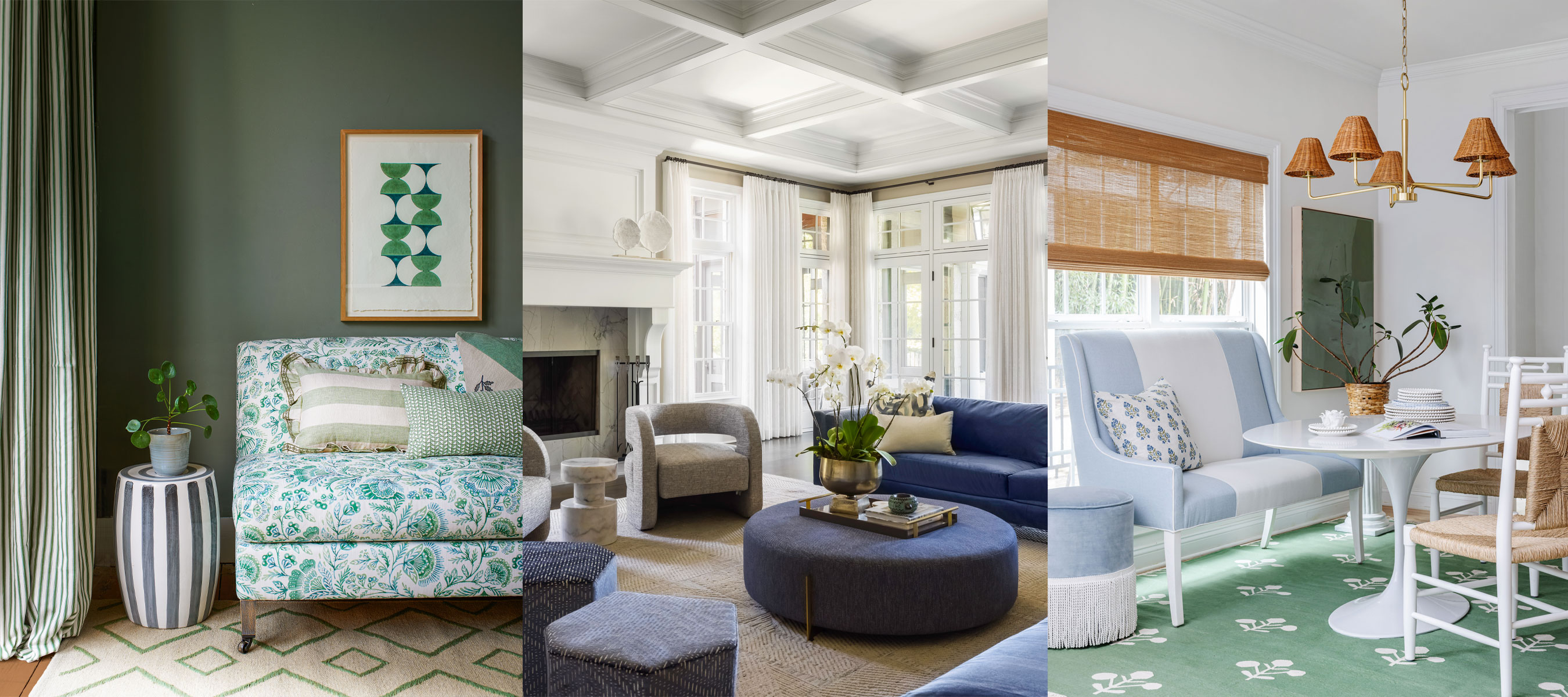
How to create repetition in interior design – 7 ideas for decorating success