1/2
HAWC spots highest-energy photons from the Sun, deep colours keep their cool
The article discusses two distinct scientific advancements: the detection of high-energy photons from the Sun by the High-Altitude Water Cherenkov (HAWC) observatory and the development of structurally colored films that remain cool in direct sunlight. Both topics are presented as significant breakthroughs in their respective fields, highlighting innovative research and potential real-world applications.
The first part of the article focuses on solar physics and the HAWC observatory's recent discovery. Traditionally, energy released by the Sun through nuclear fusion is understood to be in the megaelectronvolt range. However, the Sun also generates gamma rays through the acceleration of charged particles by its magnetic fields and interactions with high-energy cosmic rays. These processes lead to the creation of high-energy photons when cosmic-ray protons, deflected by the solar magnetic field, collide with gases in the Sun's atmosphere, subsequently traveling to Earth. The HAWC observatory, located near the peak of Mexico's extinct Sierra Negra volcano, has detected the highest-energy gamma rays ever observed from the Sun, reaching the teraelectronvolt regime—a million times more energetic than the nuclear fusion output. This detection was also characterized by a surprisingly high number of these high-energy photons, prompting further investigation into the mechanisms of solar gamma-ray production. The HAWC observatory itself is described as a striking facility, consisting of 300 large, water-filled barrels, and a video detailing its operation, titled "Faces of Physics: a HAWC eye on the sky," is available.
The second part of the article shifts to materials science, presenting a novel solution for passive cooling inspired by natural phenomena. Conventional wisdom suggests that white clothing is best for staying cool in the sun due to its high reflectivity. However, researchers led by Guo Ping Wang from Shenzhen University in China have developed colored films that achieve similar cooling effects. These films utilize "structural color," a phenomenon where nanostructures on a surface interact with light to produce vibrant hues, similar to the colors found on butterfly wings. By engineering specific nanostructure arrays, Wang's team created surfaces that exhibit deep colors while reflecting nearly all incident light. This innovation allows for colorful objects to maintain significantly lower temperatures; tests showed these films could cool objects to 2 °C below ambient temperature. For example, a blue object treated with this film was 26 °C cooler than a similar object painted with conventional blue car paint when exposed to direct sunlight. The potential applications are broad, including textiles for comfortable clothing in hot climates and architectural uses for energy-efficient buildings, where the films were observed to keep roof surfaces 35 °C cooler than untreated areas on summer days. The research findings for these cooling films were published in an open-access paper in the journal *Optica*.
#HAWCObservatory #GammaRayAstronomy #SolarPhysics #HighEnergyPhotons #StructuralColor #PassiveCooling #MaterialsScience #EnergyEfficiency #Biomimicry #HAWCObservatory #GammaRayAstronomy #SolarPhysics #HighEnergyPhotons #StructuralColor #PassiveCooling #MaterialsScience #EnergyEfficiency #Biomimicry
0 Kommentare insgesamt
 Noch keine Kommentare
Das könnte Ihnen auch gefallen

The distinctive illuminated discs form a perfect archetypal figure of the sun

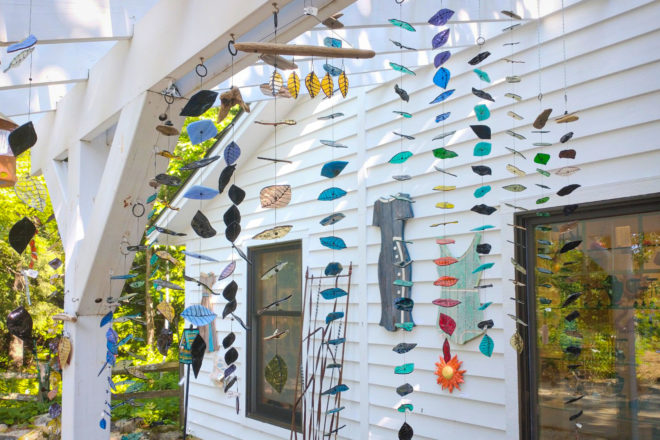
Fused-Glass Show Captures Sunlight with Color


These 30 Low-Light Houseplants Refuse to Die in Dim Conditions

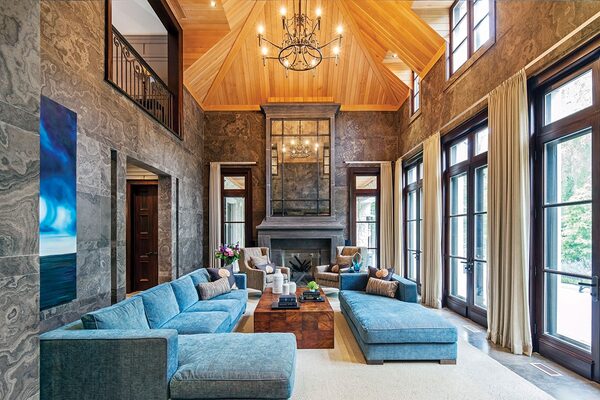
Let the sun shine in, just not too much

White Hot

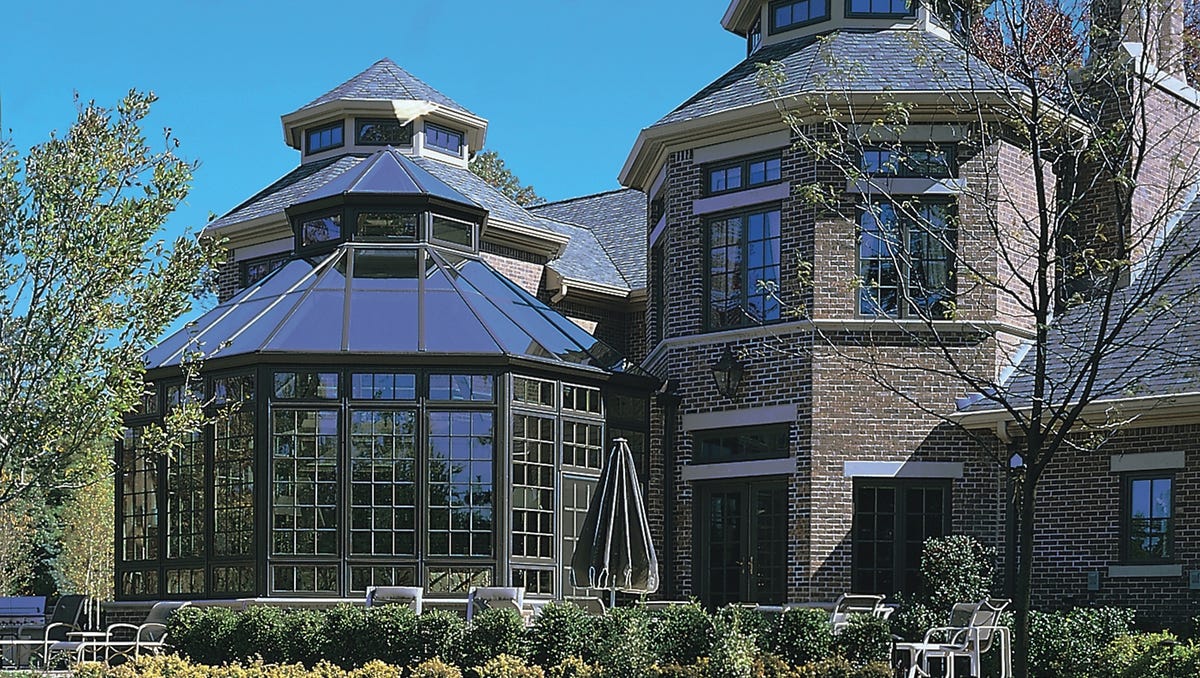
Take a shine to sunrooms

The Core Shed Light in an Unexpected Place


hudson valley lighting group shines coziness indoors with warm finishes

Govee’s Newest TV Backlight Produces Vivid Colors in the Light and the Dark