




1/28
First Class Travel, 1930s-Style: What Were the Interiors/Floorplan Like Inside the Hindenburg?
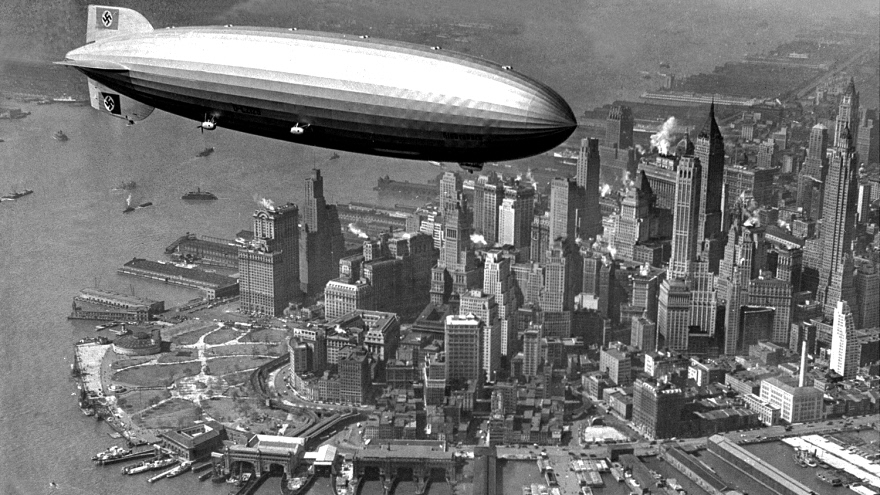
The Hindenburg, a German-engineered airship, provided the world's first transatlantic air service for passengers in the 1930s, following the success of the Graf Zeppelin. Carrying 50 to 72 passengers and a crew of 40 to 60, the Hindenburg offered a four-day journey between Frankfurt and New Jersey. A one-way ticket cost $400, equivalent to approximately $7,050 in 2017, making it a luxury travel option exclusively for the wealthy. The appeal of Hindenburg travel included a faster transit time than sea voyages and a remarkably smooth flight experience, with lift-off so gentle that passengers often didn't notice they had departed. Unlike modern aircraft, the Hindenburg flew at a low altitude of 330 to 650 feet, and its passenger areas were largely unpressurized, even allowing windows to be opened.
The Hindenburg's interiors were designed to offer a luxurious experience. Dining was a highlight, with food comparable to high-end European hotels. The chef on the final Hindenburg voyage, for instance, came from the Ritz in Paris. Menu items included elaborate dishes like "Beef Broth with Marrow Dumplings and Rhine Salmon a la Graf Zeppelin." The low flying altitude meant that passengers' taste buds were not affected, enhancing the dining experience. The main passenger areas featured promenades on both port and starboard sides, leading to a lounge and dining room. The lounge was equipped with an aluminum grand piano to save weight. Although weight-saving measures were implemented, such as perforated ladders, these were primarily to maximize cargo capacity, including the ability to transport cars. The kitchen, located downstairs, was all-electric, with food delivered to the dining room via a dumbwaiter.
Passenger cabins, while private, were utilitarian, offering two bunks similar to a train sleeper compartment. Each cabin included a sink with hot and cold running water. Toilets and a shower were located downstairs, as was a bar, allowing passengers to enjoy alcoholic beverages during the journey. A unique feature was the pressurized smoking room, accessible through a two-door airlock. This room allowed passengers to smoke cigarettes, cigars, or pipes safely, as its pressurization prevented the highly flammable hydrogen from entering. Electric lighters were provided to minimize the risk of open flames.
Operators of the Hindenburg were also experimenting with an innovative feature: a trapeze-like aircraft hook-on point. The intention was for customs officials to fly out to the airship, board, and process passengers mid-air, thereby eliminating waiting times on the ground. However, two test runs in March and April 1937 encountered turbulence issues. These experiments were cut short by the catastrophic Hindenburg Disaster in May 1937, where the airship exploded upon landing. Out of 36 passengers and 61 crew members, 23 passengers and 39 crew members remarkably survived. The exact cause of the initial explosion remains unknown, but the tragedy effectively ended the era of blimp passenger flights. Despite its tragic end, the Hindenburg represented a brief period of luxurious and innovative transatlantic travel.
#Hindenburg #AirshipTravel #TransatlanticFlight #LuxuryTravel #1930sDesign #AeronauticalHistory #PassengerExperience #Zeppelin #Hindenburg #AirshipTravel #TransatlanticFlight #LuxuryTravel #1930sDesign #AeronauticalHistory #PassengerExperience #Zeppelin
 Noch keine Kommentare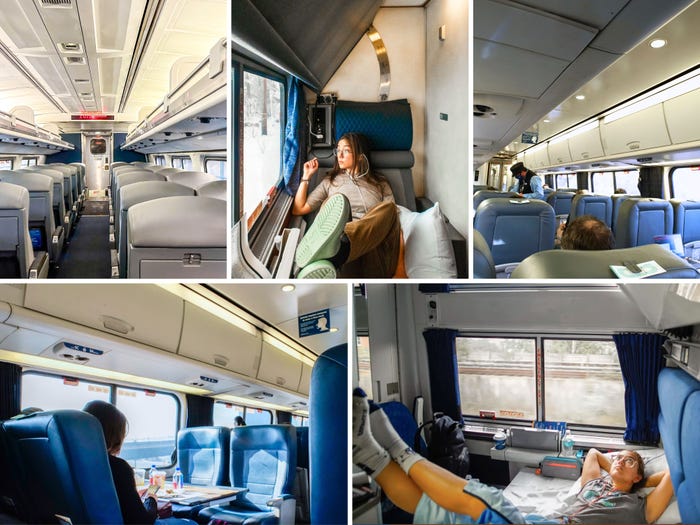
I've spent 95 hours on Amtrak trains in 5 different classes, from coach to a bedroom. The best deal was a premium cabin.

PHOTOS: Booked Interior Cabin to Save Money on 12-Day Cruise, Worth It