


From Concept to Reality: How AI is Reshaping Interior Design
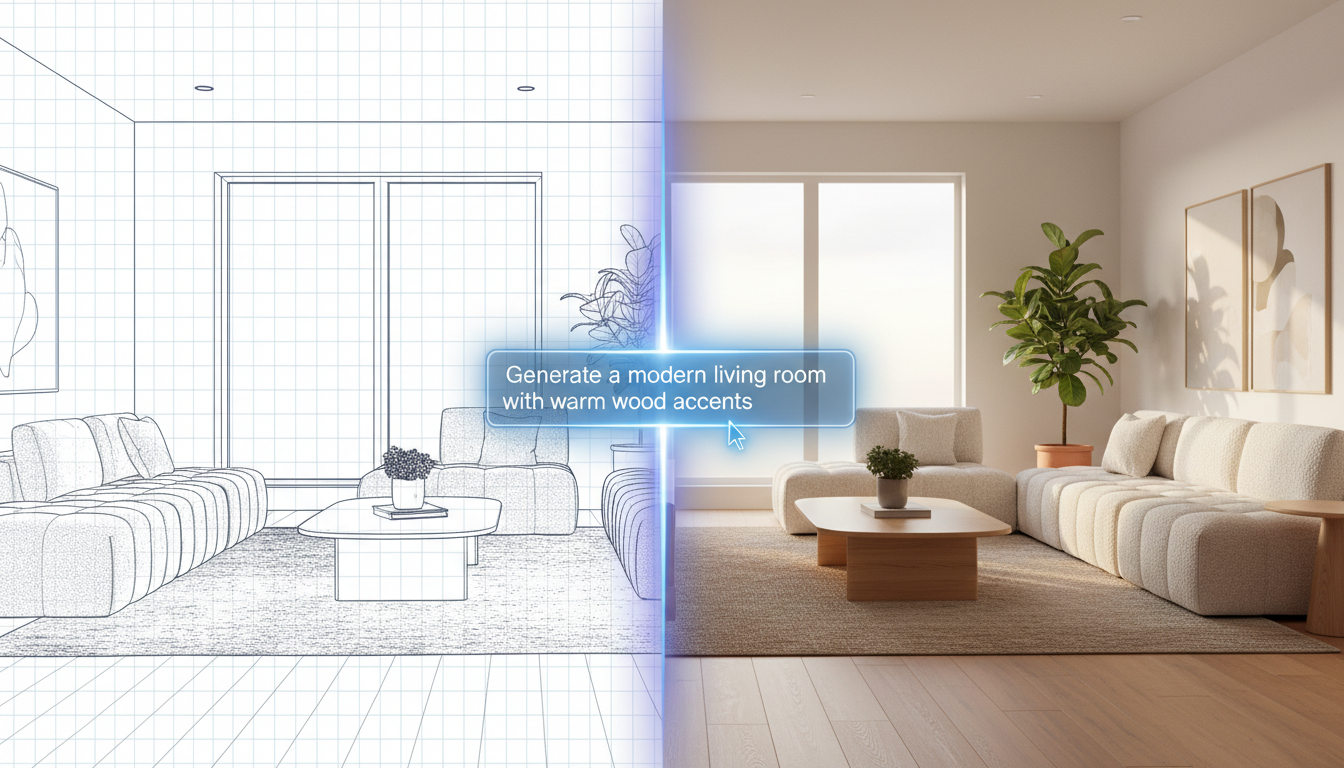
Artificial intelligence is no longer a futuristic concept in the world of design—it's a practical, powerful partner that’s reshaping how homeowners, designers, architects, and real estate professionals bring ideas to life. The conversation has shifted from "what if" to "how," as AI interior design tools become integral to every stage of the design process. For those looking to leverage this technology, platforms like Ideal House offer a comprehensive suite of AI-powered tools that bridge the gap between imagination and execution.
Artificial intelligence is no longer a futuristic concept in the world of design—it's a practical, powerful partner that’s reshaping how homeowners, designers, architects, and real estate professionals bring ideas to life. The conversation has shifted from "what if" to "how," as AI interior design tools become integral to every stage of the design process. For those looking to leverage this technology, platforms like Ideal House offer a comprehensive suite of AI-powered tools that bridge the gap between imagination and execution.
From generating initial concepts and automating floor plans to creating photorealistic virtual staging and even powering visual commerce for furniture retailers, AI is streamlining workflows, sparking creativity, and making professional-quality design more accessible than ever. This article explores the practical ways AI is transforming interior design, from simple room makeovers to complex architectural projects.
The Core of AI Interior Design: Instant Inspiration and Visualization
At its heart, AI interior design is about speed and exploration. What once took days of manual sketching, mood boarding, and rendering can now be accomplished in seconds. These tools act as a creative co-pilot, allowing anyone to visualize possibilities without needing specialized software or skills.
Redesigning Spaces from a Simple Photo
One of the most popular applications is AI-powered room redesign. By uploading a single photo of any space—a living room, kitchen, or bedroom—you can instantly see it transformed into dozens of different styles. Whether you’re curious about a Japandi bedroom aesthetic or want to see your kitchen with a modern farmhouse look, tools like an Interior Remodel AI can generate high-quality visual concepts while preserving your room's core architecture. This is perfect for homeowners planning a renovation or designers looking to share initial ideas with clients for faster feedback.
Bringing Ideas to Life with Text and Sketches
Beyond photos, AI is becoming adept at interpreting other forms of input:
- Text-to-Image Editing: Imagine describing a change and seeing it appear instantly. With an AI image editor or Magic Editor, you can type prompts like “change the sofa to an emerald green velvet couch” or “add a large skylight to the ceiling.” The AI applies these modifications realistically, respecting the photo's lighting and perspective. This
generative AIcapability makes fine-tuning designs incredibly intuitive. - Sketch-to-Render: Even a rough sketch can become a polished visual. AI plan visualizers can take a hand-drawn floor plan or a simple 2D drawing and convert it into a full-color, stylized visualization. This
sketch-to-renderprocess is invaluable for architects and designers who want to quickly move from a basic layout to a compelling concept image.
The Professional's Toolkit: Streamlining the Architectural Workflow
For architects, real estate agents, and commercial designers, AI is moving beyond inspiration to become a critical tool for efficiency and project delivery. It's automating tedious tasks, improving accuracy, and enhancing client communication.
Automating Architectural Plans and Layouts
Creating floor plans is a foundational but time-consuming task. An AI floor plan generator streamlines this by creating optimized 2D layouts based on specific parameters. A designer can input requirements like "three bedrooms, two bathrooms, open-concept kitchen, under 1500 sq. ft.," and the AI will generate multiple compliant plans in seconds. Some advanced tools can even generate a complete set of house plans, including exterior elevations and 3D renderings, directly from a description. This automation is a game-changer for generative design in architecture, allowing for rapid feasibility studies and client presentations.
From 3D Models to Photorealistic Renders
Traditional 3D rendering requires powerful hardware and hours of processing time. Cloud-based AI 3D rendering tools disrupt this model by transforming simple screenshots from software like SketchUp, Revit, or 3Ds Max into photorealistic images in minutes. Because the rendering is handled in the cloud, there's no need for an expensive GPU. The AI intelligently enhances materials, lighting, and shadows from the screenshot, producing studio-quality architectural visualizations with minimal effort. This is a core part of modern AI for architects workflows.
Revolutionizing Virtual Staging and Real Estate Marketing
In real estate, presentation is everything. AI offers a powerful, cost-effective alternative to traditional home staging. The workflow is simple yet effective:
- Create a Blank Canvas: Use an AI furniture remover or Object Remover to instantly clear a cluttered or tenant-occupied room, creating a pristine, empty space from a photo.
- Furnish with AI: Apply AI virtual staging to furnish the empty room in various styles that appeal to target buyers, from
modern minimalisttoluxury farmhouse. - Enhance and Animate: Use an AI photo enhancer to improve lighting and clarity, then turn the static images into dynamic video walkthroughs for platforms like Zillow and Redfin.
This entire process helps real estate professionals create stunning MLS-ready listings that attract more buyers and help properties sell faster.
The Next Frontier: AI for Hyper-Personalization and Visual Commerce
The latest evolution in AI interior design is its integration with e-commerce, creating a seamless path from inspiration to purchase. This is transforming how both consumers and businesses interact with furniture and decor.
Visualize Real Products in Your Space
Instead of guessing how a piece of furniture will look, you can now see it in your room. AI furniture try-on tools allow you to upload a photo of your space along with images of real products from retailers. The AI intelligently places the new furniture—whether it's a single sofa or a complete dining set—into your room, accurately handling scale, perspective, and lighting. Other tools, like an AI material visualizer, let you test real-world finishes like flooring, tile, and paint colors on your surfaces. This virtual try-on for furniture builds buyer confidence and dramatically reduces return rates.
The Rise of Visual Commerce for Furniture Retail
For furniture brands and retailers, AI is a powerful B2B solution. Instead of expensive photoshoots, companies can use AI product visualization to generate infinite lifestyle images of their products in any setting. AI platforms can also create fully shoppable room packages using a retailer's live inventory, optimizing for style and budget to increase average order value (AOV). This AI visual commerce strategy connects content directly to sales, turning inspiration images into revenue.
Precision Edits for a Perfect Finish
Modern AI tools offer granular control for making targeted adjustments. A Smart Replacer lets you select a specific area, like a countertop or a light fixture, and change it with a simple text prompt. Similarly, a Texture Replacer can swap the fabric on a sofa or the siding on a house using a reference image. This level of precision is ideal for designers making client revisions or homeowners finalizing the details of a remodel.
Navigating the AI Landscape: Challenges and the Human Touch
Despite its incredible potential, it’s important to approach AI interior design with a realistic perspective. The technology is a powerful assistant, not a replacement for human expertise.
- Accuracy and "Hallucinations": AI models can sometimes misinterpret architectural details, generate spatially illogical layouts, or "hallucinate" elements that don't make sense. Human oversight is crucial to ensure the outputs are practical and buildable.
- The Problem of Originality: Since AI is trained on vast datasets of existing images, there's a risk of generating generic or derivative designs. True creativity comes from a designer's ability to use AI as a starting point and infuse the result with a unique vision.
- The Human Element: AI cannot understand a client's emotional needs, cultural context, or the subtle nuances of creating a space that feels like "home." It's a tool for efficiency and exploration, but the final design decisions—balancing budget, functionality, and human-centered design—still rest with a skilled professional.
- Data and Privacy: Users should be mindful when uploading sensitive information like detailed floor plans. It's important to use trusted platforms that have clear data privacy policies.
The Future is a Collaboration
AI is not here to replace interior designers and architects, but to amplify their capabilities. It automates the tedious, accelerates the creative, and opens up new possibilities for visualization and client collaboration. By handling the repetitive work, AI frees up professionals to focus on what they do best: solving complex problems, thinking strategically, and delivering a unique, human-centered vision.
As tools like those from Ideal House continue to evolve, the future of interior design lies in a powerful partnership between human creativity and artificial intelligence. The designers who learn to harness these tools will be the ones who lead the industry forward, creating smarter, faster, and more inspiring spaces than ever before.