


How to Design a Functional & Inspiring Playroom for Kids
Creating the perfect playroom can feel like a puzzle. You want a space that sparks imagination, encourages learning, and contains the inevitable chaos of toys.
But where do you start? Visualizing how different colors, layouts, and furniture will look can be the biggest hurdle.
The Foundation of Fun: Planning Your Playroom with Zones
The secret to a functional and less chaotic playroom is creating distinct "zones." This approach helps organize activities, making it easier for kids to focus and even easier to clean up. By dedicating areas to different types of play, you create a balanced environment that supports all aspects of development.
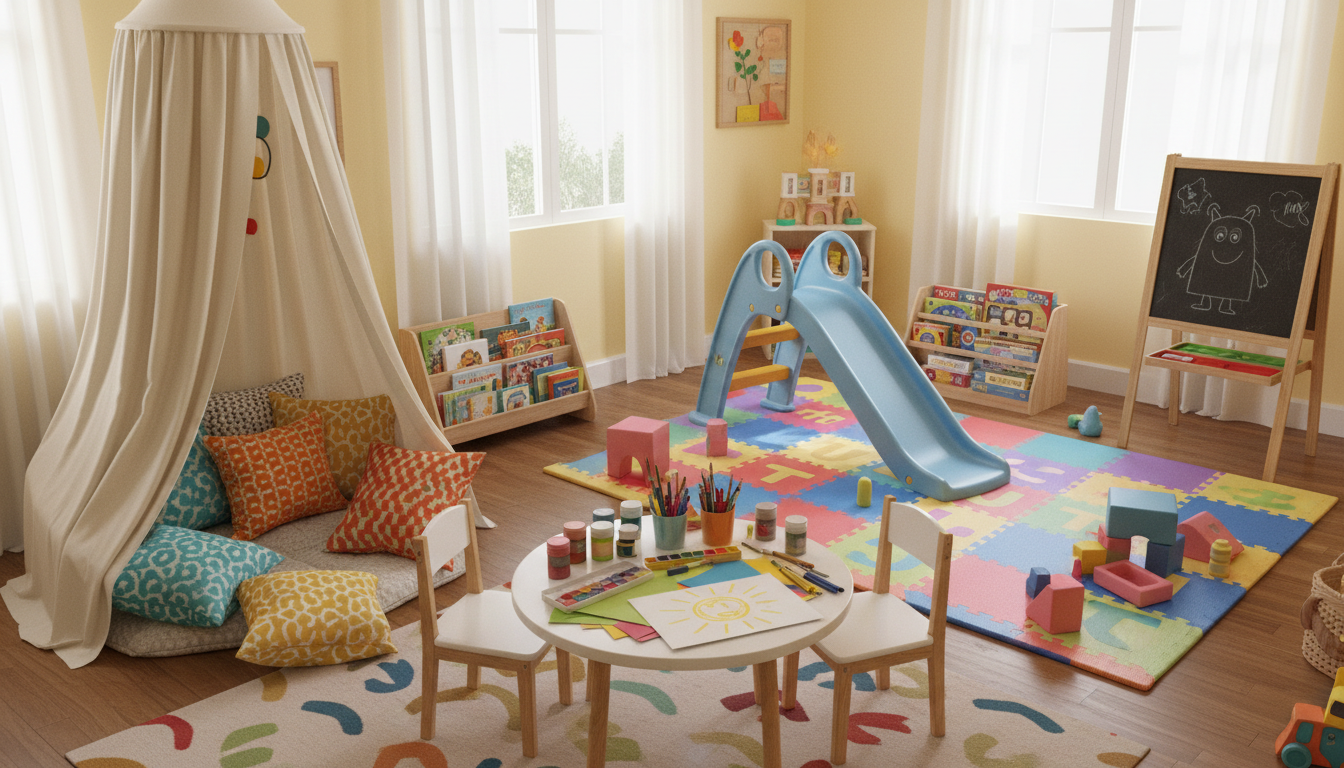
- Active Play Zone: This is the space for getting the wiggles out. Think gross motor play like tumbling on soft mats, balancing on a wobble board, or even a small indoor slide. It's an essential outlet for physical energy, especially on rainy days.
- Creative Zone: A dedicated spot for arts, crafts, and building. A small table and chairs, an easel, and accessible storage for paper, crayons, and clay make this a go-to area for hands-on making. This is the perfect spot for a playroom craft corner.
- Imagination Zone: This is where stories come to life. A playroom with a kitchen set, a dress-up corner with hooks for costumes, or a collection of blocks and figures for building tiny worlds encourages role-playing and storytelling.
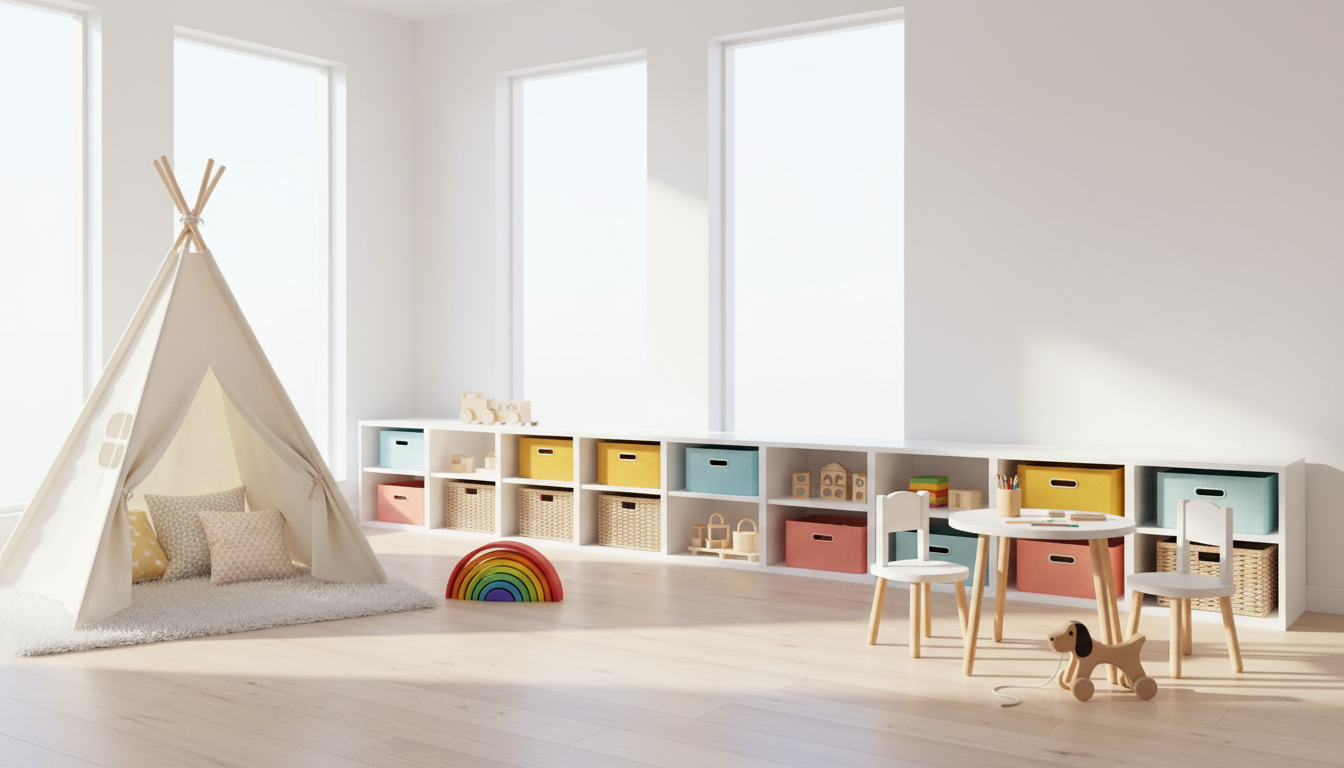
- Cozy Corner: Every child needs a quiet space to decompress. A kids' reading nook with soft pillows, a plush rug, and accessible bookshelves creates a perfect retreat for looking at picture books or having some calm-down time. A teepee or canopy can make this spot feel extra special.
Inspiring Playroom Themes to Spark Imagination
A theme can turn a simple room into a world of adventure. While you can go all-in, even a few simple touches can set a magical tone.
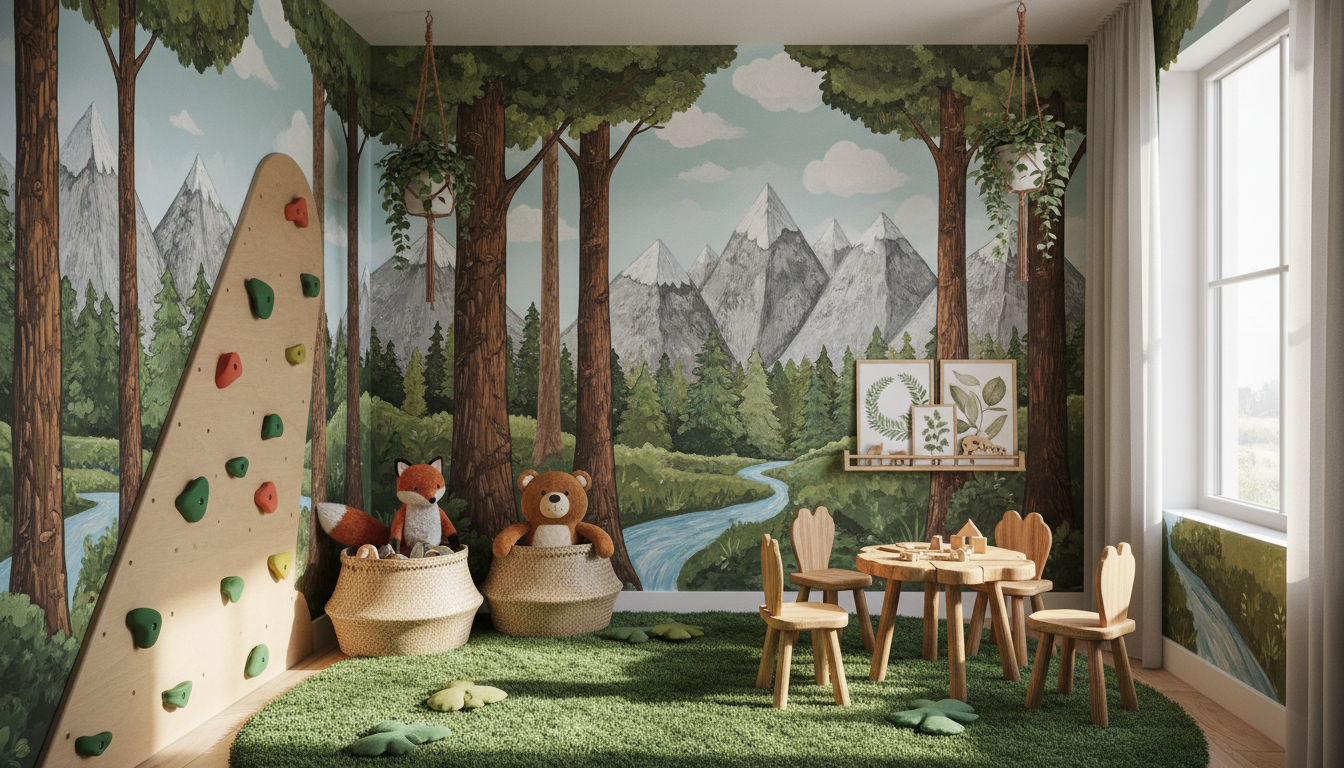
- Nature and Adventure: Bring the outdoors in with a forest-themed playroom or a nautical design. Use earthy greens, wood tones, and animal motifs. A wall mural of mountains or a cloudy sky can create an immersive backdrop. For a more active theme, consider a DIY indoor climbing wall to complete the adventurous feel.
- Modern and Minimalist: A stylish playroom doesn't have to be cluttered. A Scandinavian-inspired design with a neutral color palette, light wood furniture, and pops of color from a rainbow toy storage system can feel both calm and cheerful. This style often aligns with the Montessori playroom philosophy of simplicity and order.
- Whimsical and Artsy: Let color be the star. A colorful rainbow nursery theme can be carried into the playroom with multi-colored bins, a vibrant rug, and a gallery wall showcasing your child’s artwork. Polka-dot wall decals or a geometric painted accent wall can add a dose of fun without overwhelming the space.
Smart Ideas for Every Space and Budget
Not everyone has a dedicated room to spare. The good news is that any corner, nook, or shared area can become a fantastic play space with a bit of creativity.
The Living Room Playroom Combo
For many families, the living room is the playroom. The key to making this work is stylish, stealthy storage.
- Use Multifunctional Furniture: An ottoman with hidden storage can hold toys and double as seating. A modern sideboard can conceal bins and baskets while blending seamlessly with your adult decor.
- Define the Zone: Use a soft, durable area rug to visually separate the play area in the living room. This creates a designated spot for play while protecting your floors.
- Go Vertical: Install floating shelves to display a few favorite books and decorative toys, keeping them off the floor.
- Embrace the Nook: The unused space under the stairs is a prime location for a small playroom corner. Add a small bookshelf, a cushion, and a basket of toys to create a cozy hideout.
Small Playroom, Basement, and Attic Solutions
Unused or awkward spaces are full of potential for play.
-
Small Playroom Ideas: When square footage is limited, think up. Maximize vertical space with tall, anchored bookshelves like the IKEA KALLAX. Use wall-mounted storage like pegboards for art supplies or a DIY LEGO table hack that folds away.
-
Basement Playroom Ideas: A finished basement offers a large canvas. Make it cozy with foam floor tiles or a large, soft rug to combat cold floors. A basement playroom is also the perfect spot for bigger active play equipment, like a mini trampoline or an indoor swing. If you're on a budget, focus on paint, wall decals, and sourcing furniture from places like Facebook Marketplace.
-
Attic Playroom Ideas: The sloped ceilings of an attic can create an incredibly cozy, den-like feel. Build a window seat to serve as a reading nook with storage underneath. Hang a swing from a sturdy beam or paint the angled walls with a starry night mural.
The Secret to a Tidy Playroom: Genius Organization
An organized playroom is not a myth—it just requires a smart system that’s easy for kids to use.
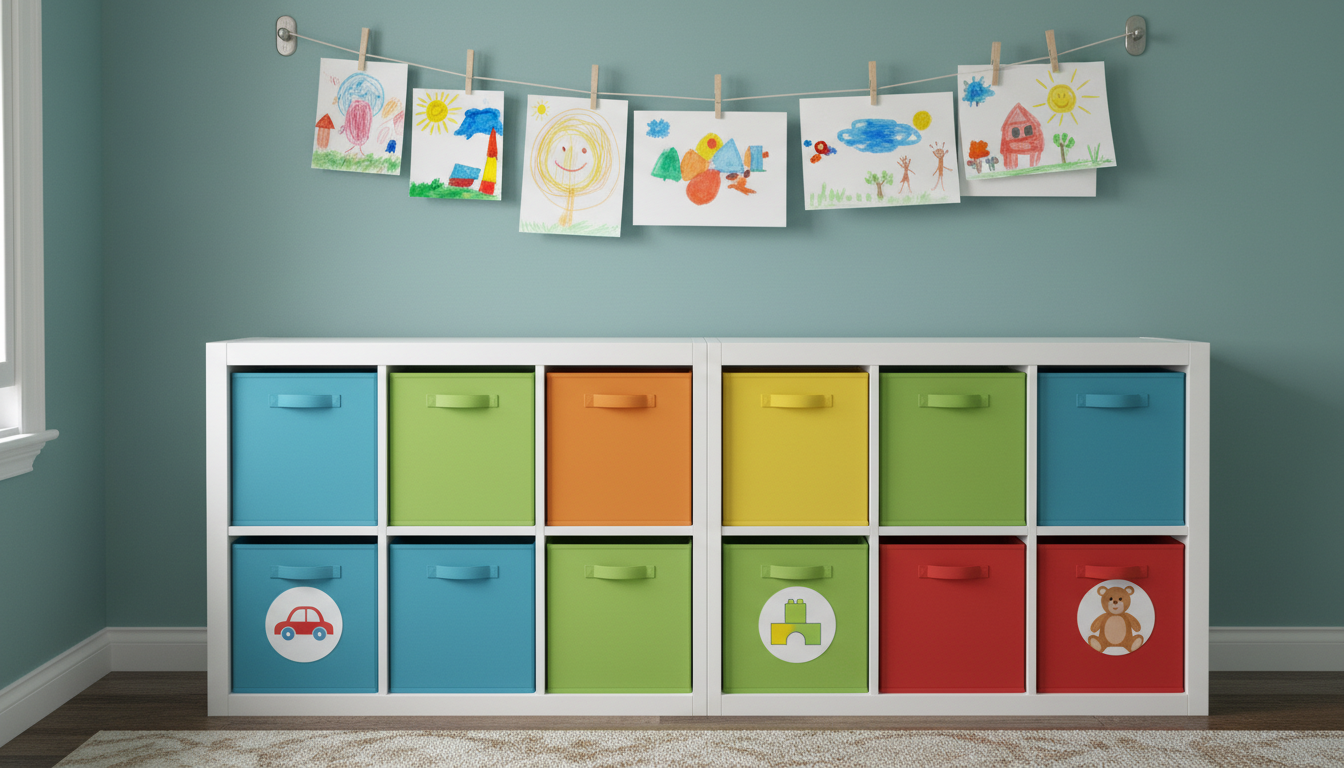
- Toy Storage That Works: Cubby systems like the IKEA TROFAST or KALLAX are popular for a reason. They allow you to categorize toys into individual bins. Use clear playroom storage bins so kids can see what's inside, or use picture labels for non-readers. Woven baskets are great for larger items like stuffed animals or blocks.
- The Art of the Toy Rotation: Inspired by the Montessori method, toy rotation is a game-changer. Keep only a selection of 8-10 toys out at a time and store the rest. Every few weeks, swap them out. This reduces clutter, prevents overwhelm, and makes old toys feel new again.
- A Place for Masterpieces: Don't let art pile up. Create a playroom art display wall. You can hang a wire with clips, use a large corkboard, or frame a few of their best pieces in a rotating gallery. This validates their creativity and adds personal decor to the room.
Designing a Playroom That Grows with Your Child
Kids' interests change in the blink of an eye. A well-designed playroom can evolve with them.
- For Toddlers: Focus on a Montessori-inspired playroom. Low, open shelves allow them to access toys independently. Simple, purposeful toys made from natural materials encourage engagement. A soft play area with foam climbers and a small ball pit is perfect for this age.
- For Older Kids: As they enter school age, the playroom can transition into a play and study room. A dedicated homework station with a desk and good lighting becomes important. Storage can shift to accommodate LEGO sets, board games, and more complex craft supplies.
- For Teens: Eventually, the playroom becomes a teen hangout room or lounge. A comfortable sofa (a pull-out is great for sleepovers), a spot for a gaming console, and more sophisticated decor will make it a space they'll love.
- For Multiple Ages: If you're designing a multi-age playroom for siblings, zoning is your best friend. Create a safe toddler area with age-appropriate toys, while providing a desk or a more complex building zone for the older child. Shared spaces like a reading nook or a dress-up corner can be enjoyed by everyone.
The Sensory Playroom: A Space for Calm and Exploration
A home sensory room can be a sanctuary for all children, especially those with sensory processing needs. It’s a space designed to provide input that can either calm or stimulate the nervous system.
- Movement: A sensory swing, pod swing, or indoor hammock provides calming vestibular input.
- Tactile Play: A sensory table filled with sand, water beads, or rice offers rich tactile experiences. A crash pad or a ball pit is great for deep pressure input.
- Lighting: Create a calming atmosphere with soft lighting. A bubble tube or a projector that casts gentle stars on the ceiling can be mesmerizing.
- Cozy and Safe: A weighted blanket, a small tent, or a bean bag chair in a quiet corner can create a safe, snug space for a child to retreat to when they feel overwhelmed.
With these ideas, you’re ready to design a playroom that’s not just a place for toys, but a dynamic environment that fosters creativity, learning, and endless fun. Take your favorite concepts and start experimenting in the Ideal House virtual designer to build the playroom of your child’s dreams.