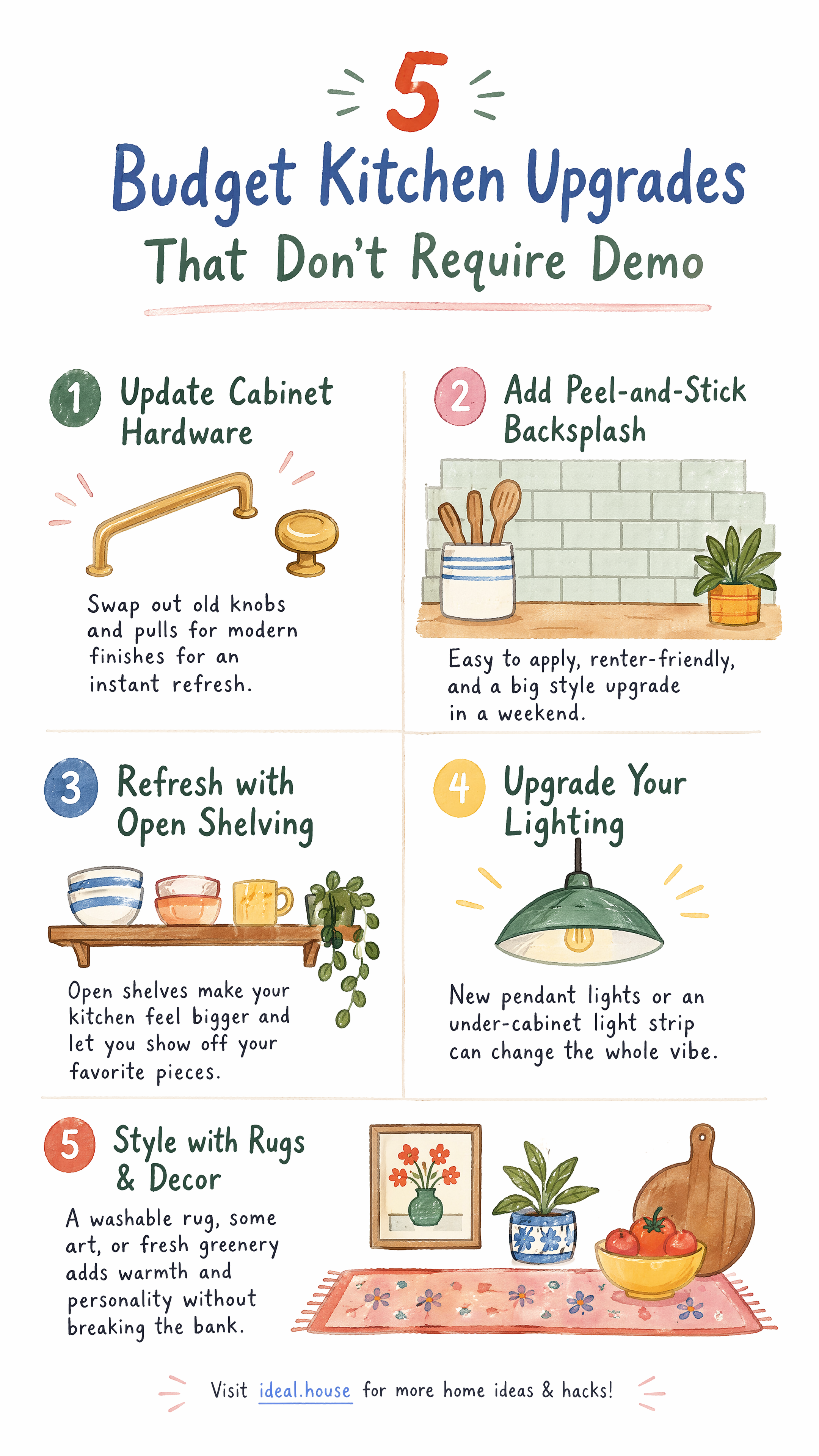
5 Budget Kitchen Upgrades That Don't Require Demo

Refresh a kitchen without demolition using cabinet hardware, peel-and-stick backsplash, open shelving, better lighting, rugs, art, and greenery.
A kitchen does not need demolition to feel different. The quickest changes are often the ones closest to eye level and hand level: cabinet pulls, backsplash, shelf styling, counter lighting, and the objects you see when you walk in.
That is the useful part of a no-demo refresh. You are not trying to hide every old feature. You are choosing a few small surfaces and details that make the existing kitchen look more considered.
Swap the hardware
Cabinet hardware is small, but it sets the tone for the whole kitchen. Old knobs can make cabinets look dated even when the cabinet doors themselves are still working. A new pull or knob can make the same cabinet feel cleaner and more intentional.
Start with the doors and drawers you touch most often. If the cabinets are simple, a warm brass pull, black bar pull, or ceramic knob can add enough contrast without making the room busy. Keep scale in mind: tiny knobs can disappear on large drawers, while oversized pulls can feel heavy on small doors.
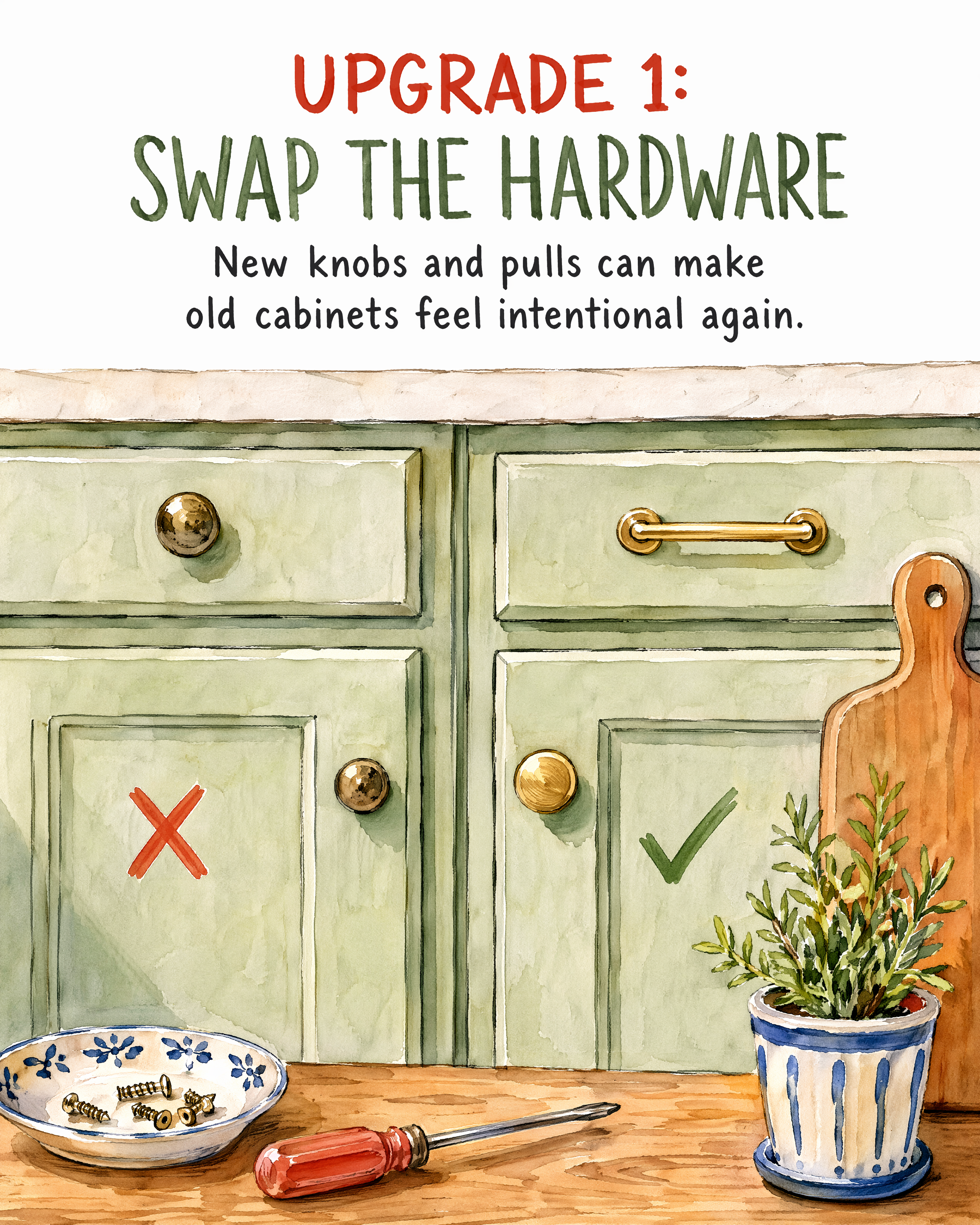
Before ordering a full set, check the existing hole spacing. Reusing the same spacing keeps the project simpler because you are not filling and drilling new holes. If you want a different shape or finish, test it on one drawer first and look at it next to the faucet, appliances, and light fixture.
Keep finishes simple
A budget refresh can start to look accidental when every visible metal finish is different. You do not need every piece to match perfectly, but the kitchen should have one main finish that carries the eye around the room.
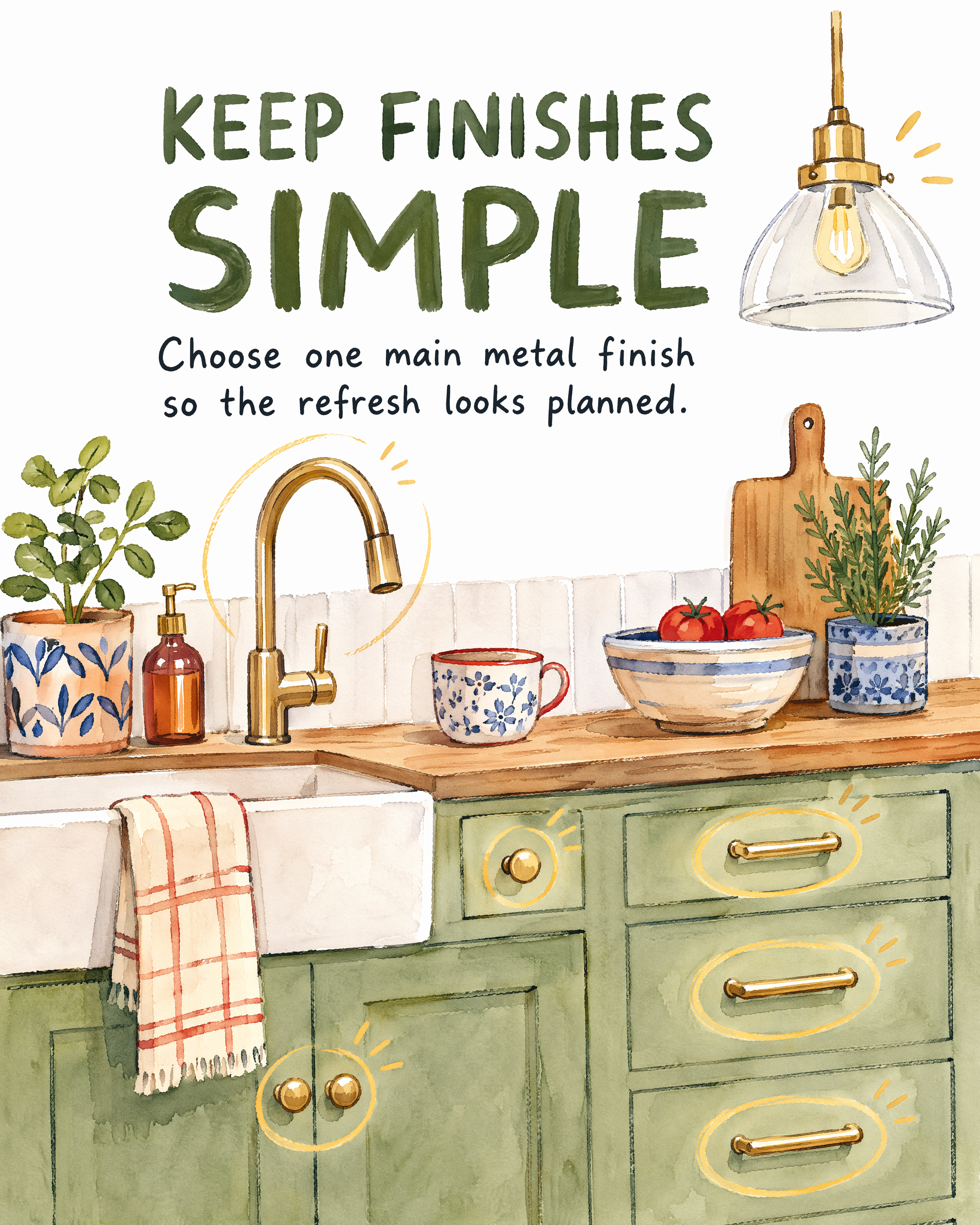
If you already have a finish you cannot change, such as a stainless appliance or chrome faucet, let that be part of the plan. Choose one supporting finish for the items you can change, then repeat it with restraint. A few related details usually look more polished than a drawer full of mismatched knobs.
Add peel-and-stick backsplash where it makes sense
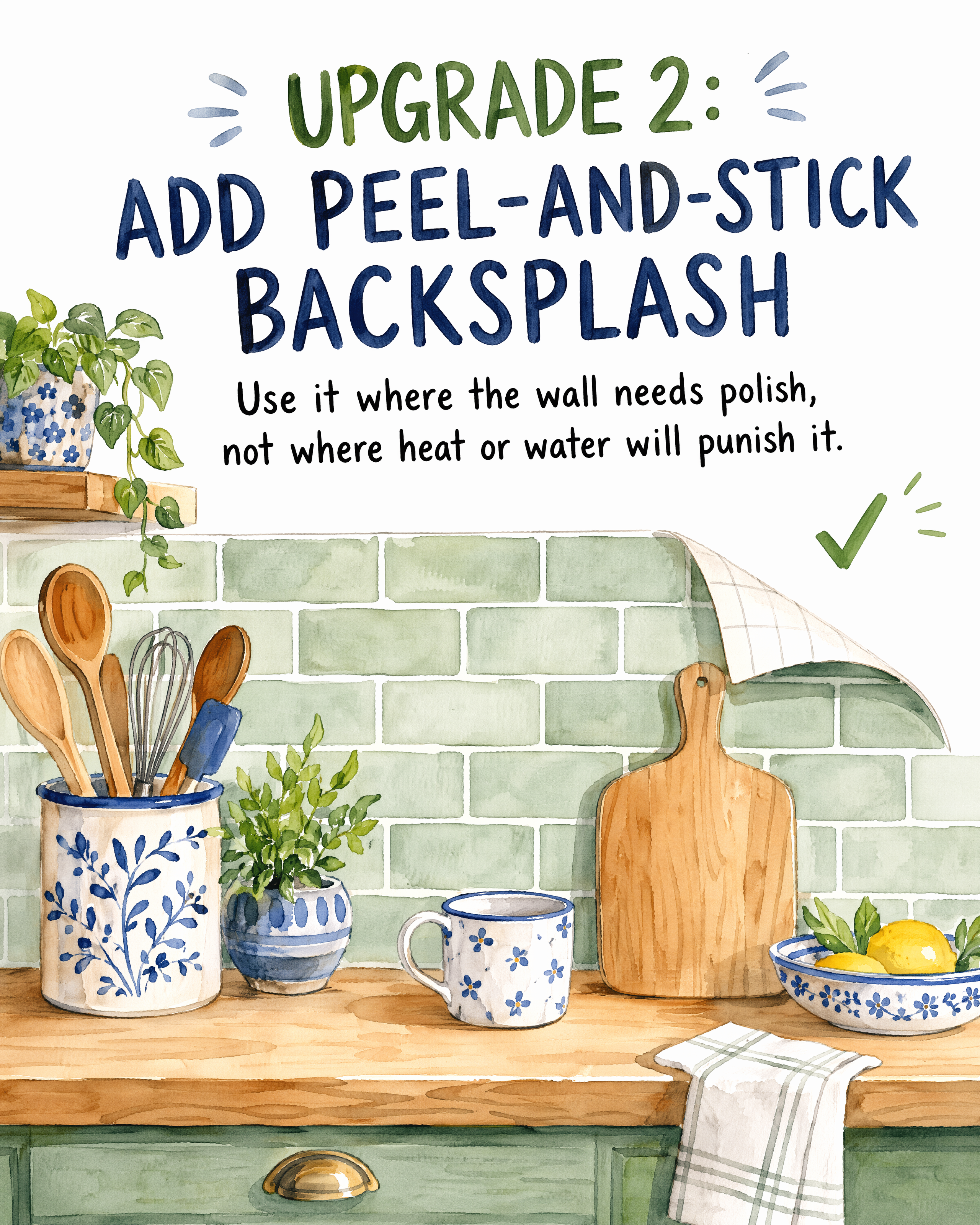
Peel-and-stick backsplash can give a plain wall more structure, especially behind a coffee corner, prep zone, or open shelf. It works best when it looks like part of the kitchen rather than a quick cover-up.
Choose a simple pattern if the room already has a lot going on. Soft subway tile, small squares, or a quiet handmade-tile look can brighten the wall without competing with dishes, countertop appliances, or cabinet color. If your kitchen is very plain, a blue-and-white or soft green pattern can become the detail that gives the room personality.
Try one edited open shelf
Open shelving can make a kitchen feel lighter, but it does not need to replace every upper cabinet. One shelf is often enough. It gives you a place for the pieces that look good and get used often: bowls, mugs, a jar, a small plant, or a framed print.
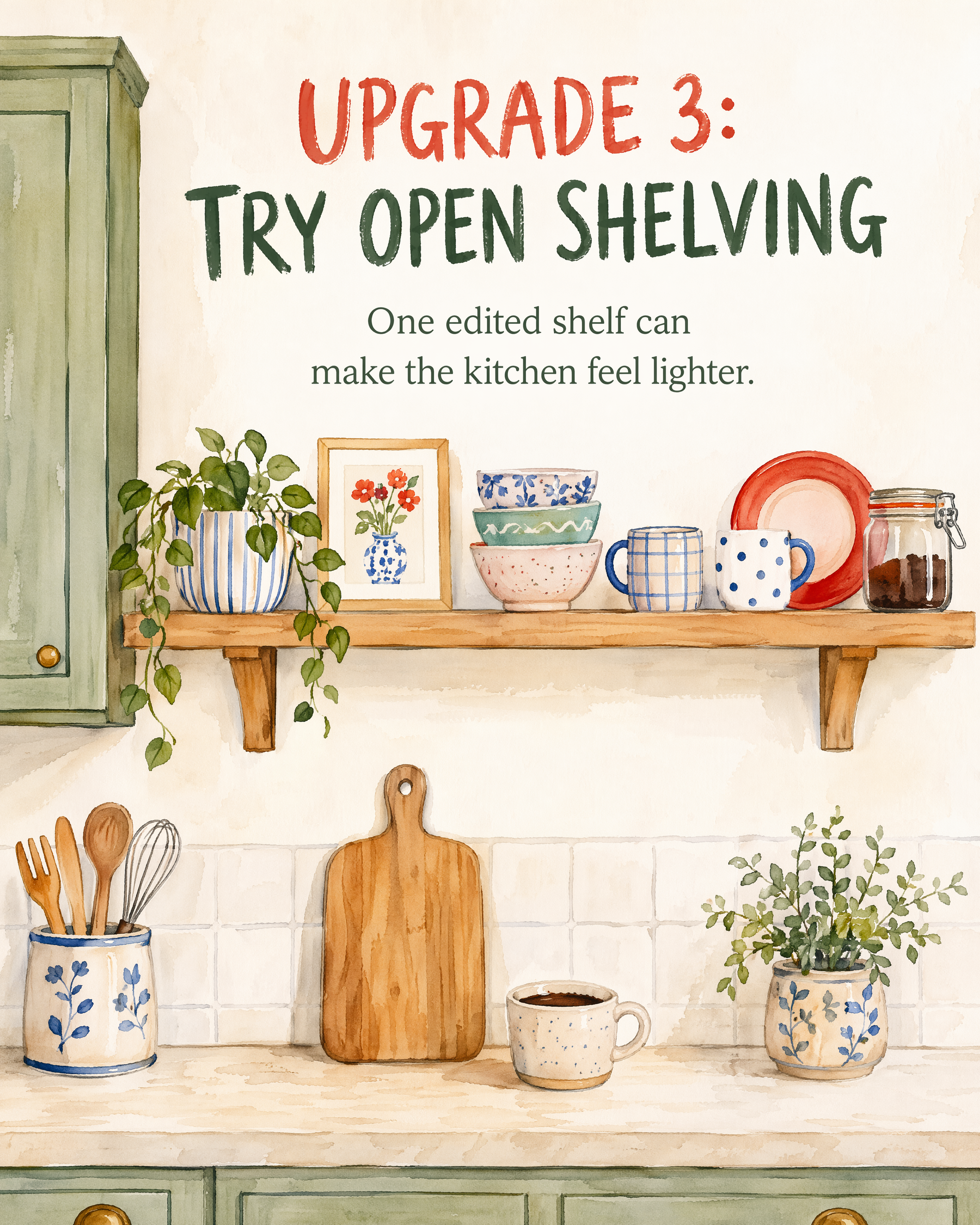
The key word is edited. If the shelf is packed from end to end, it becomes visual clutter. Leave space between groups. Repeat one or two colors. Keep the daily pieces within easy reach, and let decorative pieces support the kitchen instead of taking it over.
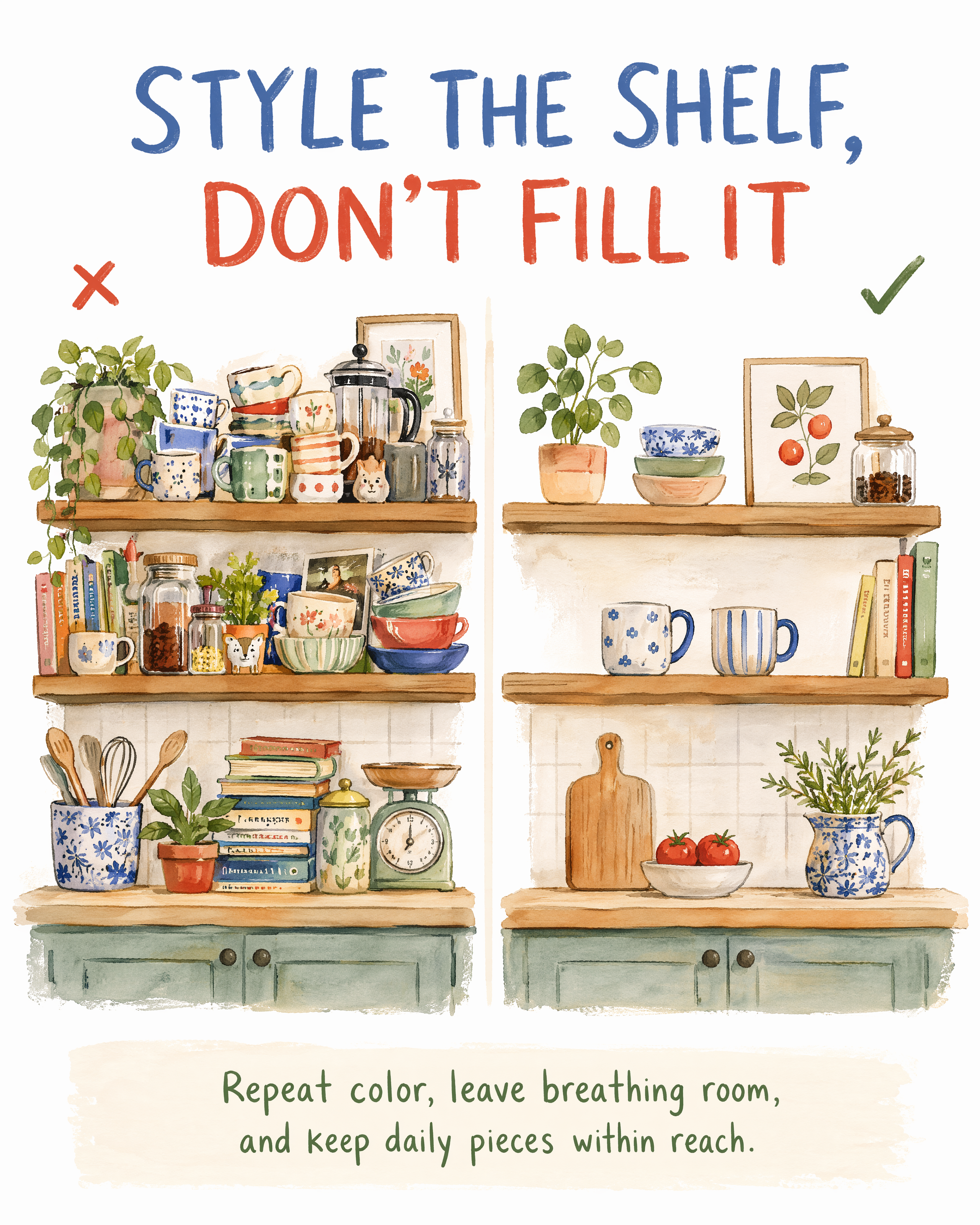
This is also a good place to bring in something personal. A blue mug, a small botanical print, or a trailing plant can soften hard cabinet lines without requiring a bigger project.
Change the lighting mood
Lighting changes how a kitchen feels after dark. A pendant over a small counter zone or island can create a warmer focal point. Under-cabinet task light can make the prep area feel cleaner and easier to use.
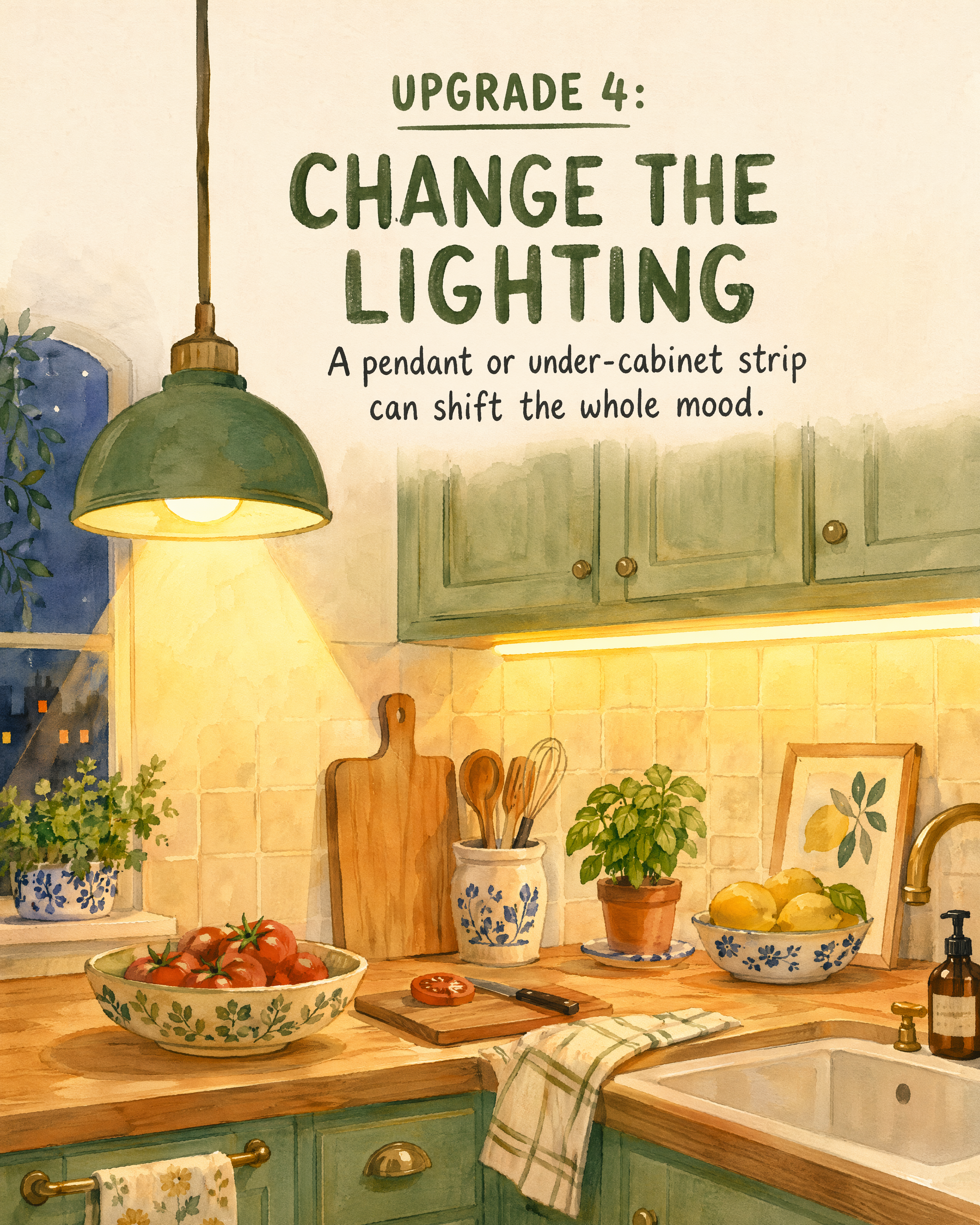
Think about where the room goes dull. If the counter is shadowy, the useful change may be a light strip under the cabinet rather than another overhead bulb. If the kitchen feels flat, one pendant or shaded fixture can add a softer pool of light and take the edge off the utilitarian parts.
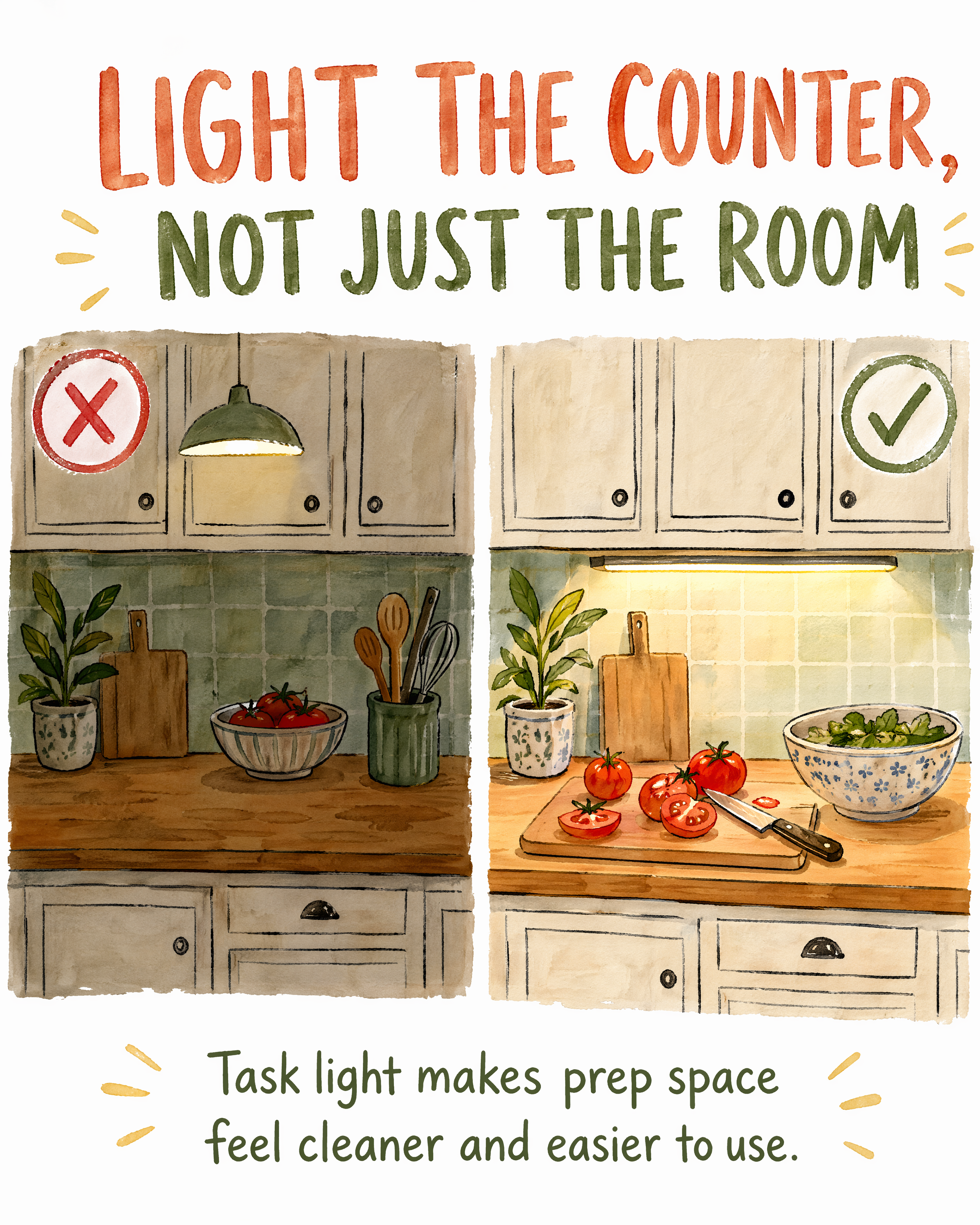
Keep the advice at the planning level unless you are working with product instructions. Plug-in, battery-powered, and hardwired lighting have different requirements, and hardwired fixtures should be handled by a qualified professional. The design goal is simple: light the counter, not just the room.
Style with rugs and decor
The final layer is softness. Kitchens have a lot of hard surfaces, so a washable runner, framed art, a plant, or a bowl of produce can warm up the space without changing cabinets or counters.
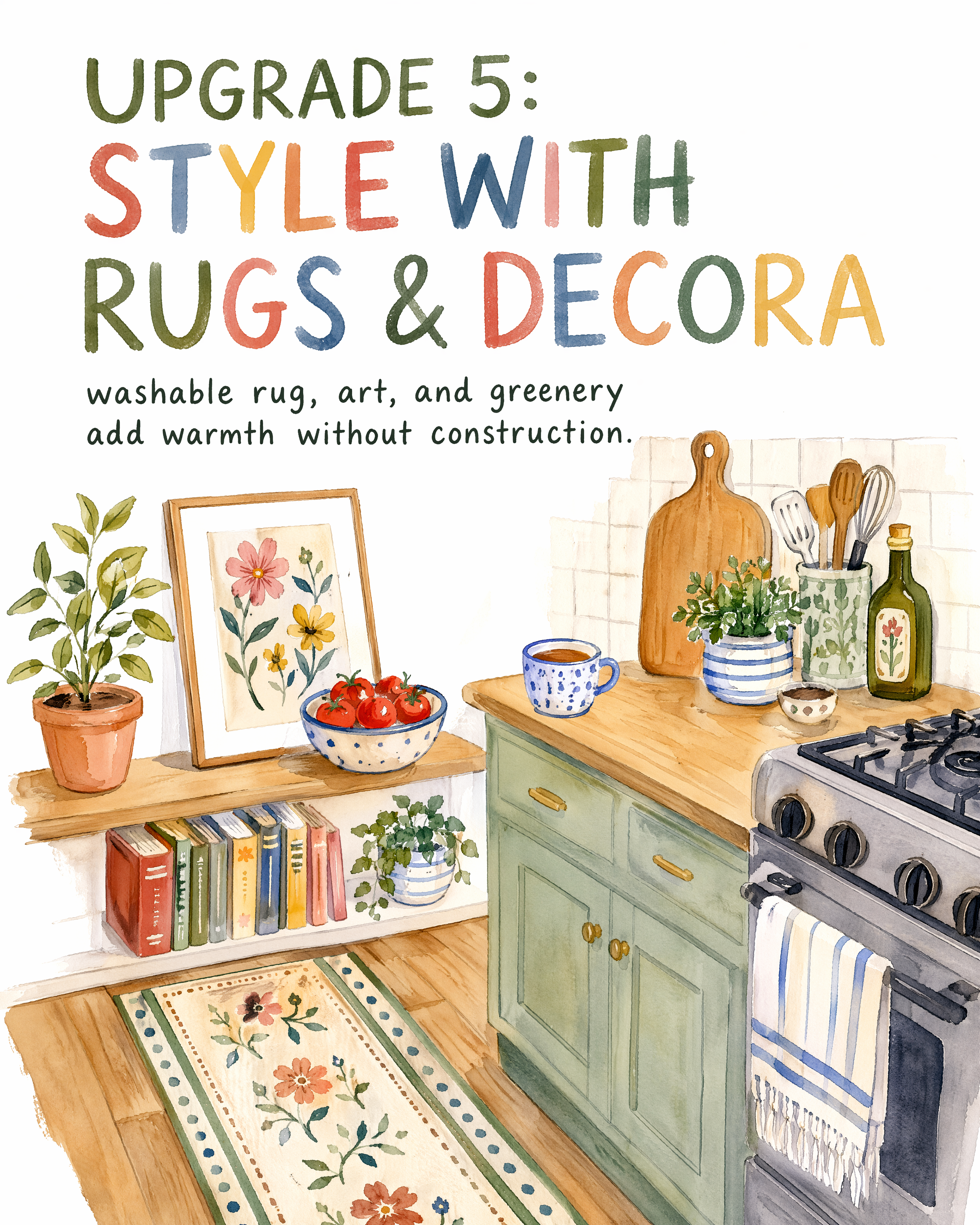
Choose decor that earns its place. A runner should fit the walkway and be easy to clean. Art should sit where it will not be splashed or knocked over. Greenery works best when it does not crowd the prep zone. A cutting board, ceramic crock, or bowl of tomatoes can be both useful and good-looking.
The easiest way to keep this from turning into clutter is to style in small zones. One rug on the floor, one art moment, one plant, and one useful counter grouping can do more than scattering decorative objects across every surface.
How to plan a no-demo kitchen refresh
Start with the detail that annoys you most. If the cabinets look tired, begin with hardware. If the wall feels blank, look at backsplash or a shelf. If the room feels gloomy at night, focus on lighting. If the kitchen works but feels cold, add the rug, art, and greenery last.
The best no-demo upgrades respect what is already there. You are not trying to turn the kitchen into a different room overnight. You are giving the existing room a clearer point of view, one visible detail at a time. Save and share the upgrade checklist below. And visit Ideal House community for more home decor tips and hacks!